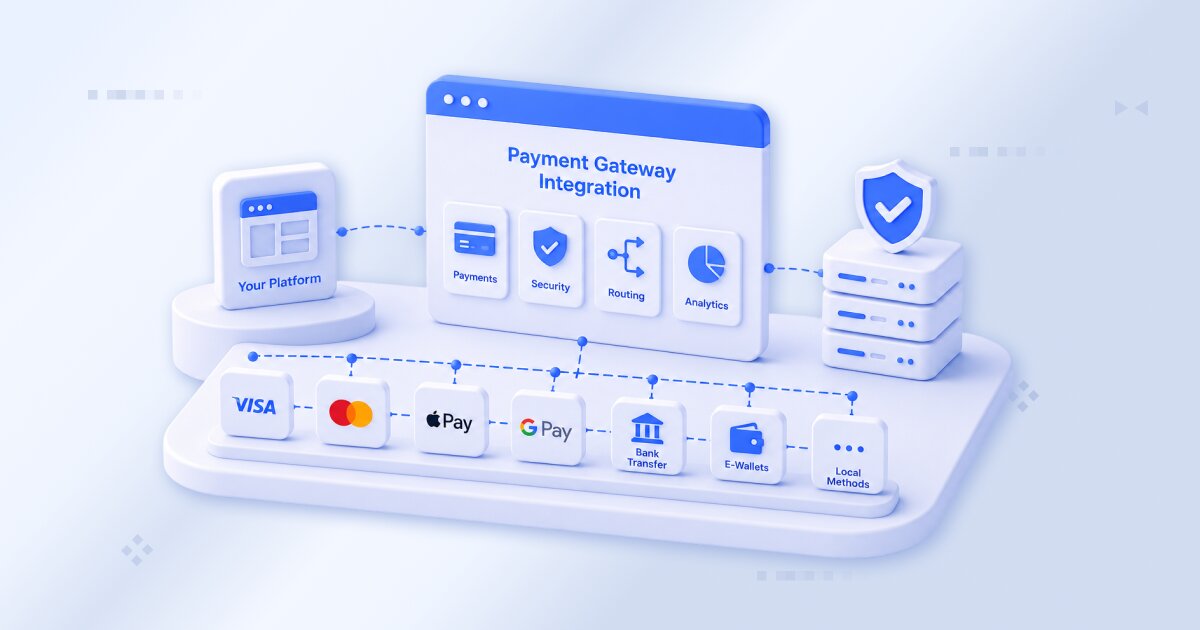

Owning a payment gateway means more than having a checkout form on your website.
TL;DR. Fintech product development succeeds or fails on the payment layer. This guide shows how a product team designs, builds, and ships a live platform, where in-house work drains time and budget, and how PayAdmit gives your team a production ready PCI DSS Level 1 payment system to embed under your own brand in weeks rather than years.
Fintech development has moved from a niche engineering exercise to a core commercial strategy. Every bank, marketplace, and software platform now wants a financial layer inside its own app, and the payment experience sits at the centre of that product. Customers expect financial services to feel native, instant, and branded, not redirected to a third-party app they do not recognise.
The pressure is real. PSP fragmentation means a single payment provider rarely covers every market a fintech platform needs. Approval rates differ by region, by card network, and by customer segment in real time. A team that ignores this fragmentation ships an app that leaks revenue on every failed transaction. A team that treats the payment layer as a first class part of fintech product development builds a solution that approves more payments, retains more users, and scales across more markets.
This is the "why now" factor. The cost of generic third-party financial services has become visible at scale. As a fintech platform grows, per-transaction fees compound, routing stays locked behind a provider, and the team loses control of the data that drives optimisation. Owning the payment stack, rather than renting it, is now the difference between a fintech business that controls its margin and one that does not.
A fintech product is software that moves, manages, or measures money for a customer. That covers a wide field of apps and financial services. What unites them is that the payment solution is not a feature bolted on at the end. It is the core that the rest of the platform is built around.
Strong fintech development starts from this premise. The user journey, the data model, and the architecture all flow from how money enters and leaves the platform. A lending app depends on disbursement and repayment rails. A marketplace app depends on split payments and payouts. A subscription app depends on recurring billing. In each case, the payment layer defines what the platform can actually do for the user.
The honest framing. A fintech platform is a payment system wearing an application. Get the payment core right, and the build of everything above it becomes far more predictable. Teams that scope a beautiful app and then discover the real complexity sits in the payment plumbing underneath are the ones whose projects stall.
Fintech product development spans several app categories, and each one places different demands on the payment solution underneath.
| App Category | Payment Demand |
|---|---|
| Neobanking | Account, card, real-time balances. Payment technology handles card issuing, top-ups, transfers, and instant notifications. The platform must feel like a real bank. |
| Lending | Moves money to the user, then collects it back on a schedule. Disbursement, repayment, and reconciliation. Both directions must be reliable; a missed repayment is a real financial loss. |
| Wallet & payment apps | Store value; let users pay, send, receive. The most payment-dense category. Routing, cascading, and real-time settlement define how the experience feels. |
| Trading & investment | Processes deposits and withdrawals at high frequency. Payment technology must approve funding fast; a declined deposit is a lost trade and a frustrated user. |
| Embedded finance / marketplaces | Collect from buyers, pay out to sellers. Split payments, payouts, per-seller settlement. Embedded finance lets non-fintech platforms add financial services as a native feature. |
Across every type, the pattern repeats. The platform is the surface; the payment system is the engine. A team that picks the right payment technology early ships a platform that performs. A team that treats payments as an afterthought rebuilds the core later. PayAdmit provides the engine for every app category above, so teams design the experience and inherit the financial services rather than building them.
Fintech product development follows a recognisable lifecycle, but each phase carries financial-grade requirements that ordinary app development does not.
The lifecycle is the same whether a team builds the payment core itself or deploys a white label solution. The difference is how much of the budget the payment layer consumes. Build it from scratch and the payment plumbing dominates. Use a ready payment system underneath, and the team spends its time on the experience that differentiates the platform.
The most valuable engineering in fintech development sits in payment orchestration. Orchestration is the logic that decides where each payment goes, in real time, to maximise the chance it is approved at the lowest cost.
A naive app sends every payment down a single path to one provider. When that provider declines or goes down, the payment is lost and the user sees a failure. A serious fintech product routes intelligently. The routing engine evaluates each payment against the card BIN, the currency, the amount, the user geography, the risk profile, and live approval statistics, then sends the payment to the provider most likely to approve it.
Cascading is the safety net underneath orchestration. When a payment fails at the first provider, the gateway cascades automatically to the next configured provider within the same checkout session, without the user knowing the first attempt failed. For a fintech platform processing real volume, a one to two percentage point lift in approval rates from cascading translates directly into real revenue.
Flowchart: a cascading payment loop
User submits payment → routing engine scores providers in real time → payment sent to optimal PSP → approved? → yes: settle and confirm to the user → no: cascade to the next configured PSP within the same session → approved? → yes: settle → no: continue the cascade or return a clean decline. Every step runs in milliseconds and stays invisible to the customer.
Building this orchestration and cascading layer is one of the hardest parts of fintech development. It needs deep payments knowledge, live provider data, and continuous tuning. Most product teams have never built it, which is why so many platforms underperform on approval rates. PayAdmit provides this routing and cascading engine as part of the payment technology, so a product team inherits years of engineering. See our payment routing infrastructure for the production shape, and companion piece how to build a payment platform for the strategic frame.
Every fintech product team eventually faces the same decision. Build the payment gateway in-house, or deploy a white label payment technology and configure it as your own. Both paths give the business a product it owns and operates under its own brand. The difference is the development cost, the timeline, and where the team spends its effort.
Two paths, one outcome
- Building from scratch. Roughly $500,000 to $1,000,000 for the first year of development and 12 to 24 months before a single live transaction. Covers core development, PCI DSS certification, acquiring connections, fraud tooling, and infrastructure. Ongoing maintenance runs 30 to 40 percent of initial spend every year.
- White label. Production ready gateway on dedicated servers, under its own PCI DSS certification, branded to your domain, in weeks. Routing, cascading, 400+ integrations, and merchant tooling already built. The developers configure and ship. The build effort goes into differentiation, not rebuilding payments plumbing.
The key insight is that both approaches give the same routing control and the same brand ownership. The white label path simply removes the two-year development burden. For a fintech development company weighing build against buy, the question is rarely about capability; it is about how to spend a finite budget. Most teams that start a from-scratch build reach a point where the estimate has doubled and the white label route was clearly the right call. Our commercial companion custom fintech software development covers the hybrid engagement in detail.
No part of fintech product development carries more risk than compliance. A platform that handles cardholder data must meet PCI DSS, and a team that ignores this until late in development pays for it in rework, delay, and exposure.
Expert insight: PCI DSS is architecture, not paperwork
Treating PCI DSS as a checklist at the end of development is the most common and most expensive mistake in fintech development. PCI DSS shapes how the platform captures card data, how it tokenises, where sensitive data lives, and which parts of the technology fall inside the certified perimeter. A product designed around PCI DSS from the first sprint ships faster and audits cleaner than one that bolts compliance on at the end.
PayAdmit operates at PCI DSS Level 1 on dedicated servers per client. When a product team deploys on PayAdmit, the cardholder data environment sits inside a certified perimeter, isolated from other operators. That removes one of the heaviest burdens from the roadmap. The developers build the platform; the payment solution carries the certification. See security and compliance for the reference posture.
Risk management is the other half of the picture. A fintech platform moving real money attracts fraud, chargebacks, and abuse. Serious development bakes risk controls into the payment layer: velocity rules, anti-fraud scoring, KYC and KYB checks, and configurable thresholds. PayAdmit integrates monitoring through providers such as ZignSec, Kount, and Paydetect via the antifraud and risk management layer, with rules the team controls.
Expert insight: build for failure, not just success
A platform looks finished when payments succeed in a demo. It is finished when it handles failure cleanly: idempotent APIs, smart retries, clean reconciliation, and a routing layer that keeps money moving when a provider wobbles. Designing for the failure path is what separates a robust product from a fragile one.
The technology decisions a product team makes early shape everything that follows. Four choices matter most.
The practical lesson is to avoid integration sprawl. Every direct provider connection a developer builds is a connection they must maintain, monitor, and update. Routing everything through one integration layer such as the payment bridge keeps the technology stack lean.
When a business hires a fintech development company, it expects more than code. It expects a partner that understands financial services, compliance, and the payment technology that makes the app work. The strongest engagements bring all three together.
A capable fintech engineering team delivers product strategy first, then technology architecture that puts PCI DSS, security, and routing at the centre rather than the edge, then the build (app, admin tooling, API layer, integrations), then the launch and the scale. A fintech platform is a live service, not a one-off project. Most companies are strong on the app and weak on payments. They can build a clean fintech app, but they have never run a routing engine, certified a cardholder data environment, or maintained 400+ provider integrations. That gap is where financial products fail.
PayAdmit closes that gap. We are not a generalist build studio; we are a payment software company that gives fintech teams the payment solution their financial product depends on. The build partner brings the app and the experience. PayAdmit brings the payment rails, the certification, and the provider network.
PayAdmit is a payment software company, not a payment service provider. We build the payment solution that sits inside your fintech app. The business owns the brand, the user relationships, the merchant accounts, and the commercial terms. PayAdmit provides the technology layer underneath.
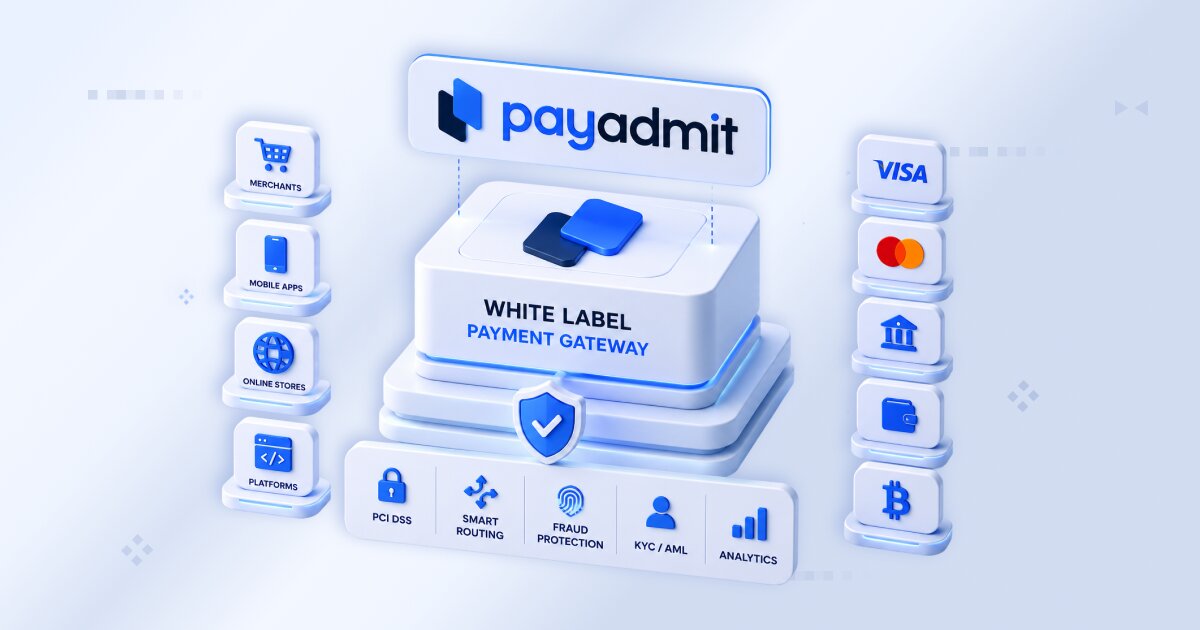
Two solutions fit most fintech development needs. White label payment gateway software deployed on dedicated servers under your PCI DSS Level 1 certification, with routing, cascading, and merchant tooling configured to your brand. Or the payment bridge that sits between your existing systems and payment providers and unifies routing, reporting, and transaction management through a single integration.
Across every deployment, the pattern is the same. PayAdmit handles the payment technology, the certification, and the provider network. The product team handles the app, the experience, and the growth. We deploy in 1 to 2 weeks, maintain the platform continuously, and add new providers or methods within one to two weeks when the platform enters a new market. Related reading: how to create an online payment system and payment infrastructure companies.
Picking a fintech product development company is one of the highest-leverage decisions you make during the fintech development lifecycle. The wrong partner ships a product that looks polished in a demo but falls apart in real user hands, and the cost of switching mid-flight in fintech development is measured in quarters, not weeks. Use the checklist below when you shortlist candidates and treat every "we can do fintech" answer as the start of a real conversation, not the end of one.
Real payment experience end to end. The best fintech product development teams do not talk about payments in the abstract. They can walk you through a real merchant onboarding, a real routing decision, a real settlement job and a real chargeback flow that they own in production today. If a fintech development company cannot describe an end-to-end financial product they have shipped, they are learning on your budget.
Compliance instincts baked into the tech. Ask how the fintech development team scopes PCI DSS on day one, how they design KYC and AML tech into the product from the first sprint, and how they use audit logs to keep the financial product defensible. A partner that treats compliance as an afterthought will hand you a fintech product that fails its first review.
A product mindset, not just a code shop. The strongest fintech product development companies push back on the roadmap. They will tell you which financial services to cut from the MVP, which user flows are not worth the tech investment, and which end-to-end journeys should ship as an internal tool for one month before real customers see them. That kind of judgement is what separates a fintech product development company from a body-shop.
A working payment stack behind the app. Real fintech development means the app you see is only the surface. Underneath it there has to be a live payment solution, real provider integrations, real observability, and a real support tech team. When you evaluate a fintech development partner, ask to use one of their existing dashboards. If the tech feels tired, your fintech product will inherit the same tiredness.
For a deeper view of the engagement models, see our companion pages on custom fintech software development, fintech solutions and software development company, and fintech development outsourcing. If your fintech product needs a dedicated team of its own, our page on how to hire fintech software developers covers rates, seniority and how to structure a real fintech development pod.
Talk to a dozen founders who shipped a serious financial product in the last two years and the same patterns show up in every conversation. None of them are secret; they are just what real fintech product development looks like once you strip out the pitch deck. Use the four patterns below as a sanity check on any fintech development roadmap you own or evaluate.
Pattern 1: The payment layer is the product. In every real fintech product we have seen, the payment tech is not one feature among many; it is the spine the entire user experience hangs off. If checkout is slow, the product feels slow. If the payment solution declines an edge-case card, the user thinks the whole app is broken. Fintech product development teams that treat payments as a real, first-class product concern ship financial services that feel effortless end to end. The teams that treat payments as a service call end up with a great fintech app on top of a mediocre payment stack, and the user always notices.
Pattern 2: The dev cycle is short and honest. Successful fintech product development runs on short iterations. Two-week sprints, real user data on staging by the end of week one, real payment traffic against a sandbox by the end of week two. A financial product that hides behind a six-month development cycle rarely survives contact with the market; a real fintech tech team learns from real user behaviour every two weeks and adjusts the product before the budget runs out.
Pattern 3: Small end-to-end wins beat big architecture bets. A common failure mode in fintech development is the "let us rebuild the ledger first" quarter that spends the whole budget on internal tech nobody outside the fintech company will ever see. The pattern that works instead: pick one real user journey end to end (a real merchant onboarding, a real payout, a real refund) and make that one journey excellent before touching anything else. Every fintech product we have shipped that grew fast started with one end-to-end journey that felt effortless to a real user, then extended the same discipline to the next journey.
Pattern 4, The fintech product development company you use for the app is not always the one you use for the payment stack. The strongest financial products in 2026 are built by a mixed team: a design-forward fintech development partner on the app, plus a dedicated payment tech company on the rails underneath. This split is not a compromise; it is the modern default. It lets the product team focus on user experience while a specialised payment services partner takes end-to-end responsibility for the payment solution, PCI DSS scope and provider tech.
Two more reads that connect directly to the patterns above: our detailed guides on fintech software developers and fintech software development services cover the people side of a real fintech product development engagement, while payment software development and payment gateway development cover the tech side in equal depth. Together they describe the shape of a fintech product development company you actually want to hire.
What is fintech product development?
The process of designing, building, and launching a platform or service that moves or manages money for users. Combines app development, payment technology, security, and compliance into one financial product.
How much does fintech development cost?
The largest cost driver is the payment layer. Building a payment gateway from scratch runs $500K to $1M in the first year plus ongoing maintenance. Using a white label payment solution removes most of that cost.
How long does it take to develop a platform?
In-house with a custom gateway typically takes 12 to 24 months before live transactions. A team that embeds a ready payment solution launches in weeks, since the payment technology and PCI DSS certification come configured.
Do I need a fintech product development company?
A build partner helps if your team lacks payment and compliance experience. The strongest financial products pair an app-focused partner with a payment software company like PayAdmit that supplies the payment services, routing, and certification.
What payment services should a fintech product support?
Most platforms need card processing, digital wallets, local APMs, bank transfers, and crypto, tuned to each user's region. A single integration to a 400+ provider network covers these without the team building each connection.
Is PayAdmit a fintech product development company?
No. PayAdmit is a payment software company. We supply the payment solution, the routing technology, and the PCI DSS Level 1 infrastructure that a financial product depends on, so your team or your chosen build partner can focus on the app and the user experience.
Launch your fintech payment solution with PayAdmit.
See the branded, PCI DSS Level 1 payment solution your team can deploy in weeks.