
Start by defining your business model: who you will process payments for, which markets you will serve, and what level of customer service you plan to offer. Secure acquiring bank relationships in your target markets. Choose your gateway infrastructure approach: build from scratch or deploy a white label solution. Complete PCI DSS certification to ensure your platform is secure from day one. Onboard your first merchants and build out your customer support and account management processes. PayAdmit’s white label gateway solution handles the infrastructure, compliance, and technical setup, letting you focus on merchant acquisition and customer service from day one.
How to Own a Payment Gateway
From First Decision to Running Your Own Payment Business
Owning a payment gateway means more than having a checkout form on your website. It means operating the payment infrastructure that processes, routes, and settles transactions, under your own brand, with your own rules, and with your own commercial relationships with merchants and acquiring banks. This guide explains how to own a payment gateway in 2026: what it actually requires, how to start, and what running your own gateway business looks like in practice.
09.06.2026
Updated:
What It Actually Means
to Own a Payment Gateway
Owning a payment gateway is a commercially precise concept that gets misunderstood frequently. Many businesses that ‘use’ a payment gateway believe they own it because they have a merchant account, a branded checkout, or their company name on the payment confirmation. They do not own it. They are customers of someone else’s gateway infrastructure, closer to a cashier payment system model where the provider runs the rails.
To own a payment gateway means your business controls the technical infrastructure that processes transactions. Your domain hosts the gateway. Your servers, or servers provisioned specifically for your business, run the payment software. Your business holds the relationship with the acquiring banks. Your gateway routes transaction data according to your rules. Your customers and merchants interact with your brand, your admin panel, and your service terms.
Owning a payment gateway also means owning the responsibilities that come with it. Security. PCI DSS compliance. Acquiring relationships. Fraud management. Chargeback handling. Merchant support. These responsibilities are significant, but so are the commercial rewards that come from accepting them.
The Ownership Distinction
When you use a third-party payment gateway, you are a customer. When you own a payment gateway, you are an operator. The difference: customers pay per-transaction fees to the gateway owner. Operators earn per-transaction fees from their merchants. At meaningful transaction volumes, the financial difference between being a customer and an operator is substantial, even after accounting for white label payment gateway pricing.
Who Should Own Their Own Payment Gateway
Owning a payment gateway makes commercial sense for a specific set of business types. The common thread is either high transaction volumes, the ambition to offer payment processing services to others, or both.
Payment Service Providers (PSPs)
A PSP’s core product is payment processing services. Owning your own gateway is the only way to deliver those services under your own brand, at your own margins, without dependence on a third-party infrastructure you cannot control. If you are building a PSP, owning your gateway is not optional, it is the business.
Banks and financial institutions
Banks that want to offer digital payment gateway services to business customers need their own gateway to do it credibly. A bank-branded payment gateway gives business clients a familiar, trusted service backed by the bank’s regulatory standing. Owning the gateway means owning the customer relationship.
iGaming and digital entertainment operators
Gaming businesses that own their own payment gateway process player deposits and withdrawals through their own infrastructure. They control routing across multiple acquiring banks, manage their own fraud rules, and keep the transaction margin that would otherwise go to a third-party gateway provider.
Large e-commerce platforms and marketplaces
High-volume e-commerce businesses that own their payment gateway pay no per-transaction fees to a third party. They control checkout experience, own transaction data, and earn on every merchant payment they process for third-party sellers on their platform.
Fintech startups and embedded finance products
Fintech businesses building financial services products often need payment gateway capabilities as a core service component. Owning the gateway, rather than integrating a third-party solution, keeps the full value chain within your business.
The Business Case: Revenue and Cost Structure of Your Own Gateway
The financial case for owning your own payment gateway is clearest when you model the margin structure. Here is how the economics work:
How Revenue Is Generated
Your own payment gateway generates revenue through the spread between the cost of processing each transaction and the fee you charge your merchants. This spread, called the basis point margin, multiplied across your total transaction volume is your gateway revenue. You also earn on other service components: monthly platform fees, setup fees, chargeback handling fees, and premium service tiers.
| Revenue Stream | How It Works | Scale Potential |
|---|---|---|
| Transaction margi | Buy rate from acquirer minus sell rate to merchant | Grows linearly with volume |
| Monthly platform service fee | Flat fee per merchant per month | Grows with merchant count |
| Setup and onboarding fee | One-time fee per merchant | Grows with new merchant acquisition |
| Chargeback service fee | Fee for dispute management service | Depends on merchant category mix |
| Premium service tier | Higher fee for custom routing, reporting, dedicated support | Higher-value merchant relationships |
Cost Structure of Your Own Gateway
The primary cost categories of owning a payment gateway are infrastructure, compliance (PCI DSS certification and annual maintenance), acquiring fees (the buy rate on each transaction), fraud management, and merchant operations. At scale, transaction margin revenue significantly exceeds these costs, the challenge is reaching scale while managing early-stage overhead.
How to Start Your Own Payment Gateway
Starting your own payment gateway is a structured process with clear phases. How to start your own payment gateway efficiently depends on the approach you take, build from scratch or deploy a white label solution. Both paths have the same destination: your own production payment gateway. The timeline and cost are very different.
1. Define your business model
Decide what your payment gateway will do and for whom. Are you processing your own transactions, or offering gateway services to merchants? What markets will you serve? What payment methods do your customers expect? The answers shape every technical and commercial decision that follows.
2. Secure acquiring relationships
Your own payment gateway needs at least one acquiring bank relationship to process card transactions. Acquiring relationships take time to establish, start this process before your gateway is built. Most businesses that own gateways maintain relationships with multiple acquirers to enable routing and redundancy.
3. Choose your tech approach
Decide whether to build your own gateway from scratch or deploy a white label gateway solution. Building from scratch takes 12–24 months and costs $500K–$1.5M. Deploying a white label solution takes 1–2 weeks. Both give you a gateway you own. Only one is commercially viable for most businesses.
4. Set up your payment infrastructure
Deploy your gateway software on dedicated servers. Configure your own domain, branding, and payment pages. Connect to your acquiring banks and payment method providers. Establish your routing logic and cascade rules.
5. Complete PCI DSS certification
Your own payment gateway must be PCI DSS certified before processing live card transactions. Working with pre-certified infrastructure reduces the certification timeline significantly. PCI DSS Level 1 certification, required for high-volume gateways, involves an annual audit by a Qualified Security Assessor.
6. Launch and grow your merchant base
Your gateway goes live. Start onboarding merchants. Monitor transaction performance, approval ratios, and chargeback rates. Optimise your routing rules based on live transaction data. The gateway infrastructure is the foundation, growing a merchant portfolio on top of it is the business
Your Own Gateway’s Core Technical Components
Every payment gateway that businesses own and operate contains the same core technical components. Understanding these components helps you evaluate any gateway solution against your business requirements.
Transaction Processing Engine
The heart of your own payment gateway is the transaction processing engine. This component receives payment requests, applies your routing logic, communicates with acquiring banks and payment service providers, and returns authorisation responses. The processing engine must handle high transaction volumes with sub-second latency and 99.99% uptime. Your merchants’ payment experience depends entirely on this component’s performance.
Card Data Vault and Tokenisation Service
Your own gateway requires a secure card data vault for storing customer payment credentials. When a customer makes a payment, their card details are captured, encrypted, and replaced with a token, a non-sensitive identifier that represents the card. Your gateway uses this token for all subsequent transactions, recurring payments, and saved-card scenarios. Raw card data never persists beyond the initial secure capture.
Routing and Cascade Engine
Your routing engine is what makes a payment gateway commercially powerful. Rules direct each transaction to the provider most likely to approve it at the best cost. Cascade logic automatically retries declined transactions through alternative providers, improving approval ratios by 5–15 percentage points compared to single-provider setups.
Merchant Management System
If your gateway serves multiple merchants, you own a merchant management system too. It handles merchant onboarding with KYC/KYB checks, individual configuration, transaction reporting, and settlement management. Its quality determines how efficiently your operation scales as your merchant base grows.
Reporting and Settlement Dashboard
Your own payment gateway generates transaction data that both your business and your merchants need to access. The reporting dashboard provides real-time transaction monitoring, settlement reconciliation, approval ratio analytics, and custom report generation.
How to Secure Your
Own Payment Gateway
Security is the most fundamental operational responsibility of owning a payment gateway. Your merchants trust you with their payment processing. Your customers trust you with their card data. The security infrastructure you maintain is the foundation of both relationships.
PCI DSS certification
PCI DSS Level 1 is the standard for high-volume card processing. Annual audits, quarterly scans, and ongoing compliance maintenance are non-negotiable for any gateway you own.
Encryption and tokenisation
Card data must be encrypted at capture. Tokenisation must be applied before storage, raw card numbers should never persist in your system after secure capture.
Antifraud systems
Your gateway needs configurable fraud screening. Rule-based systems check transactions against risk thresholds. AI-driven scoring analyses patterns across transaction history to catch sophisticated fraud.
24/7 security monitoring
Your own payment gateway must be monitored continuously. Transaction anomalies, API abuse, and security events need automated detection and immediate escalation.
Access control and MFA
Every admin user must authenticate with MFA. Role-based access limits what each user can see and do. All privileged actions must be logged for audit.
DDoS protection and uptime
Your gateway is a target. DDoS mitigation, load balancing, and geographic redundancy are infrastructure requirements for any gateway operating at scale.
Card Processing: How to Set Up Your Own Gateway for Card Payments
Card payment processing is the most technically and commercially demanding capability of any payment gateway. Here is how to set up your own gateway to process Visa and Mastercard transactions:
Acquiring Bank Relationships
To process card payments through your own gateway, you need acquiring relationships. Acquirers provide access to card networks and process transactions on behalf of your merchants. Owning a gateway gives you direct acquiring relationships rather than sub-merchant status under someone else’s account, this is a significant commercial upgrade. Direct acquiring relationships mean better rates, more control over risk parameters, and the ability to set your own service terms with merchants.
Card Network Compliance
Your own gateway must comply with Visa and Mastercard operating rules. These rules govern card data handling, transaction formatting, dispute processes, and customer authentication requirements. Card network rules are updated regularly, maintaining compliance is an ongoing operational responsibility of gateway ownership.
3D Secure 2 Implementation
3DS2 is the strong customer authentication standard required for card-not-present transactions in regulated markets, particularly in Europe. Your own gateway must implement 3DS2 to authenticate customers for high-risk transactions. Properly implemented 3DS2 reduces fraud liability and, for most merchants, improves approval rates for legitimate transactions.
Multi-Currency Card Processing
A payment gateway that processes cards in a single currency is limited in its market reach. Your own gateway should support multi-currency card processing from the start. This means connecting to acquirers that support your target currencies, implementing dynamic currency conversion where relevant, and ensuring your merchant settlement process handles multi-currency payouts accurately.
Ready to own your payment gateway?
PayAdmit deploys fully owned, branded the best payment gateways in 1–2 months, PCI DSS Level 1 certified, 400+ payment methods, your domain.
Customer Experience
in Your Own Gateway
The customer experience your payment gateway delivers is as important as its technical performance. A gateway that processes transactions reliably but presents a poor checkout experience costs your merchants conversion, and costs you merchant satisfaction and retention.
Custom Branded Checkout
Your own gateway means your brand at every stage of the customer payment journey. The checkout page, the payment confirmation, the decline message, the receipt, all carry your visual identity. Customers and merchants never see the underlying infrastructure provider. This brand consistency builds trust and reinforces your payment service as a premium commercial offering.
Mobile-Optimised Payment Experience
More than 60% of e-commerce transactions occur on mobile devices in most markets. Your own gateway must deliver a mobile-first payment experience, card capture forms optimised for mobile keyboards, Apple Pay and Google Pay one-tap payment options, and fast page loads on mobile connections. A mobile checkout that is slow or hard to use loses transactions that your routing engine would have approved.
Localised Payment Options
Customers convert at higher rates when they see familiar, trusted payment methods. Your own gateway should present locally preferred options based on customer geography, iDEAL in the Netherlands, MB Way in Portugal, UPI in India, local bank transfers in Southeast Asia. Local payment coverage is a customer experience advantage merchants value commercially.
How to Manage Merchants
on Your Own Gateway
If your gateway serves external merchants, rather than just your own transactions, merchant management becomes one of your core operational functions. How well you manage merchants determines your gateway’s retention rates, your chargeback exposure, and your regulatory standing.
Merchant Onboarding and KYB
Every merchant you onboard to your own gateway must be verified through KYB, Know Your Business, checks. This involves confirming the merchant’s legal entity, beneficial ownership, business model, and transaction history. KYB is both a regulatory requirement and a commercial risk management process. Merchants that fail KYB checks are the merchants most likely to generate chargebacks, trigger AML alerts, and damage your gateway’s processing relationships.
Risk-Based Merchant Categorisation
Not all merchants carry the same processing risk. Your own gateway should segment merchants by risk category, low-risk standard merchants, medium-risk businesses in elevated-fraud verticals, and high-risk merchants in categories like gaming, crypto, or adult services. Each segment gets different fraud rule configurations, chargeback monitoring thresholds, and commercial terms. Risk-based segmentation protects your acquiring relationships and your gateway’s overall processing reputation.
Ongoing Transaction Monitoring
Merchant monitoring does not end at onboarding. Your gateway must continuously watch each merchant’s transaction patterns, sudden volume spikes, unusual card geographies, elevated decline rates, or chargeback ratios approaching scheme thresholds. Early detection protects your gateway, your acquirers, and the legitimate merchants on your platform.
Owning a Payment Gateway vs. Reselling One
A common source of confusion in the payment industry is the distinction between owning a payment gateway and reselling access to someone else’s. Understanding this distinction is important for any business considering the gateway ownership path.
| Branding | Your brand exclusively | Your brand exclusively |
|---|---|---|
| Commercial control | You set all commercial terms | You set all commercial terms |
| Transaction data | Your business owns all data | Your business owns all data |
| Routing control | Your custom routing rules | Your custom routing rules |
| Acquiring relationships | Your own direct acquiring | Your own direct acquiring |
| Margin structure | Full spread between buy and sell rate | Full spread between buy and sell rate |
| Operational dependency | Your own infrastructure | Your own infrastructure |
Reselling has a lower barrier to entry, it is faster and cheaper to start. But owning your own gateway captures significantly more value per transaction and builds a more defensible business. Resellers are replaceable. Businesses that own their payment gateway are not, they have built the infrastructure that merchants depend on.
Running Your Own Payment Gateway: Day-to-Day Operations
Owning a payment gateway is not a set-and-forget exercise. Running your own gateway requires ongoing operational attention across several functions.
- Transaction monitoring: Real-time oversight of approval ratios, decline rates, and processing volumes across all merchants and acquiring connections.
- Routing optimisation: Review and refine routing rules regularly based on live performance data, approval ratios by provider, card type, and geography change over time.
- Merchant support: Handle questions about transactions, integration, and reporting. Response quality directly affects merchant retention
- Chargeback management: Disputed transactions require timely responses. A chargeback ratio above card scheme thresholds risks processing restrictions.
- Compliance maintenance: PCI DSS annual re-certification, quarterly network scans, and security patch management are ongoing operational requirements.
- Provider relationship management: Maintaining acquiring relationships, rate negotiations, volume commitments, performance reviews, is part of running a gateway business.
Your Own Gateway for Different Business Verticals
The way you run your own payment gateway differs meaningfully based on your business vertical. Here is a practical perspective on gateway ownership across the sectors PayAdmit serves:
iGaming, Your Own Gateway for Player Transactions
Gaming operators that own their gateway control every aspect of the player payment experience. Your own payment gateway for iGaming gives you routing flexibility across multiple acquirers, which is essential when individual acquirers experience approval ratio problems in specific player markets. Your own fraud rules are calibrated for gaming transaction patterns. Your own chargeback management handles the dispute volumes that characterise the gaming vertical.
Banking, Your Own Gateway for Business Clients
A bank that owns its gateway can offer business clients a genuinely branded, bank-standard payment processing service. Your own payment gateway for banks carries your institution’s trust and regulatory standing at every customer touchpoint. The service generates transaction revenue while deepening the business client relationship.
Marketplace, Your Own Gateway for Split Payments
A marketplace that owns its payment gateway for marketplace operations controls the full payment experience for buyers and sellers. Your own gateway processes buyer payments, holds funds in escrow, and distributes payouts to sellers according to your marketplace rules. Owning the gateway eliminates the marketplace platform fee that third-party payment services charge on every transaction you route through them.
PayAdmit: The Fastest Way to Own Your Payment Gateway
PayAdmit provides white label payment gateway solutions that give businesses full ownership of their payment infrastructure in 1–2 months. Your own domain. Your own brand. Your own admin panel. Your own transaction data. Your own acquiring relationships. Your own commercial terms with merchants.
We have spent 10+ years building payment gateway infrastructure for PSPs, banks, iGaming operators, and fintech businesses. Our platform is the result of that experience, a production-grade payment gateway with 400+ payment method integrations, PCI DSS Level 1 certification, smart routing and cascade logic, AML/KYC compliance workflows, and a full merchant management system, ready to deploy as your own.
What Comes With Your Own PayAdmit Gateway
Your own domain and branded payment pages. Dedicated server infrastructure. 400+ payment methods including Visa, Mastercard, Apple Pay, Google Pay, SEPA, local APMs, and crypto. PCI DSS Level 1 certification included. Smart routing and cascade logic configurable from your admin panel. AML, KYC, and antifraud tooling built in. Merchant onboarding and management system. Real-time reporting and settlement reconciliation. 24/7 support from payment specialists who have built and operated gateways across 40+ markets.
We also go beyond deployment. Our team connects you with potential merchants directly, because owning a payment gateway is the foundation, not the finish line. The commercial value comes from the merchant base you build on it. We understand both sides of that equation and work with you on both.
If owning the gateway is the first step and running a licensed operator is the goal, our walkthrough on how to create a payment processing company covers the rest of the journey.
Frequently Asked Questions
How to start your own payment gateway business?

Do I need a banking licence to own a payment gateway?
No. A payment gateway is software and owning it does not require a banking licence. You do need acquiring bank relationships to process card transactions, and those banks hold the relevant processing licences. In some jurisdictions, providing payment services commercially may require a payment institution or e-money licence. Your development approach also matters: building custom software from scratch triggers different regulatory obligations than deploying a pre-built platform. Consult a legal adviser familiar with your target market’s requirements.
How much does it cost to own a payment gateway?
Owning a gateway built from scratch costs $500K to $1.5M in the first year including development, certification, and infrastructure. The annual maintenance cost is typically 30 to 40 percent of that figure. Web infrastructure, security systems, and ongoing compliance programmes add to the total cost of ownership over time. Owning a gateway via PayAdmit’s white label solution costs a fraction of the custom build price, deploys in 1 to 2 weeks, and includes PCI DSS certification and ongoing maintenance.
How secure is your own payment gateway?
A properly deployed payment gateway can be extremely secure. To make it secure, you need PCI DSS Level 1 certification, end-to-end encryption, tokenisation of all card data, 24/7 monitoring, and AI-driven fraud screening. The key is building each security layer into the platform from the architecture stage rather than adding it after the fact. PayAdmit’s platform is PCI DSS Level 1 certified, SOC 2 Type II audited, and includes DDoS protection, MFA access controls, and round-the-clock security monitoring as standard. Every customer transaction is protected at every stage of processing.
Can your own payment gateway process cards from any country?
Yes, if you have the appropriate acquiring relationships. Card processing in different regions requires connections to local acquirers or processors with coverage in those markets. Keeping your customer experience consistent across geographies also requires local payment method coverage and multi-currency support. PayAdmit’s platform connects your gateway to payment providers across 40 or more markets through pre-built integrations, so your gateway can process card transactions globally and deliver a localised customer payment experience from launch day.
What is the difference between having your own gateway and having a merchant account?
A merchant account allows a business to accept card payments through someone else’s processing infrastructure. The customer service relationship, the transaction data, and the processing margin all belong to the infrastructure provider. Having your own payment gateway means you own the processing infrastructure itself: the software, the routing logic, the merchant management system, and the customer service layer. Merchants open accounts on your gateway. You hold direct relationships with acquiring banks and earn on every transaction your merchants process. The difference is the difference between being a customer and being an operator.
How do you manage chargebacks on your own gateway?
Chargebacks are initiated when a customer disputes a transaction with their card-issuing bank. As a gateway operator, you are responsible for managing chargeback responses on behalf of your merchants. This involves collecting transaction evidence, submitting rebuttals through your acquirer, and maintaining chargeback ratios below card scheme thresholds. A secure and well-documented transaction record for each customer payment is your primary defence in any dispute. Your gateway’s merchant management system should include chargeback tracking, workflow tools, and customer dispute history to make this process manageable at scale.
ADDITIONAL RESOURCES
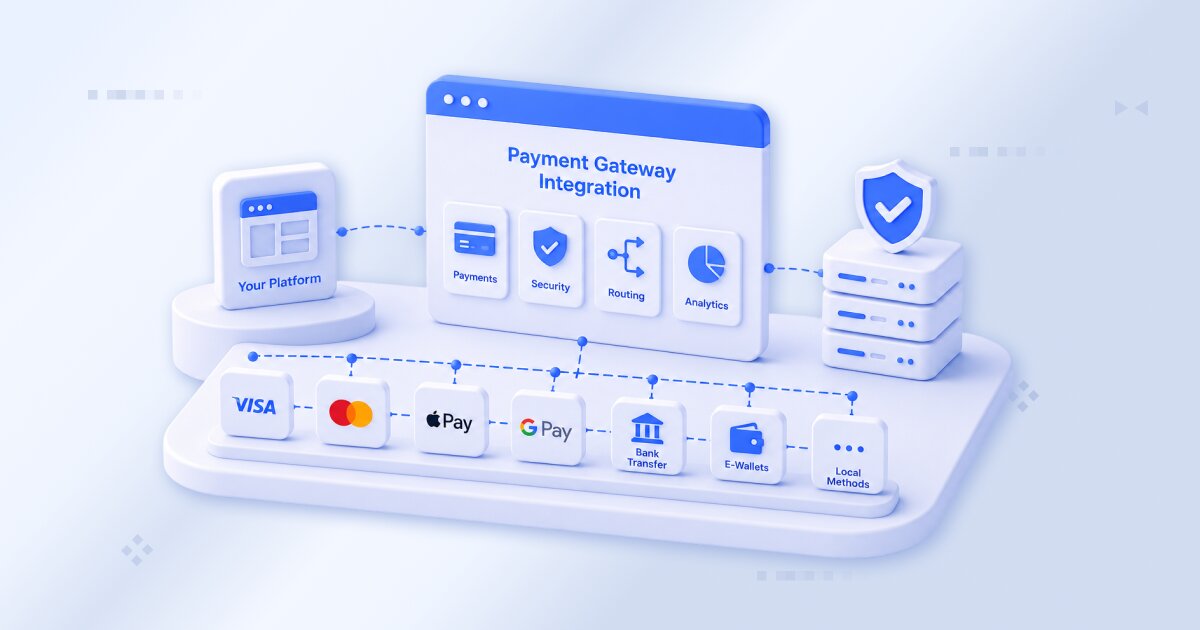
Payment Gateway Integration Services
Payment gateway integration services are the technical and operational work that connects your business systems, your website, app, or platform, to the payment infrastructure that processes transactions.
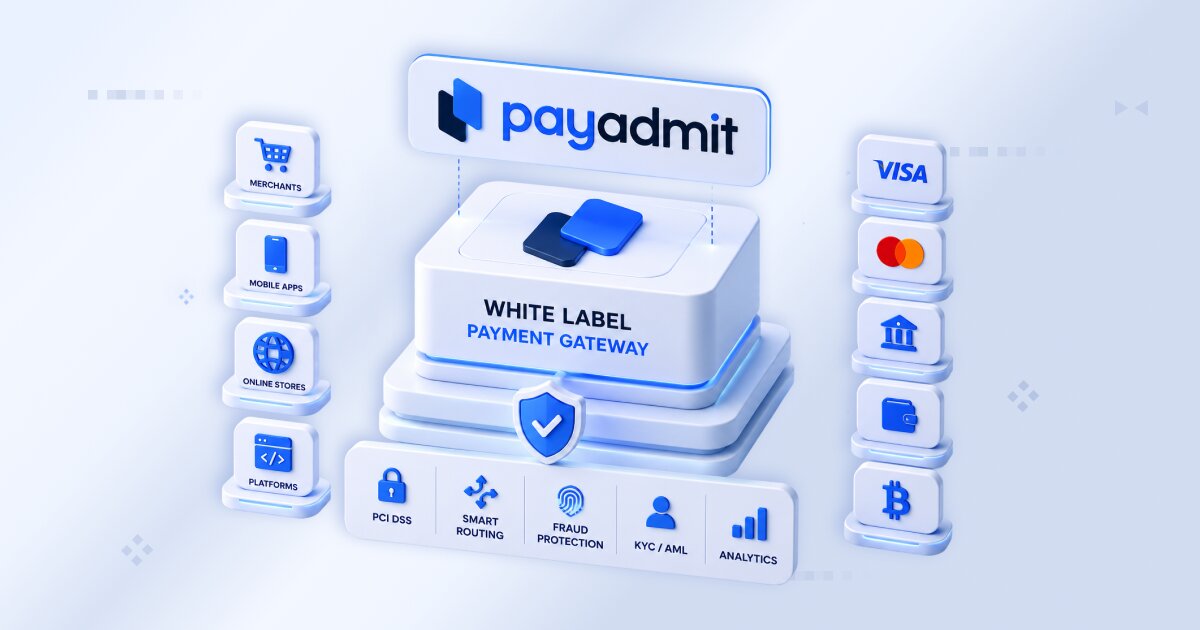
What Is a White Label Payment Gateway
In plain terms: someone else builds the engine. You put your name on the hood, set the rules, and keep the revenue.

How to develop payment gateway
Developing a payment gateway is one of the most technically demanding projects in fintech.