
Owning a payment gateway means more than having a checkout form on your website.
TL;DR. Most guides on building a payment platform jump straight to architecture. This one starts earlier. Before you draw a single component diagram, decide whether you actually need a platform, scope the MVP that a small team can ship, budget honestly, pick the two or three metrics that will define success, and design an operating cadence that survives contact with real transaction volume. Get those five decisions right and the architecture almost writes itself.
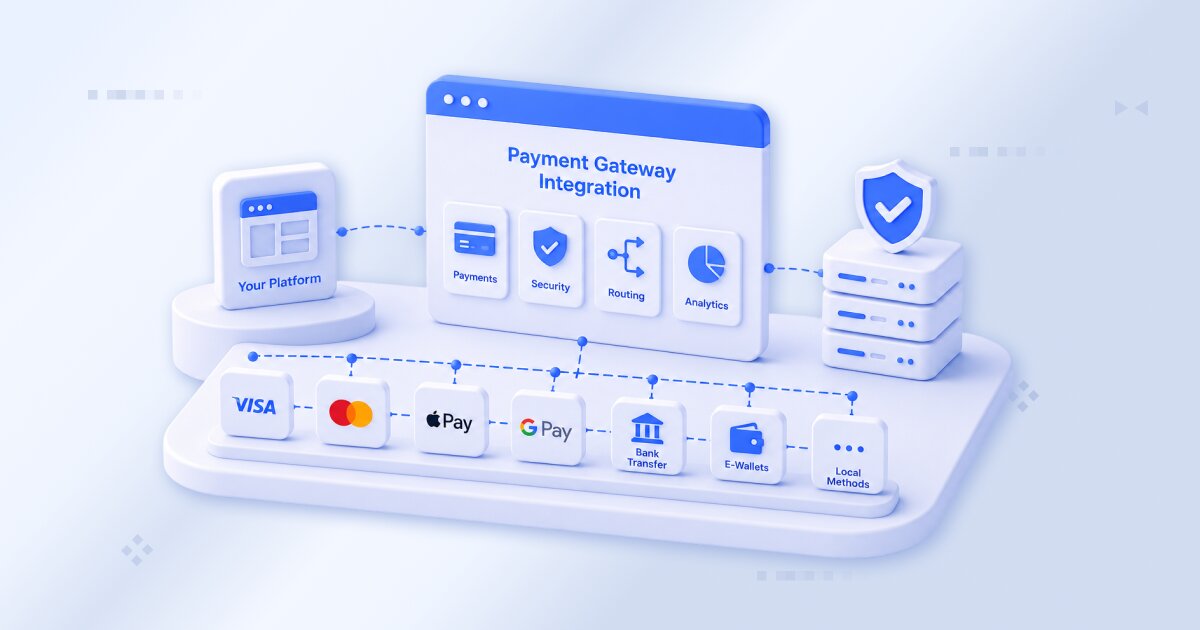
The word "platform" gets used loosely in fintech, so it pays to be precise. A payment gateway takes a transaction from a checkout, sends it to an acquirer, and returns a result. A payment platform does that plus everything around it: onboards merchants, keeps a ledger, orchestrates across many providers, monitors risk, reconciles settlements, and gives compliance the audit trail regulators will ask for.
Teams often try to ship a gateway and call it a platform. That works for one merchant. It falls apart at the second or third, because gateway thinking optimises for the single transaction and platform thinking optimises for the operating model. If your roadmap only ever serves one integration in one market, gateway thinking is fine. If you plan to grow across merchants, methods, or regions, you need the platform frame from day one.
The practical test: ask what breaks first as you scale from one merchant to fifty. If the answer is "we would need to rewrite reconciliation, add per-merchant configuration, and change the ledger model," you were building a gateway. If most of those already exist in a rough form, you were building a platform.
| Shape | What it owns | Who ships this |
|---|---|---|
| Gateway | A single checkout to a single (or small set of) acquirer paths. Focused on transaction success rate and uptime. | SaaS teams embedding payments, single-merchant operators. |
| Orchestrator | Multi-acquirer routing, cascading, method selection, and reporting across many rails. Sits above a set of gateways. | PSPs, marketplaces, high-volume merchants optimising approval rates. |
| Platform | The full operating layer: merchant onboarding, KYC/KYB, ledger, orchestration, reconciliation, compliance, disputes, and multi-tenant configuration. | New payment companies, banks extending into merchant acquiring, embedded finance operators serving many customers. |
The right shape for you is the smallest one that covers what your merchants will actually need in the next 18 months. Building a full platform when your only merchant is yourself burns capital. Building a gateway when the roadmap needs multi-tenant support burns time later. Pick honestly. If you want a deeper look at the surrounding organisation, our commercial how to build a payment system reference walks the architecture side.
Every payment platform team overestimates what has to ship on day one. A useful discipline is to write a two-column list. On the left, everything the roadmap will eventually need. On the right, only what the first three merchants demand within their first ninety days. The right column is the MVP.
Six things that usually stay for MVP
- Authorise, capture, refund, void. The four verbs every platform starts with, all idempotent from the first commit.
- One acquirer path per method. Multi-acquirer cascading is a phase two concern. Ship one clean path first.
- A ledger that reconciles daily. Even a simple one, as long as it balances.
- Merchant dashboard read-only. Give merchants visibility before you give them controls.
- Webhooks and a single SDK. Reliable delivery on one language matters more than five half-shipped SDKs.
- Manual dispute workflow. Automate later; a shared inbox and a runbook are enough for the first three merchants.
Six things that usually get cut from MVP
- Multi-currency settlement (unless it is your first market)
- Mobile SDKs (unless your first merchant is mobile-native)
- Automated onboarding (a two-week manual pipeline is fine at three merchants)
- Advanced fraud rules (buy a screening service, tune it later)
- Self-serve pricing changes (a support ticket works for now)
- Regional payment methods beyond the launch market
Every item cut from MVP buys weeks of engineering time that you can spend on the ledger, on cascading, or on the operational discipline that will decide whether you scale.
A common failure mode is to hire generalist engineers and hope they pick up payment domain knowledge as they go. It works occasionally. More often the team ships something that passes tests and fails the first PCI audit. Sizing and shaping the team matters as much as the code.
| Role | Owns | Where to compromise |
|---|---|---|
| Payment architect | The ledger model, the state machine, the idempotency story, and the integration pattern. | Never. This is the one role you cannot outsource. |
| Backend engineers (2 to 4) | API, orchestration, connector implementations, reconciliation jobs. | You can start with two and grow; keep at least one with prior payment experience. |
| Frontend / mobile | Merchant dashboard, checkout SDK, embedded widget. | One person can carry this to MVP if the design system is picked, not invented. |
| Security / compliance lead | PCI scope, KYC/KYB integrations, sanctions screening, audit trail. | Fractional is fine at MVP if the person is genuinely senior. Full-time by month six. |
| Operations / merchant support | Onboarding, dispute handling, incident response, the runbook. | Usually the last hire and the most underestimated. Bring them on before general availability, not after. |
| SRE / observability | Distributed tracing, alerting, on-call rotation. | Can be a backend engineer wearing a second hat for the first six months. |
For a deeper look at the hiring side, see our companion piece how to hire fintech software developers, which covers engagement models and region-based cost.
If one component decides whether a payment platform lasts five years or five months, it is the ledger. Everything else can be rewritten under pressure. A ledger that lost transactions or diverged from bank statements cannot be undone.
Double-entry from day one. Every transaction is a matched pair of postings, so the platform can always answer "where did the money go" without guessing. Teams that use a single-entry event log spend the next two years reconstructing the truth.
Immutable posting, mutable status. Once written, a ledger entry never changes. Adjustments happen as new entries that reference the original. This makes audit trivial and disputes tractable.
Reconcile on schedule, not on demand. A daily job that matches ledger against bank statements catches drift within twenty-four hours. Weekly matches accumulate discrepancies that get lost in the noise.
Separate money movement from money accounting. The orchestration engine tells the acquirer to move funds. The ledger records the intention and the outcome separately. Conflating the two creates race conditions that only show up under load.
Design for chargebacks and reversals early. A ledger that only handles forward flow needs surgery when the first chargeback lands. Model the reverse case from the start.
The ledger is the least glamorous component and the highest leverage one. Every hour spent on ledger design in month one saves a week of firefighting in year two.
Most teams building a payment platform underquote themselves by roughly a factor of two. A reference budget for an operator shipping MVP on top of a licensed core, then growing to multi-market operations:
| Phase | Duration | Approx budget (USD) | What it buys |
|---|---|---|---|
| MVP on white label core | 1 to 3 months | $150K to $400K | Configured platform, brand customisation, first three merchants live. |
| MVP from scratch | 9 to 15 months | $1.2M to $3.5M | Full custom build, PCI audit, initial acquirer integrations. |
| Multi-acquirer & cascading | +3 to 6 months | $200K to $600K | Routing engine, per-merchant policy, approval-rate uplift. |
| New market expansion | Per market | $100K to $400K | Local methods, local acquirer, local compliance mapping. |
| Steady-state platform ops | Annual | 15 to 25% of build cost | Maintenance, compliance renewals, tech-debt paydown, incident response. |
The unit economics that matter later are simpler: cost per transaction (fully loaded, including support and reconciliation), gross margin per merchant, and payback period on merchant acquisition. Track these three from the first live payment. Vanity metrics like "transactions processed" do not decide whether the business survives.
Every payment platform is a stack of decisions about what to own and what to buy. The trap is treating all buy-decisions the same. A KYC provider and an acquiring bank are both vendors, but the cost of switching them differs by an order of magnitude.
For the connector layer specifically, a payment middleware and gateway integration layer is what turns "we integrated one bank" into "we can add banks as configuration."
Dashboards fill up with metrics. Very few of them change decisions. Three do:
Cascading uplift, chargeback rate, dispute win rate, and MRR per merchant are useful secondary metrics. Everything else is noise until the platform is at scale. Our payment routing infrastructure page covers how routing decisions move the first two of these.
Launch is the easy part. The operating cadence that follows is what separates platforms that scale from platforms that stall.
Daily. Reconciliation match. Overnight incident review. Alert triage. Payment volume review.
Weekly. Approval-rate review across acquirers and methods. Dispute queue review. On-call handover with lessons learned.
Monthly. Merchant health review (churn signals, volume trends). Cost per transaction review. Tech-debt paydown time boxed on the sprint.
Quarterly. Compliance posture check. Vendor performance review. Roadmap re-scoping against real merchant demand rather than internal wish list.
Annually. PCI attestation. External security review. Business continuity exercise. Multi-region failover drill.
Payment platforms that publish this cadence internally and stick to it survive year two. Platforms that treat operations as ad hoc do not.
"We need microservices from day one." No. A well-structured monolith with clean module boundaries ships MVP faster and refactors into services later once traffic and team size justify it.
"Building it ourselves is cheaper long term." Only if you sustain a payments engineering group of at least 8 to 12 people. Below that headcount, licensing beats building on total cost of ownership.
"We can add compliance later." Retrofitting PCI scope reduction, KYC, and audit trails costs three to five times more than designing them in from the start.
"One acquirer is enough at launch." Fine as an MVP choice, but the second acquirer should already be signed by month six. Concentration risk is a real category of business risk.
"Cascading is a phase-two feature." Design the interface for it from day one even if you only ship the trivial single-path implementation initially. Retrofitting cascading later means touching every payment flow.
"We can outsource operations." You can outsource tier-one support. You cannot outsource the judgement calls on chargebacks, fraud escalations, and merchant relationship recovery. Those stay in-house or the merchants leave.
Every technology decision has an exit ramp, even ones you never plan to take. A payment platform built on a licensed core reaches a natural inflection point when the operator is large enough that in-house engineering becomes cheaper than platform fees. Recognising that point matters more than avoiding it.
The rough signals:
Even then, migration is a two-year project, not a rewrite sprint. The pragmatic path is to route new functionality through the in-house build while the licensed platform runs the existing traffic; over 18 to 24 months the split shifts. Nobody wins a "big bang" payment migration.
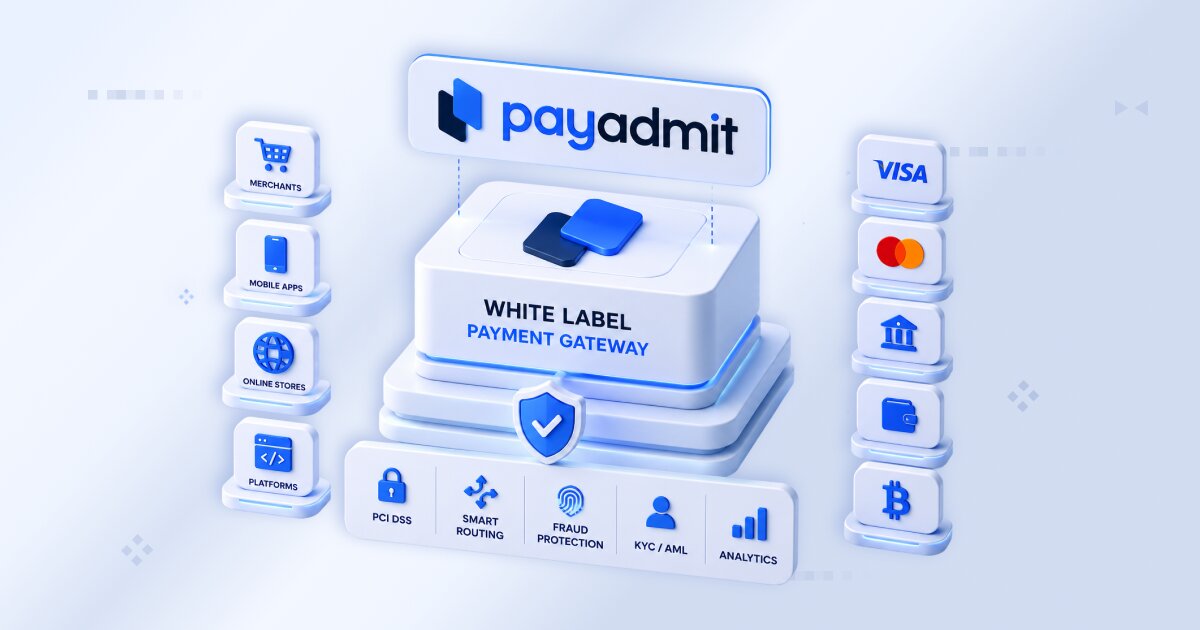
PayAdmit is a white-label core built for teams that want to spend their engineering budget on differentiation rather than plumbing. Instead of funding 12 to 18 months of PCI-scoped infrastructure work, you inherit an already certified platform and put your team on the merchant-facing product and the orchestration logic that decides your margin.
The PayAdmit Bridge gives you multi-acquirer connectivity through a single integration and cascading from day one. Custom fintech software development covers the layer where your product actually differs from every other operator. Together they compress the launch curve from years to months while leaving room for the differentiation the platform frame requires.
Related reading if you are still shaping the business: how to create a payment processing company covers licensing, banking, and the go-to-market side; payment infrastructure companies surveys the wider market.
Half the design work on a payment platform is API design. The other half is app design. Merchants judge the platform by the API they integrate against and by the app screens their operations team uses every day. Both surfaces need the same discipline: predictable naming, consistent transaction states, honest error messages, and an on-ramp that a new developer can absorb in one sitting.
Good payment API design starts from the transaction lifecycle. Every payment moves through a small number of states (authorised, captured, refunded, disputed, settled) and the API should expose them in exactly those terms. When teams invent bespoke states to match internal implementation details, integrators struggle for months. When the API mirrors the domain, integration effort collapses to a couple of afternoons.
The merchant app should follow the same design principle. Payment operators use the app to search transactions, resolve exceptions, and answer support tickets. Every extra click during a chargeback investigation costs money. A single screen that shows the transaction, the customer, the risk signals, the connected bank movements and the raw API events wins more merchant loyalty than any pricing tweak. This is where app design directly moves platform economics.
Two design principles are worth internalising early. First, one canonical transaction ID that follows the payment end to end across every surface: API responses, merchant app, ledger entries, bank statements, webhook events. Second, one unified event stream that the app renders and the API emits: no dual sources of truth. Payment platforms that violate either rule spend the next year reconciling their own systems against themselves.
Payment API design also determines how easily third-party apps can plug in. A well-designed platform ships a stable REST surface, a webhooks contract, and one or two SDKs. Everything else (no-code plugins, ecommerce app integrations, ERP connectors) is downstream of that core. Get the core payment API design right and the plugin ecosystem grows for free. Get it wrong and every online integration turns into a bespoke development project.
Transaction processing at scale is a data design problem before it is a throughput problem. Most payment platforms slow down not because their servers are underpowered but because the data model was drawn for a hundred transactions per day and is now servicing a hundred per second. Getting the data model right in the first months is the single highest-leverage design decision on the platform.
Model each payment as an aggregate root that owns a small set of child entities: the authorisation, the captures, the refunds, the disputes, the settlement records, and the risk decisions. Every child entity is immutable and time-stamped. The aggregate exposes derived state (current status, outstanding amount, next expected action) computed from its children. This design lets the platform replay any transaction to any point in time, which is the property regulators, auditors and merchants all end up asking for.
On the data-plane side, the payment platform should separate the operational store (the source of truth for live transaction processing) from the analytical store (the warehouse the reporting app queries). The operational store is optimised for one payment at a time, indexed by transaction ID and merchant ID. The analytical store is optimised for cohorts and time ranges. Trying to serve both workloads from one database is the number-one design mistake in early-stage platforms.
Transaction data has one non-negotiable property: it must be idempotent to write and safe to replay. Every incoming payment request carries an idempotency key; every outbound bank call carries an idempotency envelope; every internal event carries a deterministic ID. When a network blip causes a duplicate request, the platform absorbs it silently instead of processing the same payment twice. Payments that get processed twice are the fastest way to destroy merchant trust.
Throughput scaling is downstream of that design. Partition the transaction table by merchant. Cache read-heavy views. Use asynchronous processing for anything the user does not have to wait for: webhook fan-out, reconciliation matching, analytics rollups. A platform designed this way handles ten times its current volume without a rewrite; a platform that skipped the design work needs one every eighteen months.
Once the core payment engine is stable, the next design frontier is online onboarding. A merchant who signs up on Tuesday and is processing live payments on Wednesday will refer three more merchants. A merchant who waits three weeks for a bank account to open will churn before their first transaction. The design of the onboarding app decides how fast a payment platform can grow.
A well-designed online onboarding flow uses a single-page app that captures company data, verifies documents, screens against sanctions lists, opens the underlying bank or acquirer account through APIs, and provisions the merchant tenant in the platform, all in one continuous session. The design goal is to keep the merchant inside the app the entire time; every redirect to an external website is a churn risk. Modern KYC vendors expose SDKs that live inside your app, so document capture and biometric checks happen without a context switch.
Bank integration is the trickiest part of the onboarding design. Different acquirer banks expose wildly different APIs; some still require signed PDF onboarding packs. The platform's job is to hide that variance behind a uniform internal contract. From the merchant's perspective, the app asks for one set of information; behind the scenes the platform maps that information to whichever bank owns the acquirer relationship. This bank abstraction layer is where a lot of platform engineering effort quietly goes, and it is what lets the platform add new banks as a configuration change rather than a development project.
The merchant app itself does not stop at onboarding. Day-two features (invoicing, subscription management, payout scheduling, payment link generation, refund workflows) all live in the same app shell. Every one of them is a small design decision that compounds. A payment platform whose merchant app feels like one coherent product beats a platform whose app feels like five features stapled together, even when the second platform has more raw functionality.
Finally, the mobile app matters. A large share of payment operators check their platform from a phone: a founder reviewing yesterday's transaction volume in a taxi, a support lead approving a refund on the way to a meeting. A responsive web app is table stakes; a native mobile app with push notifications for payment events is a genuine retention lever. The design cost is real but the payoff is measurable in monthly active operator seats.
Everything a payment platform team builds looks solid until real transactions start flowing through it. The gap between "the tests pass" and "we can process online payments for a real merchant" is where most payment platform development projects lose a quarter. A disciplined testing and certification process closes that gap before you cut over the first merchant, not after.
Start with a proper sandbox environment that mirrors production topology one for one, same services, same data model, same bank connections in test mode, same transaction pipeline end to end. If the sandbox is a stripped-down version of the real platform, the tests it runs will lie to you. Treat the sandbox as a first-class piece of the payment platform, not a side project.
Every online transaction path deserves an automated end-to-end test that exercises the whole pipeline: create an order in the merchant app, submit a payment through the checkout, hit the acquirer bank in sandbox, receive the webhook, update the ledger, generate the reporting record, and reconcile against a bank statement fixture. When you can run that end-to-end suite in ten minutes on every commit, the payment platform development team can ship changes with confidence and merchants stop being your regression system.
Certification is the other half of the go-live process. PCI DSS certification is the most obvious one, but the card schemes also want their own certification for every acquirer connection: Visa AIS, Mastercard MTF, JCB and so on. Each certification is a batch of scripted transactions that the payment platform has to process and respond to correctly. Automate the whole certification suite from day one and re-run it on every payment engine change; a payment platform that only runs certification manually before releases will fail certification quietly one commit later.
Go-live itself is a process, not a moment. The pattern that works is a staged cutover: use a canary merchant with capped transaction volume, let real online payments flow end to end for a week, watch the data and the alerts, and only then open the platform to broader traffic. A one-week canary in production catches ten problems the sandbox never surfaced, and it does so before you have thousands of merchants depending on the same pipeline.
For a broader look at what a mature platform looks like once this discipline is in place, our white-label payment platform page shows the exact test-and-certification surface teams inherit when they build on a licensed core instead of assembling it themselves.
A payment platform that comfortably serves ten merchants breaks in surprising ways at a thousand. Scaling is not a single problem; it is a set of related problems that appear in a predictable order as the platform grows. Understanding the order helps the payment platform development team spend engineering time on the right thing at the right moment.
The first thing that breaks is usually the merchant onboarding process. What worked as a two-week concierge onboarding at ten merchants becomes a bottleneck at fifty and a crisis at five hundred. The fix is to turn onboarding into a real online product: an app that captures KYB data, runs sanctions screening, opens the acquirer bank sub-account through APIs, and provisions the merchant tenant end to end without a human touch on the happy path.
The next thing that breaks is transaction throughput. A payment platform designed for a hundred transactions per second will start dropping tail latency at a thousand transactions per second unless the data path was designed with scale in mind. Partition the transaction store by merchant, cache read-heavy views, push webhook fan-out and reconciliation to async workers, and treat the transaction pipeline as the hottest path in the whole system. Every millisecond spent inside the payment pipeline at ten transactions per second is ten seconds a day at a thousand.
Data volume is the third scaling problem. A platform that stores every transaction, every webhook attempt, every reconciliation record and every audit event will accumulate terabytes of data in the first year. The clean solution is a two-tier data design: an operational store optimised for the transaction pipeline and the merchant app, plus an analytical store optimised for reporting, cohort queries and machine learning. Trying to serve both workloads from one database is the number-one scaling mistake in payment platform development.
Bank capacity is the fourth. Every acquirer bank the platform connects to has its own throughput ceiling, and hitting it silently degrades every merchant on that route at the same time. The mature approach is multi-acquirer bank connectivity per method, so the platform can route around a bank that starts throttling without the merchant app or the end user ever noticing. When the platform reaches this shape it stops being a "payment gateway with more features" and becomes a real payment orchestration platform.
Finally, the merchant app itself has to scale. A dashboard designed for ten merchants makes ten merchants happy; the same dashboard makes a thousand merchants miserable. Bulk actions, saved views, role-based access, per-merchant configuration, real search across transactions. These are not nice-to-haves at scale, they are the reason a merchant renews their contract. Teams that keep investing in the merchant app design as the platform grows keep their merchants; teams that freeze the app at MVP watch churn creep up quarter after quarter.
The parts of a payment platform users never see are often the parts that decide whether the platform survives its second year. Support tooling, ops runbooks, developer experience for merchants integrating with the API. These are unglamorous but load-bearing. A disciplined payment platform development team treats them as first-class product surfaces, not internal afterthoughts.
Start with the internal support app. When a merchant emails asking why a specific online transaction was declined, the support engineer should be able to open one screen, search by transaction ID, and see the full end-to-end record: the order, the routing decision, the acquirer response, the webhook delivery attempts, the reconciliation status, the audit trail. Every extra click during a chargeback investigation costs money and reputation. A well-designed support app compresses a twenty-minute investigation into two minutes and lets a small team handle the same volume a bigger one struggled with.
Ops runbooks are the second load-bearing layer. Every payment platform will have an incident: a bank connection going down, a webhook backlog building up, a settlement job failing overnight. The teams that recover in minutes have runbooks that describe what the alert means, which dashboard to check first, which query to run against the transaction data, which button to press to failover, and who to page if the runbook does not resolve the problem. Runbooks are documentation the team actually uses, so keep them next to the code that emits the alerts.
Developer experience is the third. Merchants integrate with the payment platform through APIs, SDKs and webhooks. A merchant developer who reads the docs, copies an example, and gets a working online payment inside an hour becomes a promoter for the platform. A merchant developer who gives up after a day tells everyone. Invest in a clean API reference, real sample apps, a working sandbox environment, and clear error messages that tell the developer exactly what went wrong and how to fix it. This is design work as much as engineering work, and the payment platform development teams that treat it that way ship products merchants want to build on.
Observability closes the loop. A payment platform without deep observability is flying blind. Every transaction has a trace, every trace has a merchant ID, every alert points to a runbook, every runbook resolves to a fix. When observability is done right, the platform becomes debuggable end to end: from the checkout tap on the customer's app, through the routing engine, through the acquirer bank, back through the webhook, into the ledger, and out through the reporting data pipeline. When observability is skipped, every incident becomes a scavenger hunt.
Together, these three layers (support tooling, ops runbooks, developer experience) are what turn a payment platform from "software that processes transactions" into "a platform merchants trust to run their business on." For a look at how the same three layers are delivered end to end inside a ready-made product, see our white-label payment platform page.
Ready to shortcut the 18 month build?
See how the white-label core plus custom engineering layer fits the platform you actually want to ship.