Strategy, team and economics for shipping a payment platform in 2026, from MVP scope to steady-state ops.
TL;DR. Fintech software development services power every digital financial product you use today, the payment gateway that clears your card, the banking app that holds your balance, the compliance solution that screens each transaction against money-laundering risk. Choosing a fintech development company is less about picking a language stack and more about matching domain depth, compliance engineering, and delivery model to the product you actually want to ship. This guide walks the seven service categories, the honest cost bands for 2026, and a practical framework for evaluating providers before you sign.
Fintech software development services are the full range of technical, compliance and operational work involved in building software for financial services companies. The category is broader than most businesses expect when they first engage a fintech development company. At the product level it means the user-facing applications and platforms through which financial services reach the end customer. At the infrastructure level it means the backend systems that process transactions, manage customer data, enforce compliance rules and integrate with banking and payment networks. At the compliance level it means designing software architectures that meet the regulatory requirements of every market the product operates in.
End-to-end fintech development handles all three levels together because they cannot be separated cleanly. Security requirements shape architecture decisions. Compliance obligations decide data-management approaches. Regulatory frameworks constrain what the user interface can and cannot do. A team that treats them as separate phases ends up rebuilding the product at every phase gate.
| Service layer | What fintech software development covers |
|---|---|
| Product development | User-facing applications, merchant dashboards, mobile apps, and customer-facing platforms for specific fintech use cases. |
| Payment software | Payment gateway development, transaction processing, payment API integration, and settlement software. |
| Banking software | Core banking platforms, digital banking apps, account management systems, banking API layers. |
| Compliance software | KYC and KYB verification systems, AML monitoring platforms, regulatory reporting tools, workflow management. |
| Security systems | Fraud detection, identity verification, cryptographic key management, security monitoring infrastructure. |
| Data and analytics | Financial data pipelines, transaction analytics platforms, risk scoring, real-time reporting infrastructure. |
| Integration services | API development for banking integration, PSP connections, third-party fintech services, legacy modernisation. |
General software development and fintech software development share the same engineering disciplines but operate in fundamentally different environments. A developer who ships excellent e-commerce or social software rarely has the knowledge required to deliver a compliant, secure fintech product on the first attempt. The specialisation requirement in fintech comes from three compounding factors: the regulatory environment, the security obligations, and the financial system integration requirements.
The regulatory environment. Every fintech product operates inside a regulatory framework that constrains what it can do, how it must manage customer data, and which compliance processes it has to embed. PCI DSS governs payment software. AML regulations define transaction monitoring obligations. KYC requirements determine customer verification workflows. A fintech development company without deep compliance knowledge will ship software that is technically functional but commercially undeployable in regulated markets.
Security obligations. Financial software is a high-value target. Fintech systems manage money, process payment credentials, and hold sensitive financial data. Security is a fundamental architectural requirement, not a late-stage add-on. Encryption, tokenisation, access control, fraud detection, and intrusion monitoring must be designed into fintech software from the first commit.
Financial system integration. Fintech software integrates with banks, card networks, payment processors, clearing houses, and regulatory reporting systems. Each has specific integration requirements, data formats, and communication protocols. A team without direct experience with these integrations ships software that works in isolation but fails on contact with real financial infrastructure.
The fintech development skills gap. A 2025 survey of financial services companies identified specialised fintech development expertise as the primary bottleneck in digital product delivery. The core issue is that fintech requires developers who understand both software engineering and financial services. A combination that is genuinely rare. Companies that engage generalist development teams for fintech projects typically spend 40 to 60 percent of their project time on compliance rework and security remediation that specialist teams design in from the start.
Fintech software development services break into several distinct categories. Leading fintech development companies typically own deep expertise in several of them at once, so they can deliver integrated solutions rather than isolated components handed between vendors.
1. Payment software development. Payment processing systems, payment gateway software, transaction routing platforms, and payment API infrastructure. The most commercially critical category for any business managing money movement. End-to-end payment gateway development by an experienced fintech company produces a production-ready system from launch day rather than a proof of concept.
2. Digital banking platform development. Neobank platforms, digital banking apps, account management systems, customer-facing banking interfaces. Banking software must integrate with core banking infrastructure while delivering the user experience modern banking customers expect from a consumer app.
3. Compliance and RegTech development. KYC verification systems, AML monitoring, transaction screening, regulatory reporting. Compliance software development translates regulatory language into automated, auditable software processes with a full audit trail.
4. Fraud detection software development. Real-time fraud scoring, behavioural analytics, risk management software. Modern fraud detection increasingly relies on machine-learning models developed and maintained as a core software service, not a one-off model handed to operations.
5. Wealth management and investment software. Portfolio management platforms, robo-advisory software, trading systems, investment analytics. These products manage complex financial data and require sophisticated calculation and reporting capabilities that generic frameworks do not provide.
6. Open banking and API development. Open banking APIs, financial data aggregation, third-party service integration layers. Open banking software lets fintech products reach financial data across many banking institutions through regulated API connections.
7. Financial analytics and reporting. Data pipelines, settlement reconciliation, business intelligence, real-time financial reporting dashboards. The foundational reporting layer every serious fintech platform depends on.
Of all the service categories, payment software development is the most commercially impactful. Every other fintech service depends on reliable, secure payment infrastructure. The quality of your payment software directly determines your ability to process transactions, manage merchants, and scale the business.
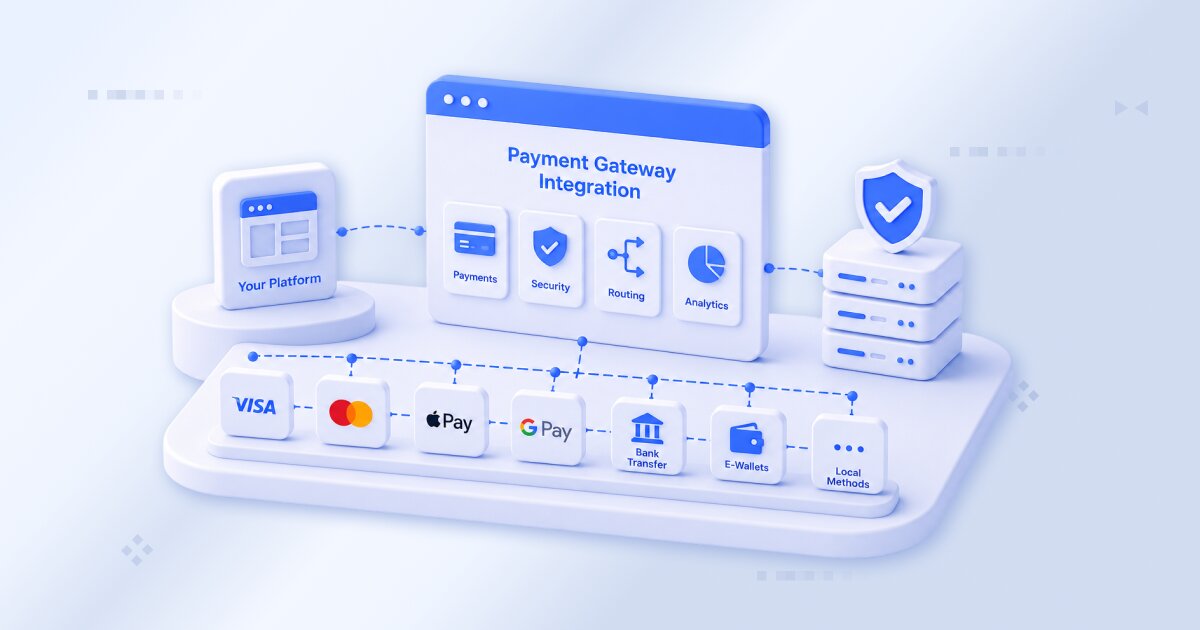
White-label payment gateway development is the core service most payment-focused fintech companies need. Building a production-grade payment gateway involves the transaction processing engine, the API layer merchants integrate with, the security infrastructure that protects card data, and the routing logic that manages flow across multiple providers.
Smart routing software is a specialised fintech service that maximises payment approval ratios by directing each transaction to the provider most likely to approve it. Top fintech development companies build routing systems that lift approval ratios by measurable percentages within weeks of deployment. A change that pays for the whole engagement several times over.
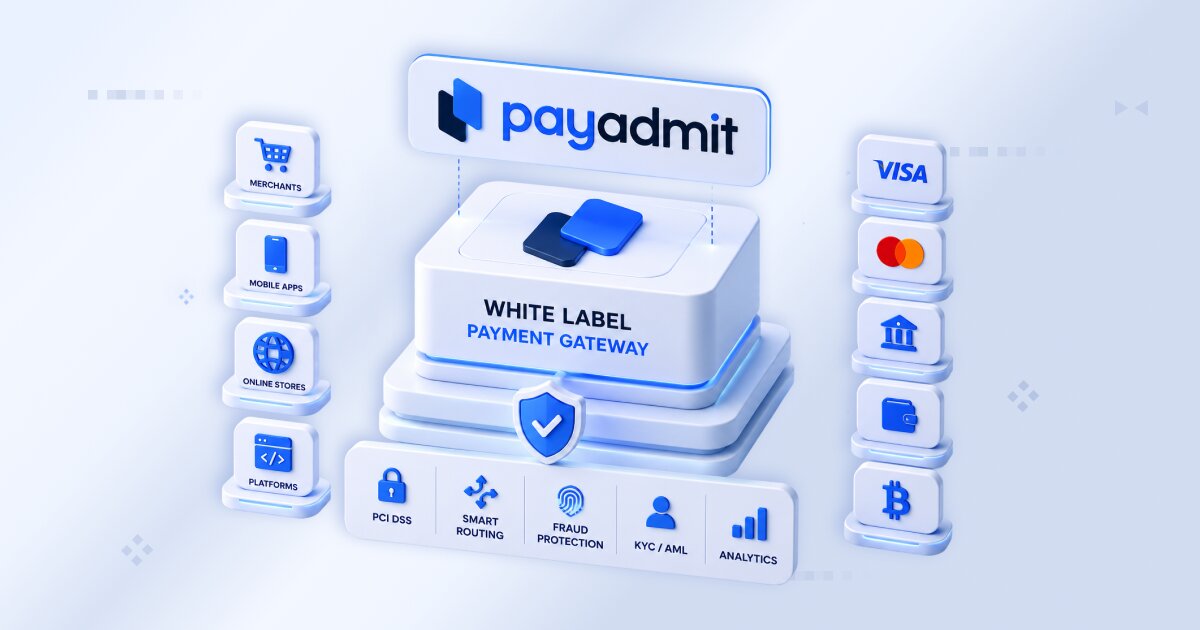
White-label payment processing delivers a fully owned, branded payment platform that businesses operate under their own identity. Particularly relevant for PSPs, banks, and fintech companies that want to offer payment processing services without funding an eighteen-month build from scratch.
Subscription payment software development requires sophisticated card-data management, billing cycle logic, failed-payment retry sequences, and customer self-service tools. To handle this efficiently, many companies look for a white-label payment gateway for subscriptions that carries the billing engine and lets the team focus on the product surface.
Compliance software development is the area where fintech development most clearly requires specialist expertise. Regulatory requirements change frequently, vary by jurisdiction, and carry significant penalties for non-compliance. A fintech development company without a dedicated compliance engineering capability will produce software that is inadequate for regulated environments.
Know Your Customer and Know Your Business verification software automates the identity checks and due diligence financial regulations require. Building effective KYC and KYB software means integrating verification data providers, document verification workflows, risk scoring, and the compliance audit trail. These are regulatory prerequisites, not optional features.
AML software development produces the monitoring systems that screen transactions for patterns associated with money laundering and financial crime. Development involves rule-based screening, sanctions and PEP database integration, transaction pattern analysis, and compliance reporting workflows. Every financial services company processing payments must have AML monitoring in place.
Payment software that meets PCI DSS requirements starts with architectural decisions made from day one. Encryption design, data minimisation, access control architecture, and security monitoring all have to be developed inside PCI DSS boundaries. A fintech development company with PCI DSS experience delivers payment software that passes certification on the first audit rather than requiring costly rework.
The compliance development timeline. Compliance software development takes longer than businesses typically expect because compliance requirements are not purely technical. They require interpretation of regulatory language, legal review of software design, and often formal review by regulators or external auditors before go-live. Build compliance software timelines that include legal review cycles and auditor engagement, not just engineering sprints.
The architecture of a fintech platform decides how well it performs under load, how easily it integrates with other systems, and how efficiently it can be maintained over time. Architecture decisions made early in development have long-lasting consequences that no amount of infrastructure spend can undo.
Modern fintech platform development uses microservices architecture. Individual services develop, scale and fail independently. For fintech applications combining payment processing, compliance, customer management and reporting, microservices allow high-load components like transaction processing to scale without scaling the entire system.
API-first development means designing interfaces before writing implementation. For fintech software this produces clearer service boundaries, better integration support for external partners, and more maintainable software over time. Each platform component has a well-defined external interface merchants and third-party services can integrate against reliably.
Cloud-native fintech software is designed to run on cloud infrastructure from the start. Containerised services, infrastructure-as-code deployment, and auto-scaling capabilities let platforms manage the traffic spikes common in payment processing environments without manual intervention.
Financial data management has strict requirements. Transaction records must be immutable and fully auditable. Customer financial data must comply with data protection regulations. Settlement data must reconcile accurately across all payment providers. Fintech development companies design data architectures that satisfy these requirements while still delivering the real-time reporting capabilities financial businesses need.
Understanding how leading fintech development companies structure their services and delivery helps businesses set realistic expectations and evaluate providers effectively. The best teams follow a recognisable pattern.
01 Discovery and compliance assessment. Every serious engagement opens with a comprehensive discovery covering business requirements, regulatory environment, target markets, and compliance obligations. The output is a scoped development plan reviewed for compliance risk, not just technical feasibility.
02 Architecture design and security planning. Before development begins, the fintech software architecture integrates security and compliance requirements fully. Data flows, encryption model, access control framework, and regulatory reporting infrastructure are defined at this stage. Architecture corrections made before development starts cost far less than those made after.
03 Iterative development with compliance validation. Leading fintech development companies build in iterative cycles with compliance validation attached to each cycle. Payment software developed this way meets PCI DSS requirements progressively. AML and KYC workflows are validated against regulatory requirements at every milestone.
04 Integration and testing. Fintech software integrates with banking systems, payment networks, compliance data providers, and existing business platforms. Top fintech companies run integration testing as a core development phase. Every integration point is tested with realistic data volumes and failure scenarios before production deployment.
05 Security review and certification support. Production fintech software must pass security review before handling live financial data. Penetration testing, vulnerability assessments, formal compliance certification. A fintech company with certification experience compresses time and cost significantly by developing audit-ready software from the start.
06 Deployment and ongoing development. The best fintech relationships do not end at launch. Regulations change, new payment methods emerge, fraud patterns evolve. A fintech development company that provides ongoing development, compliance updates, and security maintenance lets financial businesses manage these changes without replacing the platform.
One of the fundamental decisions in any fintech project is whether to develop custom software from the ground up or deploy and configure an existing fintech platform. Both approaches are valid depending on business context, but the right choice varies significantly by use case, timeline, and budget.
| Factor | Custom development | Platform deployment |
|---|---|---|
| Time to market | 12 to 24 months for complex fintech systems | 1 to 2 months for a configured platform |
| Development cost | High: development team, compliance, security | Lower: configuration and integration work |
| Feature fit | Exact match to requirements | Standard features, configurable |
| Compliance scope | You develop and certify all compliance controls | Platform carries existing certifications |
| Ongoing maintenance | Your development team manages all updates | Platform provider handles maintenance |
| Data ownership | Full ownership from architecture design | Full ownership with platform deployment |
| Best for | Unique requirements not served by existing platforms | Payment software, banking platforms, standard fintech |
For payment-focused fintech businesses, platform deployment delivers a commercially viable outcome in a fraction of the custom-development timeline. A payment gateway that deploys in one to two months, carries PCI DSS Level 1 certification and includes 550+ payment method integrations delivers the same ownership and control benefits as a custom-built solution.
Selecting a fintech software development company is one of the most consequential decisions a financial services business makes. The wrong choice produces software that fails compliance review, misses launch timelines, and requires expensive rework. A repeatable evaluation framework helps:
Ask providers about acquiring relationships, PCI DSS certification processes, and transaction routing design. A development company that cannot discuss these topics fluently will ship software that is technically sound but operationally problematic.
Evaluate how the development company manages compliance in software projects. Do they have dedicated compliance engineers? Do they design compliance into architecture from the start or apply it as a remediation layer at the end? Top companies treat compliance as a first-class development concern.
Review secure coding standards, code review processes, penetration testing methodology, and incident response capabilities. Security practices should be consistent across the entire team, not dependent on individual developer awareness.
Ask about specific integration projects delivered: which banking APIs the team has developed against, which payment processors they have integrated with, and how they manage integration complexity when third-party systems change specifications.
Fintech software is never finished. Evaluate providers on their ability to deliver long-term development, compliance maintenance, and security patch management. A company that treats project completion as the end of the relationship leaves you managing software maintenance without the institutional knowledge built during development.
Fintech software development timelines and costs vary enormously based on scope, regulatory environment, and delivery approach. Realistic benchmarks for common fintech projects in 2026:
| Fintech project | Development timeline | Approx. cost (USD) |
|---|---|---|
| Payment gateway (custom build) | 12 to 18 months | $600K to $1.5M |
| White-label payment platform | 1 to 2 months | Fraction of custom build |
| Digital banking platform (MVP) | 9 to 18 months | $400K to $1.2M |
| KYC or AML compliance software | 3 to 6 months | $100K to $400K |
| Fraud detection system | 4 to 8 months | $150K to $500K |
| Payment Bridge middleware integration | 2 to 4 weeks | Defined service fee |
| Subscription billing platform | 3 to 6 months | $80K to $250K |
Annual maintenance: typically 25 to 40 percent of the initial development investment. Covers security patch management, compliance updates for regulatory changes, integration maintenance as third-party systems evolve, and feature development as the business grows. Companies that underestimate maintenance discover it when the first major regulatory change requires urgent software updates.
The hidden cost: time to revenue. Custom fintech software development timelines represent months when your business is not generating revenue from the software being developed. A payment gateway under development for 18 months is a payment gateway that is not processing transactions, signing merchants, or generating revenue. The commercial cost of development time is rarely captured in project budgets but is often the largest financial factor in build-versus-deploy decisions.
PayAdmit is a fintech software development company that specialises in payment technology. Over ten years we have shipped payment gateway software, white-label payment platforms, compliance systems, and transaction management solutions for PSPs, banks, iGaming operators, and e-commerce businesses across 40+ markets. Our services concentrate where payment software complexity is highest: custom gateway architecture, multi-provider routing, PCI DSS-compliant payment infrastructure, AML/KYC compliance software, and end-to-end merchant management platforms.
Beyond initial deployment, we optimise routing logic based on live transaction data, manage compliance updates as regulations evolve, and connect clients with potential merchants directly. Related reading: our companion guides on how to build a payment platform, fintech product development, and fintech software developers cover the adjacent decisions most teams face at the same time.
Evaluating fintech software development options for your payment business?
PayAdmit has ten years of payment-specific fintech development experience. Talk to our team about your requirements.
Fintech software development services are the full range of technical work involved in building software for financial technology companies. This includes payment software, banking platform development, compliance engineering, fraud detection systems, and financial data management, delivered with domain-specific expertise in financial systems, regulatory compliance, and security.
The fundamental difference is domain expertise. Fintech software operates inside regulatory frameworks, handles sensitive financial data, integrates with financial infrastructure, and carries compliance obligations that general software does not. A team without fintech expertise can build technically functional software that fails compliance review or cannot integrate with payment networks.
Custom development for complex systems such as payment gateways or banking platforms takes 12 to 24 months. Simpler tools like focused compliance software can be delivered in 3 to 6 months. Platform-based deployments, like PayAdmit’s white-label payment solution, deliver production-ready fintech software in one to two months.
Custom fintech software development costs range from around $80K for focused compliance tools to over $1.5M for end-to-end payment gateway and banking platform work. Annual maintenance typically represents 25 to 40 percent of the initial investment. Platform deployments cost significantly less because the development work is already done.
They depend on the financial service type and target markets. Payment software requires PCI DSS compliance. European financial services require GDPR compliance. AML and KYC apply to any company managing customer accounts or processing transactions. Banking software must comply with local banking regulations in every operating jurisdiction.
Deep financial domain knowledge combined with strong engineering capability and genuine compliance expertise. The best companies deliver software that works in production at scale, treat compliance as a development-integrated discipline, and have a track record of shipping fintech software that passes security review and operates in regulated markets.
Yes: the best fintech relationships go beyond software delivery. PayAdmit provides ongoing development, compliance updates, security maintenance, and direct business support including merchant referrals and routing optimisation. Fintech software is an operational asset that must be continuously developed and maintained as the business grows.