
Fintech software developers design and build the technology that powers payment services, digital banking apps, compliance solutions and financial analytics. Day to day they write backend services, integrate banking and card-scheme APIs, ship mobile app features, harden security controls and maintain the audit trail that regulators expect. Strong fintech development combines general software engineering skill with deep financial domain knowledge.
Fintech Software
Developers
Every payment app, banking dashboard and compliance workflow is built by fintech software developers. This guide covers what they do, what they cost, and how to structure a team that actually ships.
15.07.2026
Updated:
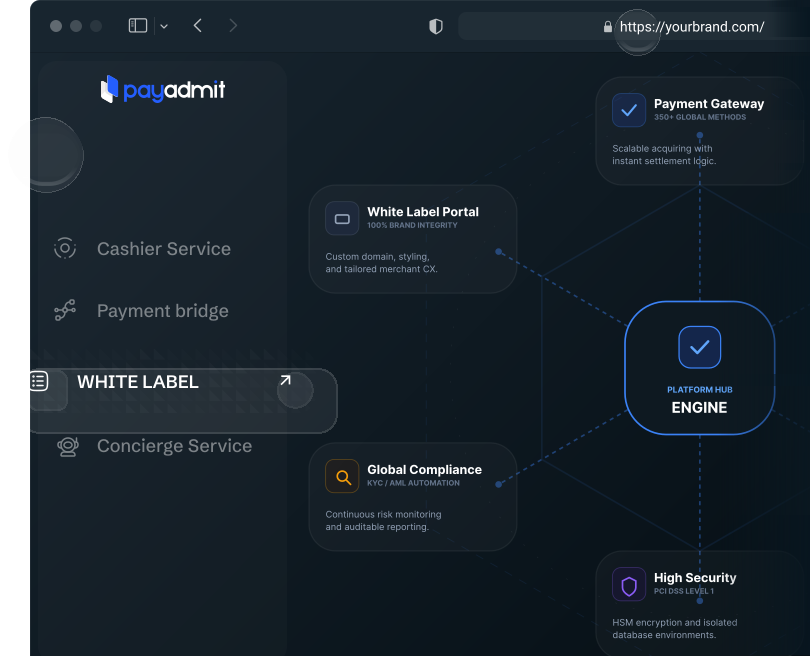

Behind every payment app, mobile wallet, neobank dashboard and AML monitoring solution stands a group of fintech software developers. They translate financial regulation, banking integration standards and security requirements into working technology. If you plan to build, scale or modernise a financial solution, the composition of your development team will shape the cost, timeline and long-term reliability of the software far more than any framework choice. In this guide we explain what fintech software developers actually do, how a dedicated development team is structured, what the technology stack looks like in 2026, how much it costs to hire fintech software developers in different regions, and how PayAdmit combines platform-based solutions with hands-on development services to help you go live faster.
Who Fintech Software Developers Actually Are
Fintech software developers are engineers who build the applications, APIs, data pipelines and infrastructure that carry money and financial data across the internet. The label sounds narrow, but the work is broad. On any given week a fintech development team may design a card-tokenisation flow, write a settlement reconciliation job, integrate an open-banking API, refactor a KYC solution, tune a fraud model, and ship a mobile app update to fifty markets. Every one of those tasks lives at the intersection of software engineering, financial services and regulatory compliance.
A general web developer can build a beautiful storefront. A fintech developer builds the payment layer underneath it, the ledger that records every transaction, and the reporting solutions that let a CFO reconcile the books at month end. That is a very different discipline. It draws on knowledge of double-entry accounting, ISO 20022 messaging, PCI DSS, card scheme rules, banking APIs, encryption standards and the peculiar failure modes of financial technology at scale.
When companies talk about hiring fintech software developers they usually mean one of three shapes of engagement: a small in-house squad that owns a specific product; a dedicated development pod embedded from an outsourcing partner; or a full end-to-end fintech development company that delivers a turnkey solution. Each model has a cost profile, a delivery cadence and a risk envelope of its own. We will unpack all three below.
The rest of this article is a practical field guide. We look at the skills that make a strong fintech developer, the composition of a modern development team, the technology stack in production use in 2026, and the cost of building a serious financial product. If you plan to talk to fintech software developers this quarter, this is the context to bring with you.
| Developer Focus | What This Fintech Development Role Owns |
|---|---|
| Payment platform engineer | Card tokenisation, transaction routing, PSP integration, checkout APIs and the payment services that keep every merchant flow alive. |
| Core banking developer | Account ledger, deposit and withdrawal logic, digital banking screens, and the financial services the back office depends on. |
| Compliance & RegTech developer | KYC, AML and KYB solutions, sanctions screening, transaction monitoring, regulatory reporting workflows and the audit trail behind them. |
| Mobile fintech app developer | Native iOS and Android apps, cross-platform app shells, mobile wallet features, biometric authentication and offline app resilience. |
| Data & analytics engineer | Event pipelines, warehouse models, dashboards, real-time risk scoring and the financial reporting solutions the business runs on. |
| Blockchain & crypto developer | Smart contracts, custody solutions, on-chain payment services, stablecoin rails and the bridge software between crypto and fiat. |
| Security & fraud engineer | Threat modelling, penetration testing, fraud detection solutions, key management and secure software development lifecycle governance. |
The Skills That Separate Fintech Development From General Software Development
Every senior developer has been asked, at least once, why fintech software development is treated as a specialisation. The answer sits in three layers that stack on top of general software engineering: financial domain literacy, regulatory awareness and a very specific attitude to failure. A team that ignores any of the three will still produce software, but the software will not survive contact with real money.
Financial Domain Literacy
A payment developer who does not understand chargebacks, authorisation holds and settlement windows will build software that quietly leaks money. A developer of banking solutions who does not understand double-entry bookkeeping will produce a ledger that cannot be reconciled. A fintech developer with real domain literacy can look at a card scheme response code and immediately know whether the correct product behaviour is a retry, a fall-back to another provider, a user prompt, or a permanent decline. That knowledge is the difference between technology that ships and technology that gets rolled back.
Regulatory Awareness
Financial software runs inside a maze of rules. PCI DSS constrains how card data is stored and processed. PSD2 defines strong customer authentication for European payment services. GDPR shapes what a fintech app may do with personal data. AML regulations mandate the way transaction monitoring solutions treat suspicious activity. A fintech developer does not need to be a lawyer, but they need to recognise which lines exist and where. When product asks for a shortcut that would cross one of those lines, the developer has to be the one who says no.
Zero-Tolerance Attitude to Silent Failure
In general software a lost request is annoying. In fintech development a lost request can be a missing transaction, a duplicated withdrawal, or a compliance breach. Great fintech developers build software with idempotency keys, saga patterns, dead-letter queues, replay tooling and reconciliation jobs by default. They assume every network call will fail eventually and they design the solution around that assumption. This mindset is culturally different from most consumer app development, and it is one of the hardest habits to teach a mid-career engineer who has never worked on financial technology before.
Communication With Non-Technical Stakeholders
Fintech development touches risk, legal, finance and operations teams. A senior developer needs to explain, in plain language, why a certain PSP integration will take four weeks rather than four days, or why a fraud rule change will affect approval ratios. The developers who become tech leads in fintech are almost always the ones who can hold that conversation without losing the technical thread underneath it.
Anatomy Of A Dedicated Fintech Development Team
People often ask how many developers they need to launch a fintech solution. There is no universal number, but there is a fairly universal shape. A modern fintech development team is a cross-functional pod that combines product, engineering, design, security and compliance in a single delivery unit. Below is the composition we see repeatedly in mature payment and banking solutions.
Product Manager
Owns the roadmap, translates business goals into a development backlog, and negotiates trade-offs between speed, cost and compliance. In fintech development this role has to be senior enough to talk to the CFO and the head of risk on the same day. Without that seniority the development team ends up building the wrong software very efficiently.
Tech Lead / Solution Architect
Owns the architecture of the fintech solution end-to-end. Decides how the payment gateway, ledger, KYC service, notification bus and reporting warehouse fit together. Reviews the highest-risk pull requests and pairs with security on threat models. A strong solution architect is the single biggest predictor of whether a fintech development project ships on time.
Backend Fintech Software Developers (three to six)
The engine room. They build the transaction services, the API layer, the integration adapters and the batch jobs. Typical technology choices in 2026 are Go and Java for high-throughput payment services, Python for data and analytics work, Node.js for lightweight orchestration and integration glue. A dedicated backend developer with three years of fintech experience will out-deliver a senior generalist for at least the first six months of any financial project.
Mobile And Web App Developers (two to four)
The people who ship the customer-facing app. React or Next.js on the web, Swift and Kotlin on native mobile, React Native or Flutter where a single team owns both platforms. Fintech app development is unusually sensitive to accessibility, localisation and offline behaviour: a payment app that cannot handle a lost connection halfway through checkout is not fit for production use.
QA And Test Automation Engineers
Financial software is regression-hostile. A change to a routing rule can quietly break settlement two weeks later. A dedicated QA function that owns end-to-end test suites, sandbox environments and card-scheme certification runs is not optional in serious fintech development. The best teams treat QA engineers as first-class developers, not as a downstream check.
Security & Compliance Engineer
Runs the secure software development lifecycle, owns the PCI DSS scope, maintains the AML rules solution and coordinates with external auditors. In smaller teams this role can be shared with the solution architect, but by the time a financial product processes real transactions it needs a dedicated compliance-minded developer on the payroll.
DevOps / Platform Engineer
Owns the cloud infrastructure, CI/CD, observability and disaster recovery. A modern fintech technology stack is only as reliable as its deployment pipeline. Great platform engineers are the reason a fintech development team can deploy on a Friday afternoon and still sleep at night.
UX / UI Designer
Financial services are inherently anxious for the end user. A well-crafted fintech app hides that anxiety behind clear layouts, honest error states and predictable flows. UX in fintech is not decoration, it is the difference between a solution that converts and one that abandons cart.
The Fintech Technology Stack In 2026
Ask ten fintech development companies which technology stack they use and you will hear ten answers. Look under the hood of the fintech solutions actually running in production this year, however, and a pattern emerges. Financial technology in 2026 is polyglot, cloud-native, event-driven and heavily instrumented. Below is a snapshot of the layers most fintech software developers work across.
Backend Services
Java and Kotlin dominate core banking and card-scheme integration workloads because of their maturity and their concurrency model. Go has become the default for high-throughput payment services, smart routing engines and API gateways. Python remains the standard for data engineering and machine-learning components of any fintech solution. Node.js is common for lightweight orchestration services, webhooks and BFF layers that feed the app.
Web And Mobile App Development
On the web, React with Next.js or Remix is the mainstream choice for merchant portals and consumer banking dashboards. On mobile, Swift and Kotlin still deliver the best experience for a serious financial app, but React Native and Flutter now power a large share of neobank and wallet products because a single fintech development team can ship both platforms.
Data And Analytics
A modern fintech data platform sits on Kafka or Kinesis for streaming, dbt over BigQuery or Snowflake for analytical modelling, and a feature store such as Feast or Tecton for real-time model serving. Machine-learning solutions handle fraud scoring, credit decisioning and dynamic checkout optimisation. Data engineering is where the boundary between fintech technology and general software engineering has almost disappeared.
Cloud And Infrastructure
AWS is still the default cloud for fintech development, with GCP strong in data and analytics and Azure common inside larger banking groups. Containers run on Kubernetes with service meshes such as Istio or Linkerd. Infrastructure-as-code is standard: Terraform for provisioning, Argo CD or Flux for GitOps deploys. Observability sits on Prometheus, Grafana, OpenTelemetry and a log platform such as Loki or Elastic.
Security Technology
HashiCorp Vault or a cloud-native KMS handles secrets. Card-data flows use tokenisation solutions and network segmentation to keep PCI scope small. Runtime protection increasingly relies on eBPF-based tooling. Static and dynamic application security testing is baked into CI so that every developer commits software that has been scanned before it merges.
Compliance And RegTech Solutions
Vendor solutions such as SumSub, Onfido, ComplyAdvantage and Sardine handle a large share of KYC, KYB and transaction monitoring workloads. Fintech developers integrate these solutions rather than rebuild them, and spend their time on the orchestration and audit trail around them. The build-versus-buy line has moved sharply toward buy for commodity compliance features and build for anything that becomes a competitive edge.
Choosing Technology Is A Cost Decision, Not A Fashion Decision
Every technology choice in a fintech project locks in a cost curve for the next five years. A payment services stack built on Kotlin is cheap to hire for in London and Warsaw, expensive in Buenos Aires. A React Native app is cheap to ship, expensive to squeeze the last ten percent of performance out of. Great fintech development leads pick the stack that matches the market they will hire developers in, not the one that is trending on social media this quarter.
Compliance And Security From A Developer's Point Of View
Compliance is often described in slide decks as a set of controls, policies and audit reports. From a fintech developer's point of view it is a very concrete list of things they have to do differently in their code. Understanding this developer-level view is critical if you plan to hire fintech software developers or scope any serious financial project.
PCI DSS And The Cardholder Data Environment
PCI DSS applies to any software that stores, processes or transmits card data. In practice this means the fintech development team has to isolate the cardholder data environment from the rest of the technology stack, tokenise card numbers as early as possible, encrypt data at rest and in transit, and log every access to sensitive fields. A well-designed payment solution keeps the PCI scope small enough that only a handful of developers ever need cardholder data access.
Strong Customer Authentication
Under PSD2 and equivalent regimes, any electronic payment above a low threshold requires two-factor authentication. This is not a UI feature, it is a full flow that touches the app, the backend risk engine and the card scheme's 3-D Secure infrastructure. Fintech app developers spend a surprising amount of time on the edge cases: exempt transactions, out-of-band authentication timeouts, fallbacks when the issuer is unreachable.
KYC, KYB And Ongoing Due Diligence
The KYC solution is where a financial services product meets its customer for the first time. Fintech developers integrate identity verification providers, document parsing services, sanctions and PEP screening databases, and risk scoring engines. The output is not just a yes or no, it is a full audit trail that can be handed to a regulator years later.
AML Transaction Monitoring
Every fintech solution that moves money has to screen transactions for money-laundering patterns. Development-side, this means a rules engine, a case management app for compliance analysts, and a reporting solution that can generate suspicious activity reports in the format each regulator expects. The best fintech development teams treat AML as a product surface, not a batch job hidden in a corner.
Data Protection And Residency
GDPR in Europe, LGPD in Brazil, and equivalent laws in other markets constrain how a fintech app may collect, store and transfer personal data. Fintech developers must design software that supports data-subject requests, right-to-be-forgotten flows, and per-region data residency. In multi-market financial services these requirements shape the architecture of the whole solution.
Compliance Debt Is The Worst Kind Of Technical Debt
Technical debt in a general app is unpleasant. Compliance debt in a fintech solution is dangerous. A missed control can lead to a fine, a licence suspension, or a public breach notification. Great fintech software developers know the difference and refuse to let compliance shortcuts pile up. The best fintech development teams treat every compliance ticket as a release blocker, not a nice-to-have.
Payment Software Development: A Developer's Guided Tour
Payment software is the highest-value area of fintech development. It is where a financial product either scales into a real business or collapses under its own operational cost. If you want to hire fintech software developers who genuinely move the needle, you want people who understand the payment layer from the inside.
The Checkout And Tokenisation Layer
Every payment solution begins with a checkout. The fintech app captures card data (or, better, receives a token from a hosted checkout), and the backend converts that data into a network token that can be re-used without re-entering scope. Developers here fight for latency: every extra hundred milliseconds at checkout costs conversion. Learn more about the checkout data flow and how development teams keep it clean.
The Routing Engine
Behind the checkout sits the routing engine, the piece of software that decides which acquirer, PSP or alternative payment method will handle each transaction. A well-built routing engine improves approval ratios by measurable percentage points and pays for itself within weeks. This is one of the most valuable pieces of software fintech developers ever write, and one of the hardest to test.
The Ledger
The ledger is the immutable record of every movement of money through the platform. Fintech developers use double-entry bookkeeping principles, append-only event stores and strong idempotency to make sure the ledger is always reconcilable. When a CFO asks how much money the platform holds at 04:17 UTC on a Tuesday, the ledger has to answer without hesitation.
The Settlement Solution
Once a transaction is captured, settlement software matches it against acquirer reports, calculates fees, and generates payouts to merchants. This is unglamorous but critical development work. A financial platform with weak settlement software leaks margin every day; a strong one lets the business scale without hiring an army of reconciliation analysts.
The Refund, Dispute And Chargeback Flows
Every payment services stack has to handle refunds, disputes and chargebacks with the same discipline as the original authorisation. Fintech development teams model these as first-class events, not exceptions, and expose them to merchants through clean APIs and clear app screens.
The White-Label Layer
Many fintech businesses do not build their own payment stack from zero. Instead they license a white-label payment processing solution and add their own value on top. This is a legitimate development strategy: the underlying payment services are already certified and battle-tested, and the fintech development team focuses on the differentiating product experience.
In-House vs Outsourced vs Dedicated Fintech Software Developers
Three engagement models dominate fintech development in 2026. Each one has a cost profile, a control profile and a time-to-market profile of its own. There is no universally correct answer, but there is a correct answer for each stage of your financial product.
| Factor | In-House Development Team | Dedicated Development Pod |
|---|---|---|
| Time to hire | 3 to 9 months per senior developer | 2 to 6 weeks to onboard the pod |
| All-in monthly cost per developer | $12,000 to $22,000 loaded cost (EU / UK senior) | $8,000 to $14,000 per developer (nearshore) |
| Ramp-up to productive delivery | 2 to 4 months to full productivity | 2 to 4 weeks with an experienced fintech partner |
| Fintech domain depth | Grows over time, depends on hiring | High if the partner is a specialist fintech development company |
| Control over roadmap | Full control, direct management | Shared, guided by your product manager |
| Long-term ownership | Highest, IP and knowledge stay in the company | Medium, knowledge is documented but sits with the partner |
| Best fit | Mature financial products with a clear roadmap | Scaling fast, launching a new financial solution, filling skill gaps |
The third model, working with a full fintech development company that already owns a licensed payment platform, sits on top of both. It is less about renting fintech software developers by the hour and more about buying a pre-built solution that your team can extend. For payment-focused financial services businesses this is often the fastest and cheapest path to production. A properly picked white-label payment gateway can compress twelve months of custom development into two months of configuration work.
How To Hire Fintech Software Developers Without Wasting A Quarter
Hiring is the moment when abstract planning meets very concrete cost. A single wrong senior hire in a fintech development team can burn three to six months of runway before the mistake becomes visible. A well-designed hiring process reduces that risk to a manageable level. Here is the framework the best fintech development companies use internally.
Start From The Solution, Not The Role
Before you write a single job description, be honest about which fintech solution you actually need. A neobank MVP, a payment gateway integration project and a fraud modelling initiative call for completely different developer profiles. Sketch the architecture of the solution first, list the services and integrations it will need, and only then decide which fintech software developers you must hire and in which order.
Screen For Domain, Not Just Code
Almost every candidate can write a decent binary tree traversal. Far fewer can explain what happens between authorisation and settlement, or why a chargeback dispute has a 45-day clock attached. Include a domain interview in every fintech developer loop. Ten focused minutes on real financial services scenarios will filter more effectively than an extra algorithmic screen.
Test For Failure Handling
Give candidates a small design exercise around a genuinely nasty scenario: a payment API that returns duplicate success responses, an issuer that goes down mid-authorisation, a settlement file that arrives with mismatched totals. How they reason about idempotency, retries and reconciliation is a stronger signal than any polished CV.
Check Compliance Instincts
Ask each candidate how they would store a customer's passport image, what they would log during a KYC flow, or how they would design the audit trail for a suspicious activity report. You are not looking for encyclopaedic regulation knowledge, you are looking for developers whose default instincts are compliant.
Watch The Cost Of Delay
Every extra week spent looking for the perfect developer is a week your fintech solution does not exist. For most companies the practical answer is a hybrid model: hire a small core of in-house senior developers for irreplaceable knowledge, and augment with a dedicated pod from a fintech development partner for everything else. The blended cost is usually lower than a fully in-house team of equivalent capacity, and the time-to-market advantage is often decisive.
Cost To Hire Fintech Software Developers By Region
Talent cost is the single biggest line item in any serious fintech development budget. Rates in 2026 have stabilised after two turbulent years, but the spread between regions is still wide. The table below gives realistic monthly loaded cost for a senior fintech developer, including salary, taxes, benefits, office and management overhead.
| Region | Senior Developer Monthly Cost | What You Typically Get |
|---|---|---|
| United States (Tier-1 city) | $18,000 to $26,000 | Deep fintech domain, strong PSP and card scheme experience |
| United Kingdom (London) | $14,000 to $20,000 | Strong banking and open banking expertise, regulated market knowledge |
| Western Europe (DE / NL / FR) | $12,000 to $18,000 | Mature engineering culture, PSD2 and SEPA fluency |
| Central & Eastern Europe | $7,000 to $12,000 | Excellent price-quality ratio, deep payment gateway experience |
| Latin America (nearshore US) | $8,000 to $13,000 | Time-zone overlap with the US, strong app development skills |
| South & South-East Asia | $5,000 to $9,000 | Very large talent pool, strong on mobile app and data engineering |
| Middle East & North Africa | $6,000 to $11,000 | Growing fintech hubs, useful for MENA market expertise |
These monthly figures are only half of the cost equation. The other half is the cost of the development team's non-productive time: hiring cycles, ramp-up, context switching and knowledge transfer. A fintech development pod that is productive from week three often ends up cheaper, over a year, than a cheaper individual developer who needs four months to reach the same output. Optimise for cost per productive engineer-month, not headline salary.
The Real Cost Of A Fintech Software Developer
Salary is roughly sixty percent of the loaded cost. The rest is taxes, benefits, equipment, office or remote infrastructure, security tooling, licences, training and management overhead. When you compare in-house cost against a dedicated pod from a fintech development company, always compare the fully loaded numbers. A partner rate of ten thousand dollars a month usually beats an equivalent in-house cost of fifteen thousand once you add all the invisible items.
Cost Of A Fintech Development Project End To End
A single developer rate tells you nothing about what a fintech solution actually costs to build. The right question is the total cost of ownership across build, launch and the first year of operation. Below are realistic 2026 budget bands for common financial products, based on projects PayAdmit has observed or delivered.
Digital Wallet Or Neobank MVP
A mobile-first neobank MVP with account opening, card issuing, basic payment services and a mobile app generally costs between $350,000 and $900,000 to build. A dedicated development team of six to eight people will ship it in six to nine months. Annual maintenance and iteration cost sits around forty percent of the initial development cost.
Payment Gateway Solution
A production-grade custom payment gateway with routing, PSP integration, merchant portal and reporting solution costs between $600,000 and $1.5M and takes twelve to eighteen months. A white-label payment gateway deployment achieves a very similar result in one to two months, with total cost that is a small fraction of the custom-build path.
Compliance And RegTech Solution
A KYC, KYB or AML platform tailored to a specific market typically costs between $120,000 and $400,000 and takes four to six months of focused fintech development. This assumes integration with two or three third-party verification providers rather than in-house identity technology.
Fraud And Risk Solution
A real-time fraud scoring service with rules engine, machine-learning model and case management app usually lands between $180,000 and $550,000. Ongoing model tuning is a permanent cost item, not a one-off project.
Investment Or Wealth Management App
A retail investing or wealth management app with brokerage integration, portfolio views and reporting features typically costs $400,000 to $1.2M and requires a mixed development team of backend, app and data engineers.
These numbers are indicative, not quotes. Every fintech development project has a unique mix of regulatory scope, integration complexity and non-functional requirements. A short discovery engagement with an experienced fintech development company is usually the cheapest way to turn a rough idea into a defensible cost estimate.
How A Serious Fintech Development Team Actually Works Week To Week
Watching a mature fintech development team from the outside can be deceptive. The work looks calm and predictable, but underneath it there is a rhythm that took years to build. If you plan to hire fintech software developers or work with a fintech development partner, knowing this rhythm helps you set expectations correctly.
01 Discovery And Compliance Framing
Every serious engagement opens with a joint discovery. Product, engineering and compliance sit together and map the target markets, the regulatory obligations, the payment and banking integrations, and the success metrics. The output is a scoped fintech solution, not a wishlist. Skipping this step is the most common reason financial products slip by six months.
02 Architecture And Threat Modelling
Before the first line of code, the solution architect sketches the services, data flows and trust boundaries. Security engineers run a threat model against that sketch. Compliance signs off on the data residency and audit trail design. Only then does development start. Architectural rework mid-project is the single most expensive category of fintech development waste.
03 Iterative Development With Compliance Baked In
The development team runs on two- or three-week iterations. Each iteration ships a slice of the solution that is genuinely usable, not just a demo. Compliance and security reviews are attached to each iteration, not deferred to the end. This is what people mean when they say fintech is a compliance-first development discipline.
04 Integration And Certification
Financial software has to integrate with acquirers, card schemes, banking APIs, KYC providers, screening databases and reporting solutions. Each integration comes with its own certification path. A good fintech development team treats certification as a full workstream with its own owner, not as a background task.
05 Launch, Monitor, Iterate
Going live is a milestone, not the finish line. After launch, the development team focuses on observability, incident response and rapid iteration. Approval ratios are tuned, fraud rules are adjusted, new payment methods are added. This phase is where the difference between a good fintech development company and a mediocre one becomes obvious.
06 Continuous Compliance And Technology Refresh
Financial regulation evolves, card scheme mandates change, third-party solutions release breaking API versions. A fintech development team owns a permanent maintenance backlog on top of the product roadmap. Budgeting for that backlog is what separates fintech development from a normal software project.
PayAdmit: The Team Behind The Platform
PayAdmit is not simply a technology vendor. Behind our white-label payment platform stands a fintech development team with more than ten years of hands-on experience in payment services, banking integrations and regulated financial technology. Our developers have shipped payment gateway software, cashier solutions, routing engines, compliance systems and reporting solutions for PSPs, banks, iGaming operators and e-commerce businesses across more than forty markets.
Working with us is closer to embedding a specialised fintech development pod inside your business than to buying software off a shelf. Our engineers integrate directly with your product and compliance teams. Our platform absorbs the majority of the payment services complexity, while your fintech software developers focus on the differentiating parts of your financial product.
What PayAdmit Delivers
End-to-end white-label payment platform deployment in one to two months. PCI DSS Level 1 certified payment services with card and alternative payment methods. Smart routing and cascade software configurable per merchant. AML, KYC and KYB compliance solutions with a full audit trail. Merchant management app, cashier service and payment analytics dashboard included. Full API and sandbox access for your development team. Ongoing development support, roadmap alignment and 24/7 payment engineering coverage.
If you are still deciding whether to hire fintech software developers directly, engage a dedicated development pod, or plug into a ready-made payment platform, the honest answer is often a combination of the three. PayAdmit is designed to be the piece you do not need to build yourself, so your development team can spend its energy where it truly differentiates your financial services business. When you are ready to talk numbers, our team is one call away.
FREQUENTLY ASKED QUESTIONS
What do fintech software developers actually do?

How do fintech developers differ from general software developers?
The gap is domain knowledge and attitude to failure. Financial technology sits inside PCI DSS, PSD2, GDPR and AML regulations, integrates with banking rails and card schemes, and cannot tolerate silent errors. A general developer can produce software that looks correct but leaks money or breaks compliance under load. A fintech developer builds solutions that reconcile, that are auditable, and that fail loudly rather than quietly.
How long does it take to hire a fintech development team?
Hiring a senior in-house developer usually takes three to nine months. Onboarding a dedicated development pod from an experienced fintech partner takes two to six weeks. Plugging into a ready-made payment platform can shortcut most of that: PayAdmit deploys a full white-label payment solution in one to two months, so your fintech software developers can focus on the product layer rather than rebuilding infrastructure.
How much does it cost to hire fintech software developers?
A senior fintech developer costs $18,000 to $26,000 per month loaded in the US, $12,000 to $18,000 in Western Europe, and $7,000 to $12,000 in Central and Eastern Europe. A full custom fintech solution typically costs $350,000 to $1.5M to build depending on scope, plus roughly forty percent of that figure per year in ongoing development and maintenance cost. Platform-based deployments cost a small fraction of custom development.
Which compliance rules must fintech developers know?
Every fintech developer working on payment services should know PCI DSS at least at a working level. PSD2 governs strong customer authentication for European payment apps. GDPR shapes data storage across every EU financial solution. AML, KYC and KYB rules apply to any product that opens accounts or processes transactions. Banking developers additionally deal with local banking regulations in each market the app operates in.
What makes a great fintech development team?
The best fintech development teams combine domain-fluent developers, a security-minded architecture, a mature engineering culture and a working relationship with compliance. They ship small, reversible changes, treat every incident as a learning event, and refuse to accumulate compliance debt. PayAdmit has built exactly this kind of team over ten years of payment-focused fintech development.
Should we hire in-house developers or work with a fintech partner?
For most companies the answer is both. Keep a small core of senior in-house developers who own the roadmap and hold the deep product knowledge, and use a dedicated development pod from a specialist fintech partner to scale delivery, add missing skills and accelerate launches. PayAdmit is designed to complement your team: our platform absorbs the payment services complexity, our engineers plug into your workflow, and your developers stay focused on the product layer that differentiates your business.
ADDITIONAL RESOURCES

How to Own a Payment Gateway
Owning a payment gateway means more than having a checkout form on your website.
Payment Gateway Integration Services
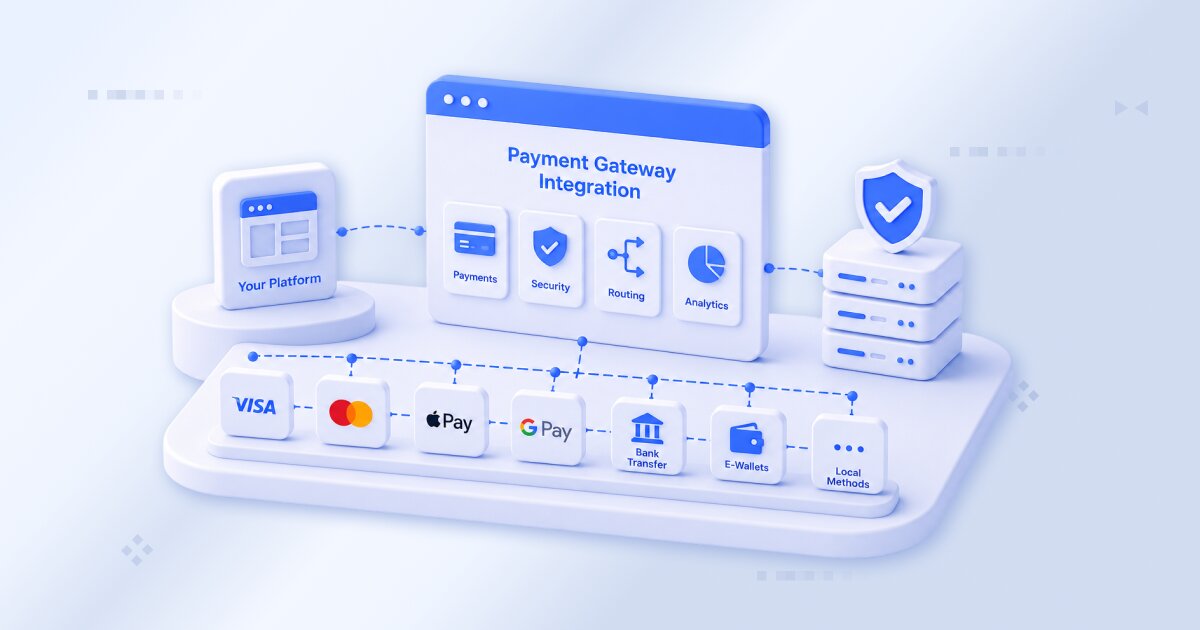
Payment gateway integration services are the technical and operational work that connects your business systems, your website, app, or platform, to the payment infrastructure that processes transactions.
What Is a White Label Payment Gateway
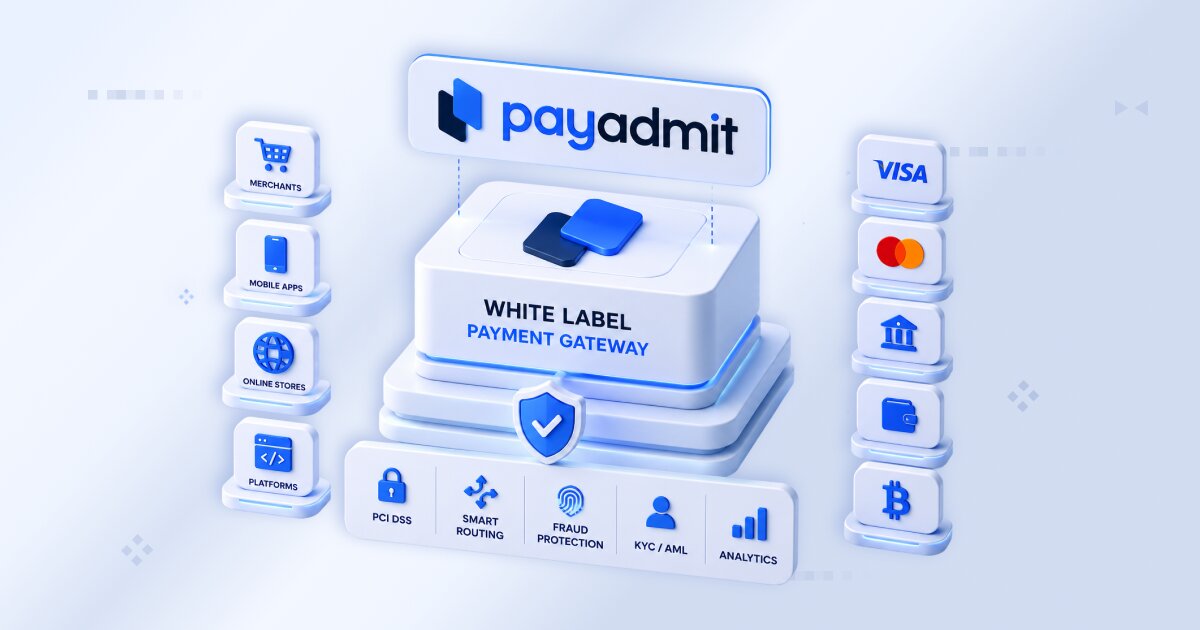
In plain terms: someone else builds the engine. You put your name on the hood, set the rules, and keep the revenue.