


The white label software provides a routing engine configurable per merchant. The PSP sets routing parameters, card BIN, transaction amount, approval rate statistics, merchant risk profile, PSP priority, and the platform routes each payment transaction to the optimal acquirer in real time.
White Label Payment Gateway for PSP
Build a full payment service provider business on white label software. One platform. Full routing control. 550+ integrations. Dedicated infrastructure.
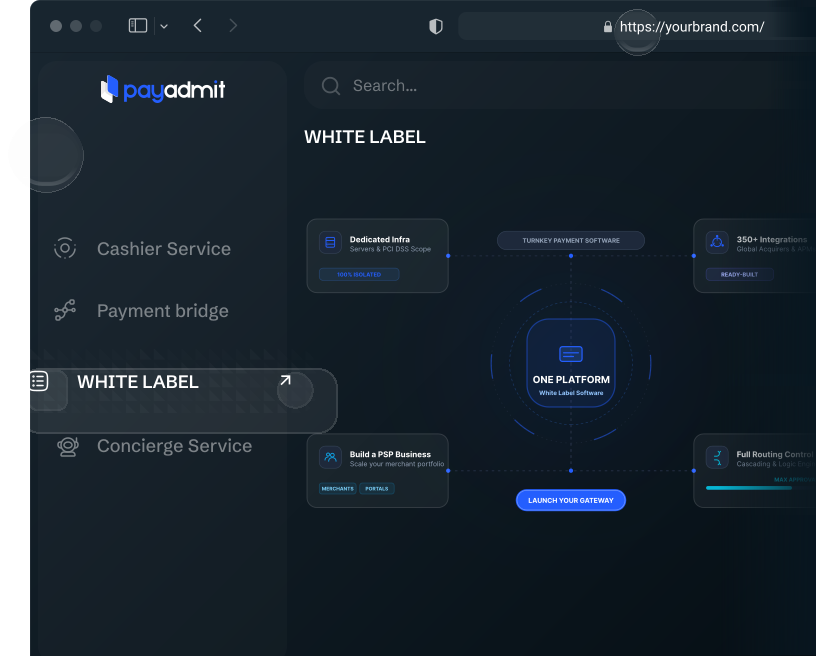
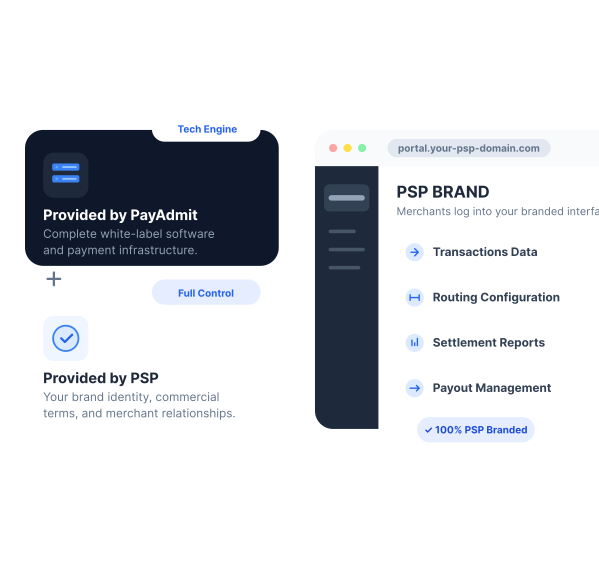
WHAT PSPS GET FROM A WHITE LABEL PAYMENT SOLUTION
A payment service provider using white-label PSP software from PayAdmit gets a complete business platform for running a payment service operation. PayAdmit provides the white-label PSP software and the white label payment gateway infrastructure. The PSP provides the brand, the merchant relationships, and the commercial terms.
Every component is branded to the PSP. The white label merchant portal runs on the PSP’s domain. Merchants log in to the PSP’s branded interface, not to a PayAdmit interface. Each merchant manages its own payment transaction data, routing configuration, settlement reports, and payout management through the PSP’s white label platform.

The white label PSP solution supports multi-provider cascading. When a payment transaction fails at one acquirer, the platform cascades to the next configured provider within the same session. The cascading engine updates provider weights continuously based on live approval rate data.

The PSP manages merchant settlement schedules, fee structures, and reconciliation from the white label back office platform. Each merchant sees its own settlement data and transaction reports through the white label portal. The PSP’s finance team accesses aggregated settlement reporting and portfolio-level transaction analytics.
The Full White-Label PSP Software Stack
PayAdmit’s white label payment gateway software includes every system component a PSP needs to provide a full payment service to merchants.

A full white label interface for merchant management: merchant onboarding, routing configuration, processing limit management, role-based access controls, and settlement data access. The portal runs on the PSP’s domain with the PSP’s brand on every system page. Merchants access transaction reports, manage payout settings, and review anti-fraud rules from the PSP’s white label interface. The platform supports unlimited merchant accounts under one PSP deployment.

The routing engine evaluates every payment transaction against configurable parameters to maximize approval rates: card BIN data, transaction currency and amount, customer trust level, merchant risk profile, and approval rate statistics per PSP and card type. The platform routes each transaction to the provider with the best rate for that combination. Provider weights update continuously from live transaction data.

The white label PSP solution cascades payment transactions across the PSP’s full acquirer network. The system configures cascade sequences per merchant, with timeout thresholds and fallback logic. Transaction rate improvement through cascading is measurable, the PSP monitors approval rates per PSP connection across the merchant network from the back office platform

The platform connects to 550+ PSPs, acquirers, and payment method providers. Visa, Mastercard, Amex, JCB, and UnionPay card processing. Apple Pay, Google Pay, PayPal, and 550+ alternative payment methods. Cryptocurrency processing available as an additional service. The PSP provides its merchants with full payment method coverage through a single white label software integration. New PSP or payment method integrations take 1 to 2 month on request

The white label platform includes configurable anti-fraud rules per merchant: velocity limits, card BIN blocks, spending thresholds, and behavior-based scoring. Third-party anti-fraud software providers, ZignSec, Kount, Paydetect, connect through the same transaction scoring pipeline. The PSP’s risk team manages rules, whitelists, and blacklists from the back office.

The white label PSP software manages payouts at scale. Bulk payout operations run through CSV or TXT file upload with approval workflows. Per-merchant settlement schedules, currency conversion, and settlement report generation are all managed from the platform. The PSP controls the full settlement layer, fee structures, payout timing, and merchant reconciliation.

The platform provides a full REST API for payment initiation, status queries, and refund management. Webhooks deliver real-time transaction updates to merchant systems. PayAdmit provides complete merchant-facing API documentation under the PSP’s brand, ready to hand directly to merchants for self-service integration. The system supports all operation types: pay-ins, pay-outs, refunds, and recurring payments.
White Label PSP Solution vs. Building Your Own
| Metric | Custom Build vs. PayAdmit White Label |
|---|---|
| Cost to launch | $500K–$1M custom build | Single platform fee |
| Time to first merchant | 18–24 months | 1–2 months |
| Time to first merchant | 18–24 months | 1–2 months |
| PSP integrations | Each built separately | 550+ included from day one |
| PCI DSS | Separate audit, 6–12 months | Included on dedicated servers |
| Routing engine | Custom development required | Fully configurable, included |
| Merchant portal | Custom build required | White label portal included |
| Ongoing maintenance | Internal team required | Managed by PayAdmit |
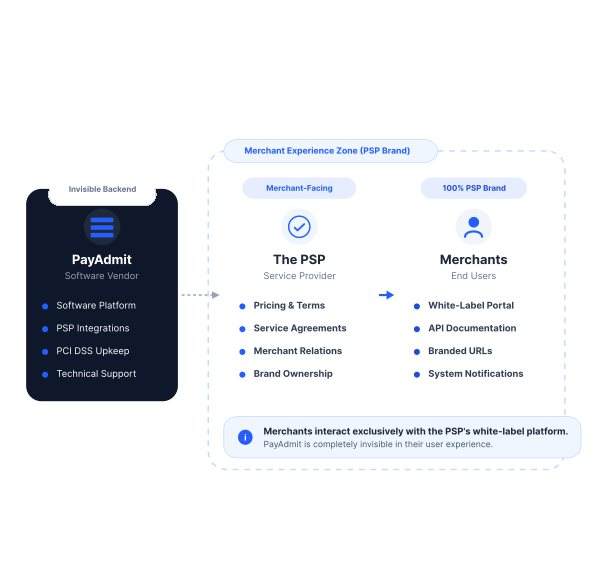
HOW THE PSP RELATIONSHIP WORKS
PayAdmit operates as the white label payment service provider software vendor. The PSP operates as the merchant-facing payment service provider. The commercial relationship between the PSP and its merchants is entirely the PSP’s, pricing, service terms, and merchant agreements are set by the PSP. PayAdmit manages the software platform, PSP integrations, PCI DSS upkeep, and technical support.
The PSP’s merchants interact exclusively with the PSP’s white label platform. PayAdmit is invisible in the merchant experience. The white label interface, the API documentation, the merchant portal URLs, and all system notifications carry the PSP’s brand. Merchants connect to the PSP’s white label payment platform, not to PayAdmit.
Real Scenarios

A payment company with merchant relationships and acquiring agreements needed a full white label payment gateway software to run a payment service provider business. Building the software system independently was not viable at the business’s current stage. Deploying PayAdmit’s white-label PSP solution gave the company a full platform, routing engine, merchant portal, cascading system, and API layer, in under two months. The PSP manages routing rules, rate optimization, and merchant fee structures from the back office. PayAdmit manages the platform infrastructure.

A payment service provider running on shared gateway infrastructure needed full control over routing logic, merchant management, and software development priorities. Deploying PayAdmit’s white-label PSP software on dedicated servers gave the PSP its own routing engine, its own merchant portal platform, and its own PCI DSS environment. The PSP now manages routing optimization, merchant onboarding, and settlement operations independently.
Key Performance Metrics PSPs Manage From the White Label Platform
Running a payment service provider business requires continuous monitoring of payment performance metrics. PayAdmit’s white label platform provides the reporting tools PSPs need to manage approval rates, transaction volumes, and settlement performance across the merchant network.

The back office displays real-time approval rate data per PSP connection, per card BIN range, and per merchant. PSPs identify underperforming routing paths and reconfigure cascading logic to shift volume to higher-performing providers. Approval rate tracking is the core metric for routing optimization and is updated continuously from live transaction data.

The platform provides transaction volume reporting at the merchant level, across the merchant portfolio, and across time periods. PSPs monitor volume growth per merchant, identify merchants approaching processing limits, and manage capacity planning from one interface. Volume data is accessible for any date range and exportable for external reporting.

The settlement reporting layer shows settlement amounts per PSP, settlement delays, and currency conversion impacts on final settlement values. PSPs manage merchant fee calculations and payout timing from the same back office. Every settlement record is reconcilable against the original transaction data.

The platform logs every failed transaction with the failure reason and routing decision. PSPs analyze failure patterns to identify routing optimization opportunities, card BIN blocks that need updating, or anti-fraud rules that are over-blocking legitimate transactions. Failed transaction data is available at the transaction, session, and batch level.
EXPLORE SOLUTIONS FOR OTHER INDUSTRIES
Banks

Expand your digital payment offering with a branded gateway.

Donations
Accept donations in any currency through a trusted, fully branded checkout experience.

PSP
Launch your own processing product and grow your merchant portfolio under your brand

SaaS
Embed native payments into your platform and turn processing into a revenue stream.

eCommerce
Full control over checkout, routing, and payment data with 550+ methods ready from day one.

Marketplace
Process split payments and manage payouts across your entire merchant base from one platform.

Subscriptions
Automate recurring billing, manage retries, and reduce churn with a purpose-built payment engine

Travel
Handle multi-currency bookings and global payment methods through one branded gateway.
For MSPs specifically, we packaged the same platform with tailored onboarding: see our white label payment solution for MSPs page for the details.

Frequently Asked Questions
How many merchant accounts can a PSP manage on the white label platform?

The white label platform supports unlimited merchant accounts under one PSP deployment. Each merchant account operates independently, its own routing rules, processing limits, anti-fraud configuration, settlement schedule, and portal access. The PSP’s admin team manages the full merchant payment network from one back office, with role-based access controls defining what each team member can view and manage. There is no per-merchant licensing fee for accounts within the PSP’s deployment. As the PSP’s payment business grows, the solution scales with it, no account caps, no tier upgrades, no renegotiation.
What happens when a PSP needs a payment method that isn't in the network?
The PSP submits an integration request to PayAdmit. The PayAdmit technical team handles the full integration development, API mapping, testing, and deployment, within 1 to 2 months. The PSP does not need to allocate engineering resources to PSP integration work. Once integrated, the new payment method becomes available across the full merchant network immediately. This keeps the PSP’s payment service competitive without adding internal development overhead to the business.
Can the PSP white label the API documentation for its merchants?
Can the PSP white label the API documentation for its merchants?
Yes. PayAdmit provides complete API documentation under the PSP’s brand, the PSP’s logo, the PSP’s domain, and the PSP’s contact information. Merchants receive fully branded developer documentation for self-service integration. PayAdmit does not appear anywhere in the merchant-facing documentation. The PSP controls the merchant integration experience end to end. From the merchant’s perspective, the white-label PSP interface is the PSP’s own product, the payment solution, the developer docs, and the support contact all belong to the PSP’s business.
How does the platform handle chargebacks and disputes?
The white label platform maintains full transaction logs at every processing step, PSP request and response, routing decision, cascade attempts, and final transaction status. PSPs export transaction logs for chargeback responses and provide them to card networks and acquiring banks during disputes. The platform supports bulk dispute management through the back office, allowing the PSP’s risk team to manage chargeback workflows without external tools. This gives the PSP’s business full control over dispute resolution, a core part of running a payment service at scale.
What is a white-label PSP solution?
A white-label PSP solution is a full payment software platform that a payment service provider deploys under its own brand. It includes the routing engine, merchant portal, cascading system, anti-fraud tools, settlement management, and API layer, all configured to the PSP’s domain and branded to the PSP’s identity. The PSP provides the payment service to merchants; PayAdmit provides the white-label PSP software that runs it. For any business that wants to operate as a payment service provider without building the technical layer from scratch, this solution is the starting point.
What is the difference between a white label payment service provider and PayAdmit?
PayAdmit is a payment software vendor, not a white label payment service provider. PayAdmit provides the white-label PSP software and platform infrastructure, the complete technical solution behind the PSP’s branded payment product. For PSP founders weighing the trade-offs, the full overview of how to make your own payment gateway explains the engineering, regulatory, and commercial dimensions. PayAdmit delivers the solution that powers it, a purpose-built solution the PSP deploys entirely under its own identity.
Can the PSP configure its own routing rules?
Yes. The white label platform provides a fully configurable routing engine. The PSP sets routing parameters per merchant: card BIN, transaction amount, approval rate thresholds, PSP priority, and merchant risk profile. The platform executes the routing logic in real time. Route performance updates continuously from live transaction data. This level of routing control is what separates a true white-label payment solution from a reseller arrangement, the PSP’s business makes the routing decisions, and the payment platform executes them.
What should a PSP prepare before onboarding its first merchants?
Define merchant eligibility, required verification documents, processing limits, settlement arrangements, and support responsibilities. Test the merchant integration and reporting flow before enabling production transactions.