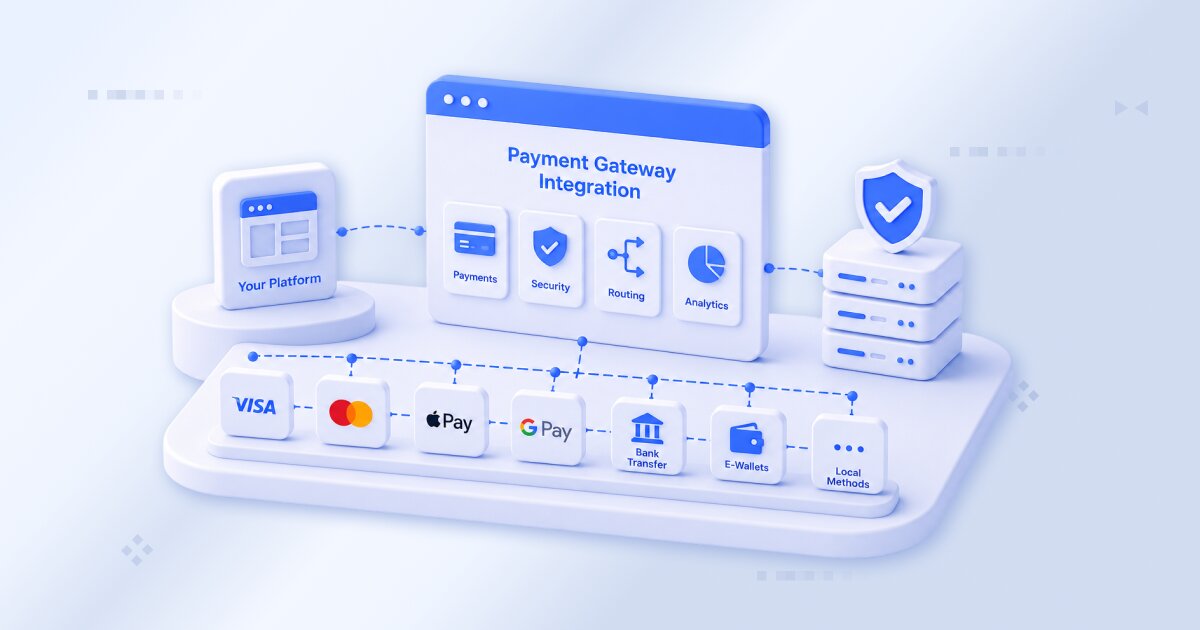

Owning a payment gateway means more than having a checkout form on your website.
TL;DR. Payment infrastructure companies build the rails that let any business move money: gateways, processors, orchestration platforms and white label software. This guide maps the categories, explains how to evaluate a payment platform, and looks at the funding, hiring and tech trends shaping the market in 2026.
A decade ago, a business that wanted to accept money plugged into one big processor and lived with whatever it offered. Today the picture is very different. Payment companies have unbundled that old payment processing stack into specialised processing layers, and any company building a product can now assemble exactly the payment setup it needs. This shift is why the category has become one of the most active corners of fintech, attracting fresh funding rounds and aggressive hiring across the sector.
The driver is fragmentation. As acquirers, banks and card schemes multiplied across regions, no single provider could cover every market well. So a wave of payment rails companies stepped in to connect them. One system processes routing, another processes fraud signals, another processes payouts, and an orchestration layer ties them together. For any business that sells across borders, this modular approach beats betting everything on one legacy vendor and one rigid tech stack.
There is also a "why now" factor. Real-time payments, embedded finance and the rise of fintech super-apps have pushed transaction volumes to record highs. Every one of those flows needs reliable rails, so demand for payment infrastructure platforms keeps climbing. Companies that once built payment tech in-house increasingly buy it instead, because a specialised category company ships faster and carries the compliance load.
The leading processing vendors are flooded with funding from growth investors, and they are hiring senior payment engineers as fast as the technical talent market lets them. The hiring pace, the funding pace and the processing volume all feed each other across the fintech cycle. Strong fintech engineering, paired with deep payment processing expertise, modern processing technology and disciplined processing operations, is what separates the durable processing platforms from the rest. That buy-over-build trend is the engine behind the whole market.
At the simplest level, payment tech companies move money from a payer to a business and keep a record of it. But the work behind that sentence is enormous. A platform authorises a transaction, routes it to the right acquirer, applies fraud checks, settles the funds and reconciles the result. It processes this thousands of times a second, across currencies, without losing a cent.
These companies also carry the regulatory weight. A serious payment company holds certifications such as PCI DSS, registers with card networks and runs anti-money-laundering and know-your-customer programmes. That compliance work is one of the main reasons any business chooses to use a payment tech platform rather than build the rails itself, the same logic behind our security and compliance posture. The company that owns the rails owns the audits, the monitoring and the security burden.
Finally, the best of these companies give developers clean tools. APIs, SDKs, webhooks and dashboards turn a complex money-movement system into something a small team can use and integrate in days. The product that a payment tech company sells is not just movement of money; it is the abstraction any team can use to hide the mess. When a business can launch a payment flow without touching a bank directly, the payment platform has done its job.
The market is not one thing. It helps to group payment players into the layers they serve, because each layer solves a different problem.
Five layers of the market
- Acquirers and processors. Connect a business to the card networks and move the actual funds. Sit closest to the banks and carry the heaviest regulatory load because they touch settlement directly. Many newer payment tech firms build on top of these processors rather than becoming one.
- Gateways. The entry point that captures a transaction, processes it and passes it on. A gateway company focuses on uptime, security and breadth of payment methods. Often the first platform a growing business adopts.
- Orchestration platforms. Route each transaction to the best acquirer, retry failed payments through a second provider and unify reporting across many rails. Where much of the recent innovation in payment technology lives, see our payment routing solution & infrastructure page.
- White label companies. Let another business launch a branded gateway on their software. Instead of building rails, a company licenses a complete payment tech platform and goes to market fast. The model that lets a small team compete with incumbents.
- Banking-as-a-service and payouts. Provide accounts, cards and mass payouts through APIs. Extend payment tech beyond acceptance into the full money lifecycle.
With so many companies competing, choosing the right one matters. A few criteria separate a strong payment platform from a weak one, and any buyer should weigh them carefully.
| Criterion | What to ask |
|---|---|
| Coverage | Does the company support the markets, currencies and payment methods your business needs today and next year? A vendor that looks great in one region can fail in another. |
| Compliance & security | Non-negotiable. Confirm PCI DSS Level 1, card-network registration and real fraud monitoring. A platform that cuts corners here will eventually cost the business far more than it saves. |
| Reliability | Uptime and approval rates decide revenue. Ask for evidence of both. A system that drops transactions during peak hours is a liability, not rails. |
| Developer experience | The speed at which a team can integrate often decides the project. Clear APIs, sandboxes and documentation mark the companies that respect the people who build on them. |
| Pricing & flexibility | Weigh commercial terms. The right platform grows with the business and does not lock it into a single acquirer or a rigid contract. |
Money follows the rails. This category has been one of the most heavily funded areas of fintech for years, and that funding shapes which companies survive and scale. Investors back payment companies because the model is sticky: once a business runs its money through a platform, switching is hard, so revenue compounds.
The funding picture explains a lot about how these companies behave. A well-funded payment company can absorb the cost of new licences, new markets and new compliance work that a thin balance sheet cannot. That is why funding rounds in this space often dwarf those in flashier consumer apps. The rails are expensive to build, so the company that builds them needs deep capital.
For a buyer, funding is a useful signal but not the whole story. Strong funding suggests a company can keep investing, yet plenty of well-funded companies have stumbled on execution. The smarter read is to pair funding data with product evidence: does the company ship, do customers use and keep it, and does its platform actually clear transactions reliably? Funding buys runway, but it does not guarantee good rails.
Look at how a company uses its funding, not just how much it raised. The best operators use funding to widen coverage, deepen compliance and harden their tech, while weaker ones use it to buy growth they cannot keep. Read every funding round as a question, not an answer. Funding also decides how much a company can process. Building rails that process millions of transactions without failure is capital-intensive, so the best-funded firms tend to process the most volume reliably. When they raise, they often use the funding to expand processing capacity, add redundancy and process new payment methods, so a buyer can read a round as a signal of how much the company will process next year.
Get the gateway integration guide and see how a modern platform connects banks, acquirers and apps through one layer.
Behind every payment tech platform is a team that is famously hard to assemble. Hiring in this market is intense, because the engineers who understand money movement, compliance and security are scarce. Payment companies compete with banks and big tech for the same small talent pool, so hiring costs run high.
This hiring pressure shapes the whole category. A company that cannot hire fast enough cannot ship, so the strongest payment tech firms invest heavily in their hiring brand and in retaining the talent they already have. For businesses building on top of these platforms, the lesson is clear: you do not need to win the same hiring war. When you build on a payment platform, the company behind it carries the hardest hiring, and you can lean on external fintech software development capacity in far smaller numbers.
That is the quiet advantage of the buy-over-build model. Hiring a full payments team is slow and expensive, while using a platform lets a lean team move fast. The hiring burden shifts to the company that owns the rails, and any business can focus its own hiring on product rather than plumbing. In a tight talent market, that shift is worth more than ever.
Hiring also signals where a company is headed. When a payment company ramps hiring in fraud or compliance, they are preparing for scale; when hiring slows, they may be consolidating. For any business choosing a platform, watching how a company approaches hiring is a useful tell. You inherit the strength of their hiring without fighting the same hiring battle yourself.
Reading these signals together helps any buyer. A company can use funding and hiring as a lens: when they fund coverage and hire for compliance, they are building for the long run, and any business that uses their rails benefits. When they chase vanity growth, any team that depends on them inherits the risk. Hiring patterns track processing growth too. A company that is hiring processing and reliability engineers is usually preparing to process more volume, and any business that uses such a company gains from that hiring, because the people they hire keep the rails processing cleanly under load.
The tech inside a payment tech platform is what separates the leaders from the rest. Three ideas dominate the modern tech stack: orchestration, cascading and clean APIs.
Three ideas at the core of modern payment tech
- Orchestration, the logic that decides where each transaction goes. Instead of sending every payment to a single acquirer, the platform scores cost, currency, risk and approval history, then routes the payment to the best option. Good orchestration lifts approval rates, and higher approval rates flow straight to revenue.
- Cascading, if the first acquirer declines a transaction, the platform retries through a second, and a third if needed. For any payment tech company, this single feature can recover a meaningful share of otherwise lost transactions.
- Clean developer-facing APIs, REST endpoints, sandboxes and webhooks a team can use without a manual. This is why the tech behind a platform is as much about developer experience as it is about money movement.
The payment loop, simplified
A customer pays → the gateway captures the transaction → the orchestration layer scores it → the best acquirer authorises it → if that acquirer declines, cascading reroutes the payment before the customer notices. Reporting then feeds every result back into one dashboard.
The vendors that treat both money movement and developer experience as first-class are the ones building durable payment tech. Fraud tooling ties in through the same layer, see our antifraud & risk management module.
It helps to see how a real company uses a payment platform day to day. A growing business does not buy rails for fun; it uses them to solve a concrete problem, and the way they use the platform shapes which company they pick.
A marketplace, for example, uses a platform to split each payment across many sellers and to process payouts on a schedule. They need a company whose tech handles complex money flows out of the box. A subscription business uses a platform to process recurring charges and to retry failed payments automatically. They care less about payouts and more about how the company handles dunning. A cross-border retailer uses a platform to process payments in many currencies and route each transaction to a local acquirer.
In every case, the business uses the platform to avoid building rails itself. They hand the hardest money movement to a company that already solved it, and they use the freed time to build product. This is why any company evaluating payment tech should start from its own use case. The right platform is the one whose strengths match how the business will actually use it, not the one with the longest feature list. When the use case is clear, the choice of company gets far easier.
PayAdmit is a company built for the modular era. The platform gives any business a route to market that does not require building rails from scratch. Through the PayAdmit Bridge, a company connects to many acquirers and payment methods through one integration, then routes every transaction intelligently and switches on cascading without rebuilding its stack.
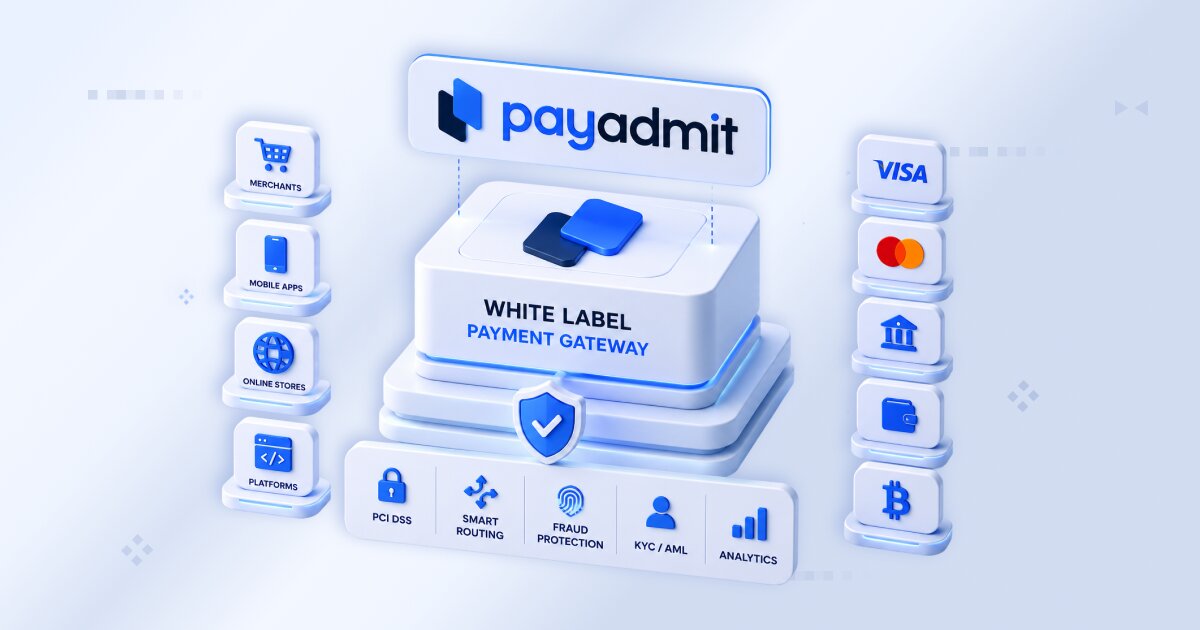
For businesses that want to launch their own branded product, PayAdmit white label payment gateway software turns the platform into a foundation a company can sell as its own. It is already PCI DSS Level 1 certified and registered as a Visa PSP and Mastercard MRP, so the compliance and network relationships are in place. A company building on PayAdmit inherits the rails instead of negotiating them one by one.
This is the same logic that runs through the whole market. Whether a team uses payment gateway middleware to unify its connections, follows our guide on how to start a payment processing company, or leans on fintech software development support, the goal is the same: ship a reliable payment product without owning every layer underneath. PayAdmit gives any company that foundation, so a small team can compete with the largest payment platforms.
The pattern holds across the whole market. Any business that wants to move money can either build rails or use a company that already has them, and the maths almost always favours the second path. A modern team uses a shared system, points its own tech at the product, and lets the company underneath handle the rails. They ship faster, they carry less risk, and they reach more markets than any in-house build could. This is the quiet logic of the payment tech era: the winners are rarely the businesses with the most engineers, but the ones that use the best rails and focus their own tech where it counts.
Not every company needs the same solution. The market offers payment solutions for every stage, and any business should match the solution to its size and ambition.
| Stage | Fit | Why |
|---|---|---|
| Early-stage | Hosted gateway | Does not need a heavy solution, needs to start accepting money in days and move on. |
| Scaling | Orchestration & multi-acquirer routing | Volume now justifies a more flexible solution; approval-rate lift starts to matter to the P&L. |
| Large | White label software | The business uses the platform as its own and controls the full experience end-to-end. |
The point is that payment solutions are not one-size-fits-all. A solution that fits a startup will choke an enterprise, and an enterprise solution overwhelms a startup that cannot use it. Any company that picks a solution one size too large pays for complexity it cannot use, while one that picks too small outgrows the solution within a year. The smartest firms treat the solution as a moving target and choose a platform they can grow into.
Launch Your Payment Gateway.
See how fast any company can go live on rails that already power modern payment platforms.