

A payment processor handles the financial transaction, communicating with banks and card networks to move money. A white label payment gateway is the software layer that captures, encrypts, and routes transaction data to the processor. With a white label gateway, your business owns the software, the brand, and the customer relationship. The processing happens through your chosen acquiring partners connected to the gateway. The key benefit for any business is full control over how payments flow, how customers interact with the checkout process, and how transaction data is used. A processor provides the rails, a white label gateway provides the entire customer-facing payment experience.
What Is a White Label Payment Gateway?
A white label payment gateway is a fully developed, PCI DSS certified payment processing platform that a business licenses from a provider, rebrand as its own, and uses to offer payment services to merchants and customers, without building any payment infrastructure from scratch.
27.05.2026
Updated:
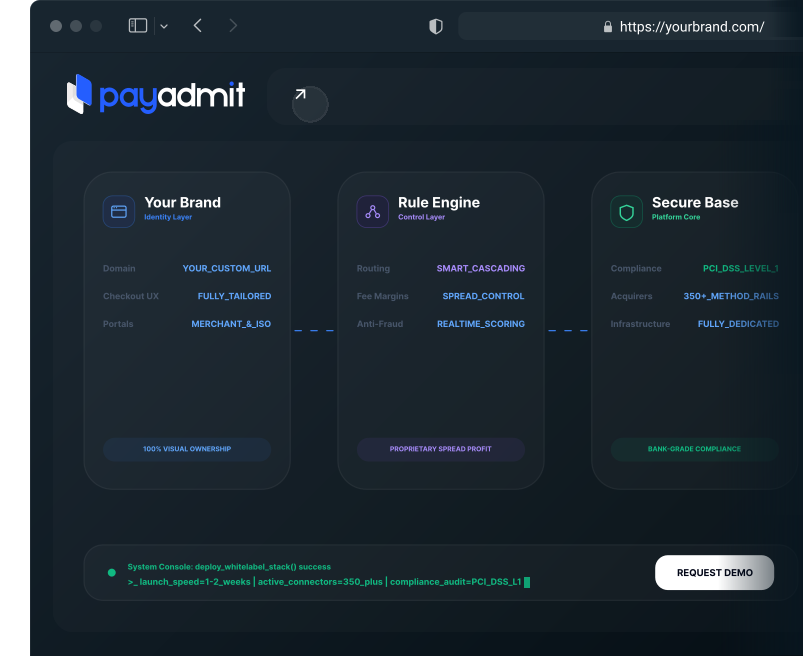

In plain terms: someone else builds the engine. You put your name on the hood, set the rules, and keep the revenue. The white label provider handles the technical complexity, server maintenance, security certification, payment method integrations, compliance updates. You control the brand, the merchant relationships, and the transaction margins.
This model has transformed how PSPs, banks, fintech businesses, and high-volume merchants enter the payment processing market. What once required years of development and millions in investment now takes weeks and a fraction of the cost.
How a White Label Payment Gateway Works
In practice, the white label model means operators can create a payment gateway built for your brand with the full visual identity, custom domain, and merchant-facing experience under their own name rather than a vendor’s.
| Stage | What Happens |
|---|---|
| Customer initiates payment | Customer enters card details or selects a payment method at your branded checkout page. The white label gateway captures the data and encrypts it immediately. |
| Gateway processes the transaction | The white label gateway routes the payment data to the appropriate acquiring bank or payment processor based on your configured routing rules. Smart routing logic selects the optimal route for each transaction. |
| Authorisation request | The acquirer sends an authorisation request to the card network Visa, Mastercard and applies Visa security requirements before reaching the issuing bank. The issuing bank approves or declines based on available funds and fraud checks. |
| Response returned | The authorisation response travels back through the network. The white label gateway receives it and returns a success or decline message to the checkout page, in real time, typically within 2–3 seconds. |
| Settlement | Approved transaction funds are batched and settled into the merchant’s account. Your white label platform handles the settlement reporting, reconciliation data, and payout management from your admin panel. |
Every step in this process happens through your branded white label system. The customer sees your payment page. The merchant uses your admin panel. The transaction data belongs to your business. The underlying technical infrastructure is maintained by the white label payment gateway provider.
White Label Payment Gateway vs. Building Your Own: What Actually Changes
Many businesses that want to process payments or offer gateway services to merchants face a binary choice: build a custom payment gateway from scratch or license a white label solution. Here is what that choice looks like in practice:
| Factor | Build from Scratch | White Label Gateway |
|---|---|---|
| Time to market | 12–24 months | 1–2 months |
| Upfront cost | $500K–$1.5M+ | Fraction of custom build |
| PCI DSS certification | 6–12 months + $50K–$200K | Included from the provider |
| Payment integrations | Each requires separate development | 550+ ready from launch day |
| Branding | Custom, but adds dev time | Custom, your domain, your brand |
| Ongoing maintenance | Your in-house team | Handled by the provider |
| Transaction data ownership | Full | Full |
The Key Insight
Both paths give you a gateway you own and operate under your brand. The white label path removes the technical build burden while keeping the commercial ownership. You still control pricing, routing, merchant relationships, and transaction margins, the difference is that you don’t spend two years figuring out how to develop a payment gateway from scratch first.
10 Key Benefits of a White Label Payment Gateway
The business case for a white label gateway comes down to speed, cost, control, and customer experience. Here are the concrete benefits that make businesses choose this model:
Speed to market
Launch a fully branded payment processing business in 1–2 months, not years. A white label gateway provider delivers a production-ready system. You configure, brand, and go live.
Lower cost of entry
Avoid $500K–$1.5M in custom development costs. White label payment processing turns a capital expenditure into a manageable service fee, freeing resources for merchant acquisition and business growth.
Full brand control
Every touchpoint, checkout page, payment confirmation, admin panel, merchant portal, carries your brand. Customers and merchants never see the underlying white label provider.
PCI DSS compliance included
White label payment gateway providers maintain PCI DSS Level 1 support on behalf of their clients. Your business inherits that compliance without running a separate audit programme.
Instant payment method coverage
Access 550+ payment methods from day one, card processing, digital wallets, local APMs, bank transfers, crypto, through a single white label integration. Each method is pre-certified and production-tested.
Transaction data ownership
All payment data generated through your white label gateway belongs to your business. You analyse it, report on it, and use it to optimise routing and improve customer conversion.
Smart routing and margin control
Configure transaction routing rules to direct payments to the optimal provider. Control the buy rate from acquirers and set the sell rate to merchants, the spread is your margin.
Scalable infrastructure
White label payment infrastructure is built to process millions of transactions. Your gateway scales with your merchant base without requiring infrastructure investment from your side.
Compliance and fraud protection
AML, KYC, KYB, and antifraud tools are built into the white label platform. Your business provides these capabilities to merchants as part of your payment service offering.
Ongoing maintenance by the provider
Security patches, payment method updates, compliance changes, and platform improvements are all handled by the white label gateway provider. Your team manages the business, not the technology.
Who Uses a White Label Payment Gateway
White label payment gateways serve businesses at different points on the payments value chain. The common thread is that each business type benefits from owning branded payment processing capabilities without carrying the development burden.
Payment Service Providers (PSPs)
PSPs use white label payment gateways to offer branded payment processing services to merchants. Instead of building technical infrastructure, PSPs focus on merchant acquisition, commercial relationships, and pricing strategy. The white label provider delivers the platform. The PSP delivers the service.
Banks and Financial Institutions
Banks use white label payment solutions to extend digital payment capabilities to business customers. A bank can offer a fully branded payment gateway service under its own name, backed by white label infrastructure, strengthening its position as a complete financial service provider without the cost of custom software development.
iGaming and Online Gambling Operators
High-volume gaming operators use white label payment gateways to manage complex transaction flows across multiple providers, currencies, and customer geographies. Smart routing, antifraud monitoring, and high-volume processing capabilities are critical requirements that white label platforms provide out of the box.
E-commerce Platforms and Marketplaces
Large e-commerce platforms and multi-merchant marketplaces use white label gateways to own their payment infrastructure end-to-end. Controlling the checkout experience, transaction data, and payment routing improves customer conversion and reduces per-transaction costs at scale.
Fintech Companies and Startups
Fintech businesses use white label payment gateways to embed payment processing in their product quickly. A neobank, lending platform, or embedded finance product that needs payment capabilities can launch weeks after integrating a white label gateway, rather than building one over 18 months.
Smaller fintech teams that don’t need full infrastructure ownership often start with a cashier service before migrating to a white label deployment.
Software Platforms and SaaS Companies
Software businesses that serve merchants, e-commerce platforms, booking systems, marketplace software, use white label payment gateways to add payment processing as a native feature. Instead of directing customers to a third-party gateway, the software platform provides payment processing under its own brand. This deepens the customer relationship, adds a revenue stream, and increases switching costs for merchants.
Independent Sales Organisations (ISOs)
ISOs that previously referred merchants to major processors and earned thin commissions use white label payment gateways to become payment principals. By owning a white label gateway, an ISO captures the full margin between the buy rate from the acquirer and the sell rate to the merchant, transforming a commission-based model into a full payment processing business.
What to Look for When Choosing a White Label Payment Gateway
| What Matters | What to Check |
|---|---|
| PCI DSS Level 1 | The provider’s infrastructure must hold current PCI DSS Level 1 certification, the highest level. Confirm it covers your deployment, not just their internal systems. |
| Payment method coverage | Confirm the number of pre-built integrations and which markets they cover. Check local APM availability for each of your target geographies. |
| Branding depth | Can you use your own domain? Customise payment pages, admin panel design, and merchant portal? A genuine white label gateway gives full visual ownership. |
| Routing and cascading | Smart routing and automatic cascading on failed transactions protect your approval ratios and merchant relationships. Confirm these are configurable, not fixed. |
| Compliance tooling | AML, KYC, and KYB modules should be built in. Antifraud monitoring should be configurable per merchant risk profile. |
| Data ownership | All transaction data should belong to your business. Check the contract for any clauses that allow the provider to use or share your transaction data. |
| Speed of deployment | Confirm the actual time from signed contract to live gateway. Realistic timelines are 1–2 months for white label solutions, not years. |
| Support model | Real payment engineers accessible 24/7 versus a ticket system. Payment issues do not keep business hours. |
How White Label Payment Gateway Businesses Generate Revenue
One of the most commercially compelling aspects of operating a white label payment gateway is the revenue model. Unlike a standard merchant that pays processing fees, a white label gateway operator sits on the other side of that equation, earning on every transaction their merchants process.
| Revenue Stream | |
|---|---|
| Transaction margin | You negotiate a buy rate with acquiring banks. You set a higher sell rate for merchants. The spread between the two is your transaction margin, earned on every payment processed. |
| Setup and onboarding fees | Charge merchants a one-time or annual fee to onboard them to your white label payment platform. This covers configuration, integration support, and account setup. |
| Monthly platform fees | Merchants pay a recurring monthly fee to access your payment processing services, reporting tools, and payment methods library. |
| Response returned | The authorisation response travels back through the network. The white label gateway receives it and returns a success or decline message to the checkout page, in real time, typically within 2–3 seconds. |
| Chargeback management | Provide chargeback handling and dispute management as a service for merchants who cannot manage this in-house. |
White label payment gateway operators transform payments from a cost centre into a profit centre. Every merchant you onboard and every transaction they process generates revenue for your business. At scale, the transaction margin alone generates significant returns, particularly in high-volume sectors like iGaming, e-commerce, and subscription services.
PayAdmit: White Label Payment Gateway Solution
PayAdmit is a white label payment gateway provider with over 10 years of experience building payment software for PSPs, banks, iGaming operators, and e-commerce businesses. Our platform delivers all the core white label gateway benefits, speed, compliance, payment coverage, and full branding, with a deployment timeline of 1–2 months.
What You Get with PayAdmit’s White Label Gateway
Your own domain. Your own branded payment pages and admin panel. Dedicated infrastructure under your control. 550+ payment method integrations ready from launch day. PCI DSS Level 1 certification included. Smart routing and cascading logic configurable from your dashboard. AML, KYC, KYB, and antifraud monitoring built in. 24/7 support from real payment specialists. All transaction data belongs to your business.
Frequently Asked Questions
What is the difference between a white label payment gateway and a payment processor?

Do I need my own PCI DSS certification to use a white label gateway?
No. White label payment gateway providers maintain PCI DSS certification on the platform infrastructure. When you deploy a white label solution, that certification covers your gateway operations. You do not need to run a separate PCI DSS programme. PayAdmit’s platform is PCI DSS Level 1 certified, the highest standard available. This is a major benefit for any business that wants to process payments without the cost and complexity of managing its own compliance process. The provider handles the certification process so your business can focus on serving customers.
Can a white label gateway process payments in multiple currencies?
Yes. White label payment gateways support multi-currency transaction processing as a standard capability. PayAdmit’s platform supports all major currencies and provides automatic currency conversion where required. Merchants can accept payments from customers in any supported currency and receive settlement in their preferred currency. The benefit for a business operating across borders is that each customer sees prices and completes the payment process in their local currency. This removes friction from the checkout process and provides a better experience for every customer.
How long does it take to launch a white label payment gateway?
PayAdmit deploys white label payment gateways in 1–2 months from signed contract to live production gateway. This includes custom domain setup, branded payment page configuration, payment method connection, routing rule setup, and full QA testing. The timeline is 60% faster than the market average. The benefit of this speed is that a business can start processing live payment transactions and onboarding customers within days rather than months. PayAdmit provides a fully configured production environment, your business does not need to build or process any infrastructure from scratch.
What payment methods are available through a white label gateway?
PayAdmit’s white label gateway provides access to 550+ payment methods from launch day, including Visa and Mastercard card processing, Apple Pay, Google Pay, PayPal, Skrill, SEPA, local APMs for 40+ markets, and crypto payments. All integrations are pre-built and pre-certified. Every payment method is ready to use from day one. This provides a clear benefit: your business can process transactions from customers across any market without managing separate integrations. PayAdmit provides and maintains every connection so you can focus on growing your customer base and scaling your payment volume.
Who owns the transaction data in a white label payment gateway model?
In a white label gateway deployment, all transaction data belongs to your business. You have full access to historical transaction records, real-time reporting, and all payment data generated through your platform. The white label provider has no claim on your transaction data. This means your business can use the data to optimise the payment process, improve customer conversion rates, and build analytics that provide real commercial insight. Full data ownership is a core benefit of the white label model, it gives every business the tools to process smarter and serve customers better.
ADDITIONAL RESOURCES

How to Own a Payment Gateway
Owning a payment gateway means more than having a checkout form on your website.
Payment Gateway Integration Services
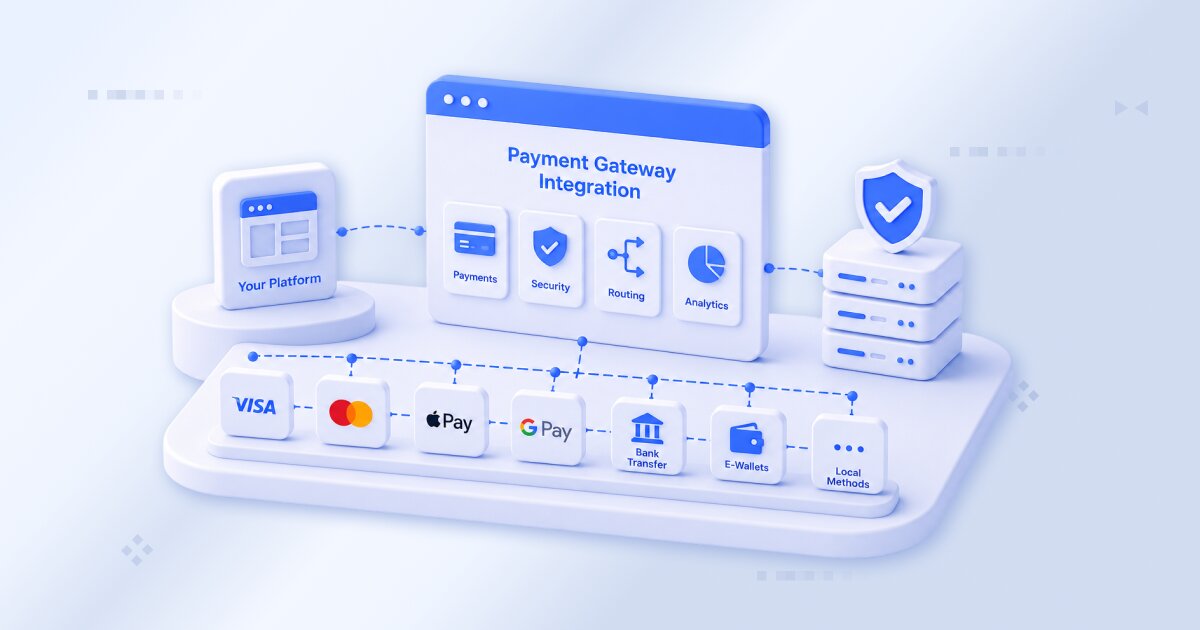
Payment gateway integration services are the technical and operational work that connects your business systems, your website, app, or platform, to the payment infrastructure that processes transactions.

How to develop payment gateway
Developing a payment gateway is one of the most technically demanding projects in fintech.