

Booking charges are high and time-sensitive. A flight booking is typically 5 to 20 times the value of an average retail transaction. The authorization window is short, fares expire, seat inventory moves, and a payment that takes three seconds too long to authorize can result in a price change. Payment processing speed and reliability are not performance metrics here. They are business continuity requirements.
White Label Payment Gateway for Travel
Multi-currency booking payments. PSP cascading for high-value transactions. API integration for OTA and travel agency platforms. Full white label payment service under your brand.

Specialized Payment Infrastructure for High-Value Travel Verticals
High-value payment verticals need specialized gateways. A single booking can involve a card charge in one currency, settlement in another, a fare rule requiring immediate capture, and a refund policy that differs by carrier or hotel.
Every card transaction in travel carries a time constraint, authorization windows are short, fares expire, and a gateway that cannot process the transaction within the booking flow timeout loses the sale entirely.
Payment failure at checkout does not mean the customer tries again, it means the booking is lost to a competitor. Payment failures are direct business continuity risks. Every missed payment transaction is a lost booking.
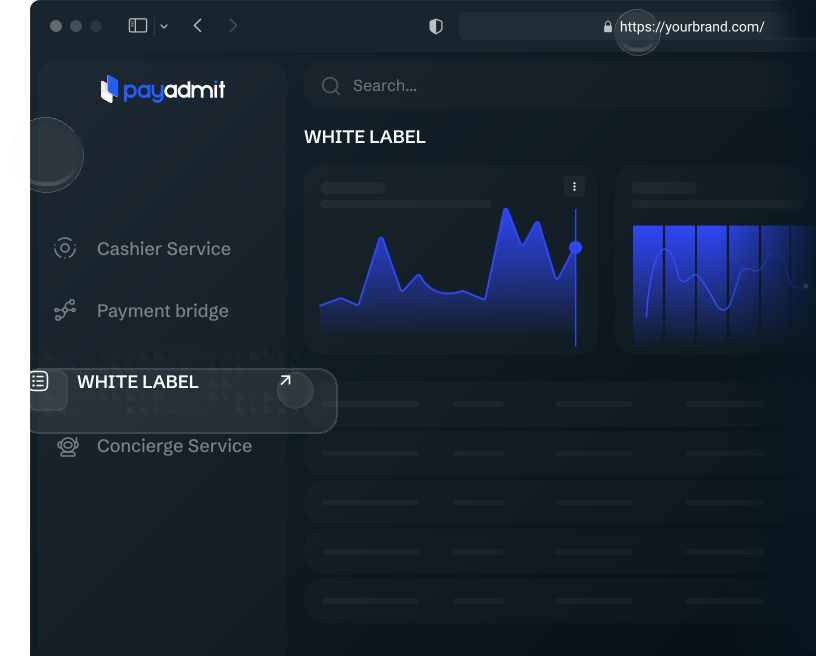
PayAdmit provides a white label payment gateway, the white label solution built for travel businesses and travel agencies: a dedicated payment service layer running under the operator’s own brand, with multi-currency payment routing, PSP cascading optimized for booking patterns, GDS and booking platform connectivity, and a white label checkout that keeps buyers inside the white label branded experience from search to payment confirmation.
The gateway handles every transaction type in the travel payment lifecycle, card authorization, pre-authorization, capture, partial refund, and void, through a single integration point. For travel businesses where each transaction represents a high-value booking, gateway reliability is not a feature. It is the foundation.
Why Booking Payments Differ From Standard Payment Processing
Payment processing in this sector has structural differences
from retail checkout that generic solutions handle poorly.

High-value bookings frequently trigger fraud flags on generic gateways, buyer in one geography, destination in another, purchase category mismatch. A solution that does not account for these patterns produces false declines that cost the business real bookings and lost business revenue. The routing and anti-fraud layer must understand booking context, not apply generic retail rules.

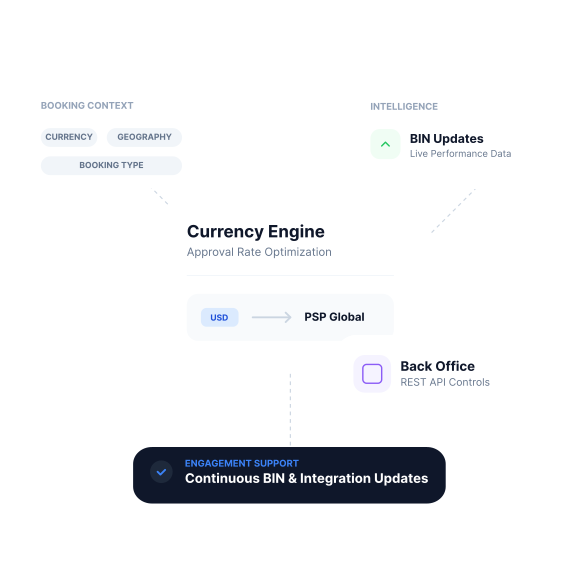
Travel businesses processing bookings across multiple markets cannot absorb currency conversion at unfavorable rates. The white label payment solution needs to handle multi-currency processing natively, routing each booking to the PSP with the best approval rate for that currency, geography, and booking type.

OTAs, meta-search engines, and corporate booking platforms are built on layered architectures. A solution without webhook infrastructure cannot integrate cleanly into a booking flow. API connectivity is a baseline requirement for any white label travel payment service.
Who Uses a White Label
Payment Solution in Travel
This is a broad vertical with distinct B2B and B2C business requirements. Each business type and agency type has distinct payment service requirements, and every booking business model and booking platform has different requirements. PayAdmit’s white label payment solution serves five business segments.
1
Online Travel Agencies (OTAs)
An OTA processing bookings for flights, hotels, and car rentals needs a white label solution that handles high-value bookings at volume and integrates into the booking engine, the right solution for any OTA, travel agency, or booking platform. The payment service runs under the OTA’s identity. The white label solution gives the OTA full control over routing, PSP selection, and checkout design, and provides the OTA with full payment lifecycle visibility. PayAdmit provides ongoing PSP management, continues to provide integration support, and provides routing optimization guidance.
2
Corp. Travel Platforms
Corporate travel management platforms and corporate travel agencies, and every agency managing booking payments for corporate clients, need a payment service with virtual card and lodge card payment support, invoice-triggered billing, multi-entity support, and detailed reporting by cost center or traveler profile. The payment solution provides connectivity with corporate ERP systems and provides integration with travel management reporting. Business booking payment data flows to finance teams in structured settlement reports.
3
Agencies and Tour Operators
Traditional travel agencies, niche-market travel agencies, and tour operators processing agency payments for package travel, cruise bookings, and multi-component agency itineraries need a white label solution that handles partial payment collection, deposit-and-balance billing, and supplier payment distribution. The travel agency provides clients with a secure, branded payment experience. The system processes payment transactions and routes funds according to configurable payment schedules. The solution handles the full payment lifecycle, including the edge cases generic payment solutions miss. For booking businesses, this solution is the right payment solution.
4
Accommodation and
Accommodation and
Property Platforms
Accommodation booking platforms, from vacation rental to boutique hotel booking engines, need flexible authorization at booking, capture at check-in, and policy-triggered refunds. The white label solution provides configurable authorization windows and capture delay. Deposit and balance payments link to the same booking record. All accessible via the REST API.
5
B2B Distribution
B2B Distribution
Platforms
Wholesale distributors and B2B travel agencies and agency networks connecting travel agency suppliers to resellers need a white label solution that handles high-volume payment processing across multiple reseller accounts. Per-reseller routing configuration, settlement separation, and consolidated reporting are all included. Automated reseller onboarding and per-account payment profile configuration are supported.
Five Capabilities That Set the White Label Travel Payment Gateway Apart
PayAdmit’s white label travel solution is built around five capabilities
that businesses require from a payment gateway.
Multi-Currency
Payment Routing
Every booking routes to the PSP with the highest approval rate for that currency, geography, and booking type. The routing engine evaluates live PSP performance data alongside BIN-level data. Routing rules and cascade sequences set from the back office or via the REST API.
The right solution accounts for booking context at the routing level. PayAdmit provides the operator with configurable controls and continues to provide routing updates. PayAdmit provides BIN updates and continues to provide integration support throughout the engagement.
PSP Cascading
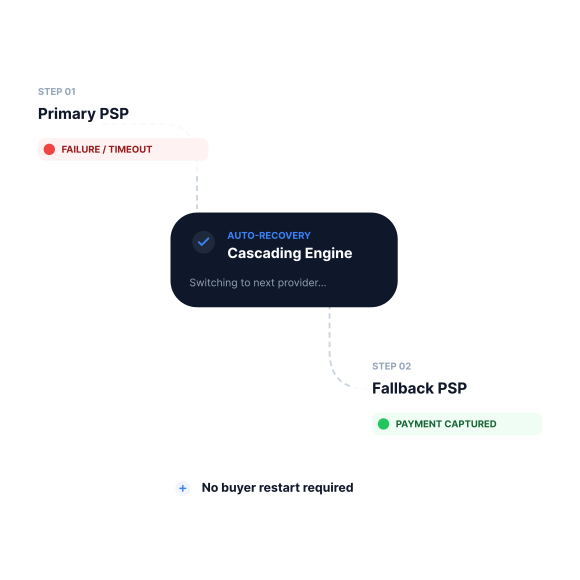
Payment failures at the first PSP do not restart the booking flow. The system cascades automatically within the same session, without interrupting the booking flow. The buyer does not restart the payment.
The booking is captured. Cascade sequences configure per payment method from the back office. For agencies and businesses processing high-value bookings where a single PSP failure means a lost booking, cascading is the core payment reliability feature.
Fraud Detection for High-Value Bookings
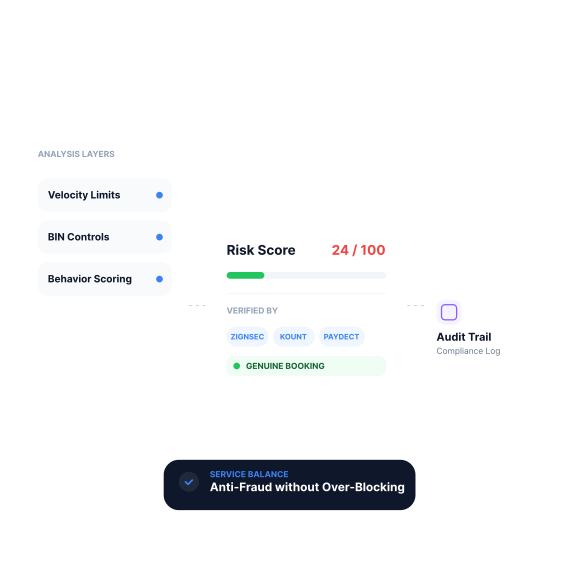
High-value bookings frequently trigger standard fraud models disproportionately. Anti-fraud rules apply per booking category: velocity limits per traveler profile, BIN controls for known high-risk geographies, behavioral scoring for rapid booking patterns.
Third-party anti-fraud services, ZignSec, Kount, Paydetect, integrate through the standard pipeline. Fraud rules account for legitimate booking purchasing patterns, protecting against fraud without blocking genuine bookings, a critical service-level balance.
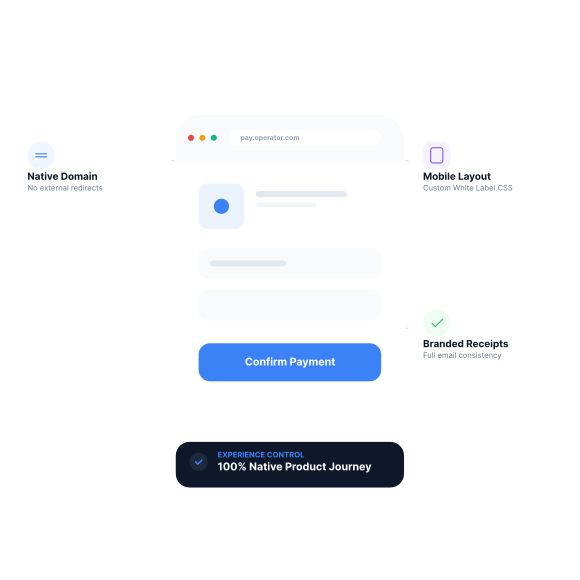
Branded Checkout on the Operator’s Domain
Every payment page runs on the operator’s domain with the operator’s branding. Buyers never leave the white label branded experience, payment entry, confirmation, and receipt all carry the operator’s brand. Custom white label CSS, mobile-responsive layout, and per-booking-type checkout configuration are included.
The checkout integrates with the existing booking UI without requiring a redirect to an external payment page. White label receipt emails and confirmation pages carry the operator’s brand. Every payment interaction stays under the operator’s white label brand.
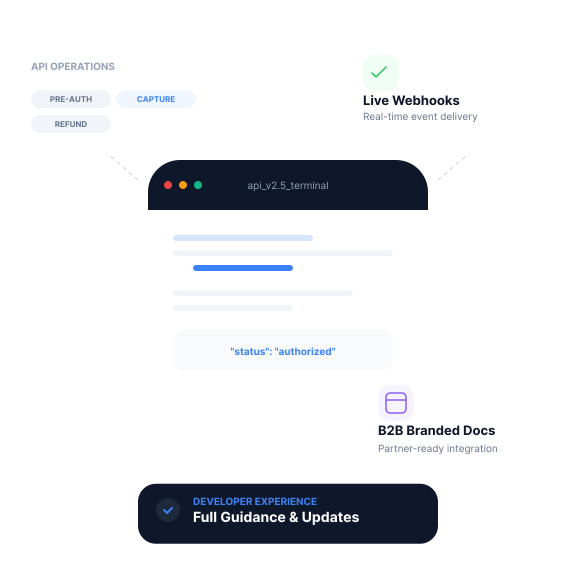
API-First Architecture for Travel Platform Integration
The REST layer covers every operation required by booking businesses: payment initiation, pre-authorization, capture, void, and refund. Real-time webhooks deliver payment events: payment authorized, payment captured, payment failed. The white label API documentation carries the platform’s white label brand, ready to provide to API integration partners.
B2B resellers and partners receive the branded API documentation and integrate against the platform’s endpoints, not PayAdmit’s. PayAdmit provides API integration documentation, continues to provide integration updates, and provides full technical guidance.
Multi-Currency Payment Architecture for Cross-Border Bookings
Multi-currency payment processing is at the center of booking payment complexity. A business processing bookings for travelers from multiple source markets, paying suppliers in multiple destination currencies, and settling in a base currency faces a three-layer currency problem that a single-currency solution cannot solve.
The routing layer handles this. Buyer currency, what the traveler pays in, configures per market. Payment settlement currency, what the operator receives as payment, configures per PSP connection. Supplier payment currency, what the business pays to hotels, airlines, and other suppliers, configures per supplier account.
Currency conversion applies at the routing layer using live exchange rate data before each booking routes to the PSP. The business operator does not need to manage currency conversion manually. Exchange rate data is available programmatically, providing the booking engine with accurate converted prices before the traveler confirms.
For businesses operating in markets where local card networks have higher approval rates than international networks, the routing engine supports local PSP priority, routing through local acquiring infrastructure first and cascading to international PSPs as backup. This routing architecture can deliver measurable approval rate improvements for agencies processing in emerging markets.
REST API Architecture
OTAs, meta-search engines, and corporate booking tools are built on technology stacks. The solution must integrate cleanly with booking engine APIs, supplier content APIs, GDS connectivity, and reporting. The REST interface is documented and versioned, covering every operation with request/response examples, error codes, and test specifications.
White label API documentation delivers under the platform’s white label brand, the operator’s own white label layer, fully branded, fully owned. B2B resellers and partners receive the branded API documentation and integrate against the platform’s endpoints, not PayAdmit’s.
PayAdmit provides all documentation under the platform’s brand and continues to provide API documentation updates.

The integration accepts booking reference data, tokenized payment details, transaction currency, and amount. The system validates the payment details, initiates the PSP authorization, and returns the authorization result within the booking flow timeout window.

Separate pre-authorization and capture endpoints are available with configurable capture windows. The operator sends a pre-authorization request at booking time. The system holds the authorization for the configured window. The operator sends a capture request at the appropriate point, ticket issuance, check-in, or departure. Authorization-to-capture timing controls via scheduled trigger and the REST API.

Travel agencies collecting deposits at booking and balances at a later date use the partial payment collection endpoints. Deposit and balance payments link to the same booking record. Outstanding payment balance tracks automatically and processes on a scheduled trigger.

Full refund, partial refund, and void operations are available per booking. Refund logic supports airline and hotel cancellation policy rules. Cancellation policy logic encodes at the routing service layer. The travel agency and the business operator encode their cancellation terms once, the system executes consistently.
Payment Analytics That Drive Business Decisions
The white label back office gives businesses access to payment performance data at the level of granularity the business actually needs: per booking type, per destination market, per PSP, per payment method, and per agency account.
Approval rate analytics by PSP and payment method let the business identify where payment failures are concentrated. A business or travel agency losing 8% of bookings across the agency’s booking portfolio at PSP A for Mastercard transactions can reconfigure routing to prioritize PSP B for that payment type, and recover those lost bookings without changing the booking engine.
Settlement reporting maps to booking reference data. Every payment transaction links to a booking ID in the settlement report. Finance teams can reconcile payment data against booking records. Payment reconciliation is automated. Programmatic access to settlement data feeds back-office ERP systems, accounting platforms, and management reporting automatically.
Transaction reporting covers the full payment lifecycle: authorization, capture, refund, and dispute status. The back office provides dispute management tooling, booking-level evidence export, and real-time chargeback notification. PayAdmit provides dispute evidence at the booking level, continues to provide chargeback management support, and provides response documentation for every dispute. PayAdmit provides ongoing dispute management support.
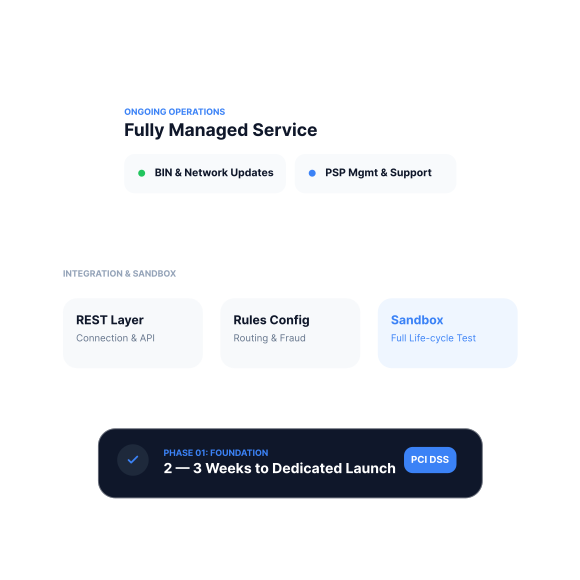
Deployment and Ongoing Support
Full deployment, dedicated infrastructure, PCI DSS activation, white label checkout on the operator’s domain, API documentation, and initial PSP connections, takes 1 to 2 months. After deployment, the operator connects via REST layer and configures booking-type routing and anti-fraud rules, and tests the full payment lifecycle in the sandbox environment.
PayAdmit provides technical service support throughout the integration, continues to provide PSP connection management, provides infrastructure updates post-launch, provides BIN maintenance on a regular schedule, and continues to provide network integration updates. The operator receives a fully managed payment service. PayAdmit provides infrastructure updates post-launch, continues to provide BIN database maintenance, provides PSP connectivity management, provides ongoing technical service, and provides routing performance reports.
EXPLORE SOLUTIONS FOR OTHER INDUSTRIES
Banks

Expand your digital payment offering with a branded gateway.

Donations
Accept donations in any currency through a trusted, fully branded checkout experience.

PSP
Launch your own processing product and grow your merchant portfolio under your brand

SaaS
Embed native payments into your platform and turn processing into a revenue stream.

eCommerce
Full control over checkout, routing, and payment data with 550+ methods ready from day one.

Marketplace
Process split payments and manage payouts across your entire merchant base from one platform.

Subscriptions
Automate recurring billing, manage retries, and reduce churn with a purpose-built payment engine

Travel
Handle multi-currency bookings and global payment methods through one branded gateway.

FREQUENTLY ASKED QUESTIONS
How does the white label travel payment gateway handle failed transactions during booking?

The system cascades to the next configured PSP automatically, within the same authorization session, without interrupting the booking flow. The buyer does not restart the payment. The agency or operator captures the booking. Cascade sequences configure per payment method and booking value from the back office.
Can the gateway handle pre-authorization and delayed capture for hotel and airline bookings?
Yes. The REST API provides separate pre-authorization and capture endpoints. The operator sends a pre-authorization request at booking time. The system holds the card authorization for the configured window. Capture request triggers at the appropriate point, ticket issuance, check-in, or departure. Capture delay windows and automatic release configure per booking type.
What card networks and payment methods does the travel gateway support?
The gateway supports Visa, Mastercard, Amex, JCB, and UnionPay card networks. Digital wallet integration covers Apple Pay and Google Pay. 550+ alternative payment methods cover regional preferences globally. Virtual card and lodge card payment support for corporate travel is available as a custom integration. New network or payment method integrations complete in 1 to 2 months on request.
How does the white label API documentation work for B2B travel platforms?
Complete white label API documentation delivers under the platform’s brand. The documentation covers all payment operations, error codes, webhook event types, and integration test scenarios. B2B resellers and partners receive the branded documentation and integrate against the platform’s endpoints, not PayAdmit’s. PayAdmit provides all documentation under the platform’s brand.
How does the gateway protect against payment fraud specific to travel?
The anti-fraud layer provides configurable rules per booking category: velocity limits per traveler profile, BIN controls for high-risk geographies, behavioral scoring for rapid booking patterns, and third-party anti-fraud service integration. ZignSec and Kount connect through the standard pipeline. The operator configures fraud rules that account for legitimate purchasing patterns, protecting against actual fraud without blocking genuine bookings.
How long does it take to deploy the white label travel payment gateway?
Full deployment, dedicated infrastructure, PCI DSS activation, white label checkout configuration on the operator’s domain, API documentation, and initial PSP connections, takes 1 to 2 months. After deployment, the operator connects via the REST API, configures routing and anti-fraud rules, and tests the full payment lifecycle in the sandbox environment. PayAdmit provides technical service support throughout and continues to provide PSP connection management and infrastructure updates post-launch.