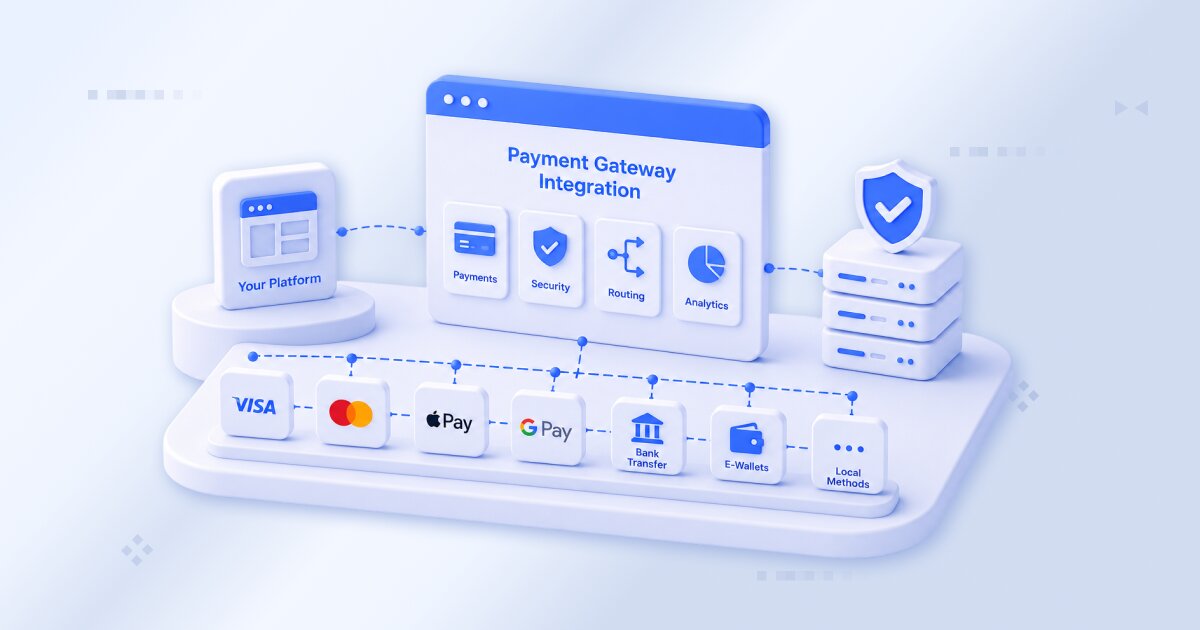

Owning a payment gateway means more than having a checkout form on your website.
TL;DR. The cost to develop a crypto payment gateway usually ranges from around $30,000 for a basic build to $250,000 or more for a custom, feature-rich platform. This guide breaks down every cost driver, from wallet integration and security to compliance and ongoing maintenance, and shows how building on existing infrastructure can cut development cost dramatically.
Crypto is moving from speculation to settlement. More businesses now want to accept crypto alongside cards, and a gateway is the software that makes that possible. It takes a customer payment in digital assets, settles each payment end to end, converts or settles it, and records the transaction, all while keeping funds secure. As adoption grows, the question every business will spend time on is simple: what is the real payment gateway development cost, and is a custom build worth it?
The "why now" factor is strong. Stablecoins have made crypto payment far more practical, because a business can accept a digital asset without holding volatile tokens. Regulators are also clearer than they were, so a compliant crypto gateway is now a realistic product rather than a legal grey zone. Every month, more merchants ask their teams to scope such a gateway, and every month the cost question comes up first.
Yet the cost to build a crypto gateway is widely misunderstood. Some teams assume a few thousand dollars will buy a working gateway; others fear a million-dollar development project. The truth sits in between and depends entirely on scope. Understanding the cost to develop crypto payment gateway projects is the only way to budget one with confidence, so this guide maps them one by one, and complements the product overview on our crypto payment gateway page.
The crypto payment gateway development project is not a single number. It is the sum of many development decisions, and each one moves the budget. Before looking at component costs, it helps to understand the five forces that shape the total development cost.
Five forces behind the total price
- Scope and features. A gateway that accepts one coin costs far less than a custom platform that supports many assets, fiat settlement and payouts. Every feature adds development time, and development time is the main cost.
- Custom build vs ready software. Building from scratch is the most expensive path. Building on existing infrastructure cuts development cost sharply, because the hardest engineering already exists.
- Security and compliance. A crypto gateway holds value, so security is not optional. Strong security, audits and compliance work can add a large share to the total cost, but skipping them costs far more later.
- Team and location. Development rates vary widely by region and seniority. The same crypto payment system can cost three times as much depending on who builds it and where.
- Integration depth. Connecting wallets, blockchains, exchanges and accounting tools all add integration work. The more systems your gateway touches, the higher the integration and development cost.
To budget the cost of crypto payment gateway development, break the build into components. Each component carries its own development cost, and together these costs form the total.
| Component | Typical cost (USD) | What it buys |
|---|---|---|
| Core gateway engine | $12,000 to $40,000 | The logic that accepts a crypto payment, processes the transaction and records the result. Scales with number of assets and flows supported. |
| Wallet & blockchain integration | $8,000 to $30,000 | Technical, security-sensitive work to move payment funds. Supporting several blockchains multiplies the effort. |
| Security layer | $10,000 to $35,000 | Encryption, key management, fraud checks and monitoring, plus external audits. Not a place to cut corners. |
| UI & customer app | $8,000 to $25,000 | Clean payment interface across web and app. More for a polished custom design. |
| Admin dashboard & reporting | $6,000 to $20,000 | Tools to manage transactions, reconcile funds and pull reports. |
| Compliance & KYC | $8,000 to $25,000 | AML and KYC features, sized to the markets the business serves. |
Add these components and a basic crypto gateway lands near $30,000 to $60,000, while a full custom platform with apps, many assets and deep compliance can pass $250,000. The exact cost always depends on scope.
Many businesses want a dedicated app, and the platform client development is its own cost line in the end-to-end payment build. A customer-facing app, a merchant app and an admin app each carry separate development. App development for a digital-asset gateway usually adds $10,000 to $40,000, depending on the vendor and depending on whether you ship one build or several across web and mobile.
A native app for iOS and Android costs more than a single web app, because each app platform needs its own development and testing, including extended QA cycles. The app is also where most end users meet the gateway, so interface design and app performance shape adoption as much as price. If your roadmap needs a mobile build, fold app development into the build from the start, rather than treating the app as a late add-on. Teams that skip app planning often pay twice: once for the rushed build and again for the rebuild.
Every build is built around an end-to-end transaction flow, and that flow drives development cost. A single transaction passes through several steps: the customer starts a payment, the platform validates the payment, a blockchain confirms the transaction, the system settles the funds and a record is written. Each step is development work, and each extra asset or payment method multiplies the development.
A gateway that handles one transaction type is cheap to build; one that handles many payment flows, refunds and partial settlements costs far more in development. The more complex the transaction logic, the higher the development cost. This is why scoping the transaction flow early is the single best way to control development cost. When a business maps every payment and every transaction path up front, the development team builds the payment flow once instead of reworking each transaction later. Engineering teams that send the full transaction map and the payment data to the vendor early avoid back-end rework that extends development timelines.
The price of crypto payment gateway development also tracks the phases of the project. Each phase consumes time, and time is cost.
| Phase | Duration | Cost impact |
|---|---|---|
| Discovery & planning | 1 to 3 weeks | Cheap in development terms but vital, a weak plan inflates every later cost. |
| Design | 2 to 4 weeks | Modest share of cost; good design reduces rework later. |
| Development | Weeks to months | Heaviest phase, carries most of the total cost. |
| Testing & security audit | 2 to 6 weeks | Must pass a serious audit before touching real funds. Adds time and cost. |
| Deployment & launch | Short | Still carries cost in setup and monitoring. |
End to end, a custom build often takes four to nine months to build. A longer timeline means a higher development cost, which is why many businesses look for ways to shorten development.
Who builds your platform shapes the cost more than almost anything. Development rates swing widely, so the same gateway can carry very different price tags.
In-house team. Hiring a full development team gives control but is the most expensive route. Senior blockchain engineers are scarce and costly, and you pay them whether or not the gateway is shipping. For many businesses, the smarter move is to hire payment processing developers in small numbers and lean on existing infrastructure.
Outsourced agency. A development agency supplies a team for the project. Rates vary by region: agencies in some markets charge $25 to $50 an hour, others $100 to $200 or more. The same crypto payment gateway development can therefore cost wildly different amounts depending on the partner.
Freelancers. Freelance developers can lower the cost for a defined scope, but a gateway is complex and security-critical, so cheap freelance work often costs more once rework and audits are added.
The tech stack matters too. A crypto platform typically uses a secure back-end, blockchain libraries, wallet SDKs and APIs to exchanges. Each choice carries a cost in licences, development time and maintenance. A clean, well-documented stack lowers the long-term cost; a messy one raises it.
The single biggest lever on the crypto payment gateway development cost is the build-versus-buy decision. There are three broad paths, and each carries a very different cost.
Three paths, three price tags
- Full custom development. You build from scratch, owning every line. Total control and the highest long-term flexibility, but the highest development cost and the longest timeline. Right only when your product truly depends on a unique gateway.
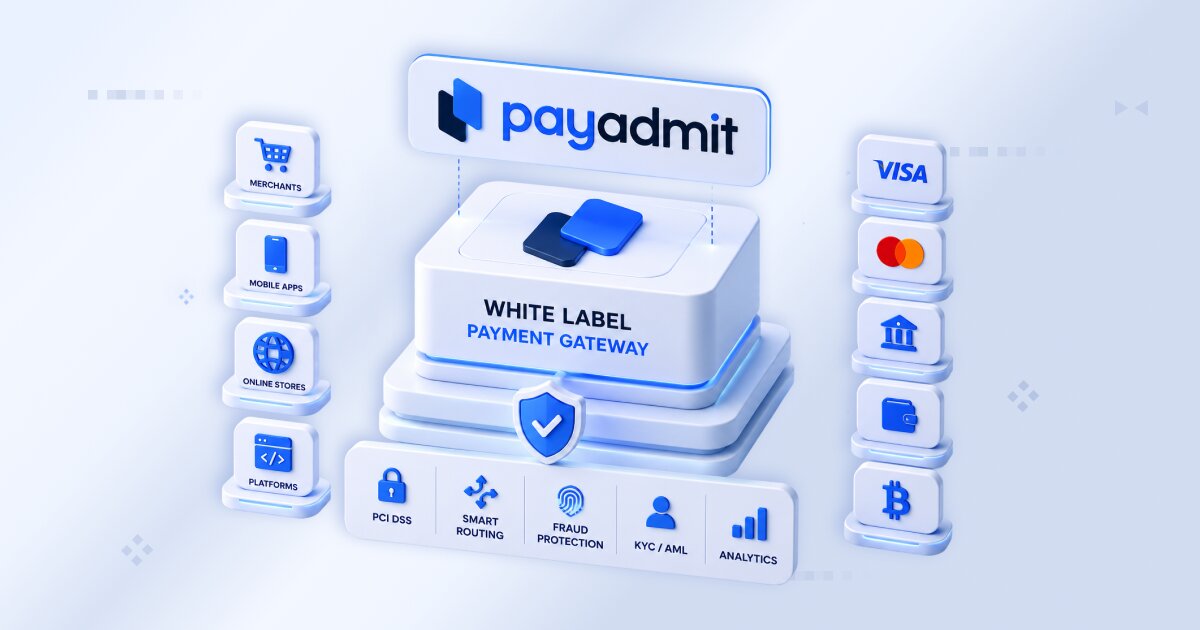
- White label gateway. You license a ready crypto payment platform, brand it and launch. Cost drops sharply, your team customises the surface rather than building the rails. For most businesses, the fastest and cheapest route to market.
- Hybrid build. You combine a ready platform with custom development on top. Balances cost and control, letting a business add the features it truly needs while inheriting the expensive core. Often the smartest mix.
The cost gap is large. A full custom platform can cost five to ten times more than a white label build that delivers similar acceptance. The white label gateway also ships in weeks rather than months, which lowers the real cost even further once lost time is counted.
Before any business spends on development, it should test the business case. A gateway is a business investment, not a vanity project, so the cost only makes sense if it serves a clear business goal. For some businesses, accepting crypto opens new markets and justifies a higher development budget. For others, the same cost would never pay back, and a cheaper ready solution or managed solution is the better business choice.
The business question is simple: will the gateway add enough revenue or savings to cover its development and ongoing cost? A business that answers honestly avoids overbuilding. Many businesses find that their use case does not need a full custom build at all, and that a leaner solution or hosted solution serves the business just as well at a fraction of the cost. Smart businesses size the development to the business case, not the other way round, and they revisit that business case as payment volumes grow.
Beyond the core build, most projects need crypto payment gateway integration services. Integration is the work of connecting the gateway to everything around it: your website, your app, your accounting, your existing payment stack and the blockchains you support. This integration carries its own cost, and it is easy to underestimate.
Good integration services do more than write connectors. They map your flows, handle edge cases, secure the integration and test it under load. Strong connection services turn a raw gateway into a working part of your business, which is why this line item deserves real budget. Weak connection is one of the most common reasons a gateway underdelivers.
The cost of connector development depends on how many systems the gateway touches. A single website connector is cheap; a full connecting effort across web, app, accounting and a legacy payment system costs far more. When you scope the cost to build a gateway, treat integration services as a core line, not an afterthought. Many teams that already use payment gateway middleware find the connection far cheaper, because one layer connects many systems at once.
There are proven solutions for businesses that want crypto acceptance without a heavy development bill.
Each solution trades some control for a much lower development price. The right solution depends on how much the business wants to own and how fast it needs to launch. For most teams, a ready solution they can use in weeks beats a custom build that takes months and budgets many times more. Choosing the right solution is the clearest way to cut the cost to develop crypto payment gateway products, and a strong solution scales with the business as payment volume grows.
Where development happens changes the investment dramatically. The same platform development can bill three or four times more in one region than another, purely because of local engineering rates. Teams in North America and Western Europe charge the highest rates, while teams in Eastern Europe, Latin America and South Asia often deliver similar quality at a lower outlay.
Many businesses use a blended model: they keep senior architecture in-house and use a remote development team for the heavier build, which lowers the overall price without losing control. A cheaper development rate that produces weak code can still budget more once you add rework and security fixes. The smartest businesses weigh development rate against proven delivery, because the lowest hourly spend rarely produces the lowest total investment. When you compare quotes, normalise them against scope, so you weigh the real cost to develop crypto payment gateway products, not just the headline rate.
| Budget tier | Range | What you get |
|---|---|---|
| Small | $30k to $60k | A focused system that accepts a few assets, settles each payment cleanly and offers basic reporting. |
| Mid | $60k to $150k | Adds an app, multi-asset support, deeper compliance and stronger security. |
| Large | $150k+ | Fully custom payment platform with many connections, advanced fraud tools and a polished interface across web and mobile. |
Knowing which tier matches your business stops you overpaying for development you will never use. Most businesses that map their payment needs honestly land in the lower or middle tier, then use a ready solution to stretch the budget further.
The fastest way to lower the development bill is to use a ready payment platform instead of building from zero. When a business chooses to use existing payment rails, it pays for a service rather than a full build, and that service already includes the security, the compliance and the payment connections that cost so much to build.
A team can use the platform APIs, route every payment through one service, and add crypto payment acceptance without owning the hardest engineering. Businesses that use this model spend their budget on the product their customers see, not on the payment plumbing underneath. They use the provider service for the heavy payment lifting and use their own team for the parts that differentiate them. A ready payment platform also keeps each payment compliant and each transaction monitored, so the business inherits payment security it would otherwise pay to build. For most companies, the smartest way to use a payment service is to start with a ready platform and extend the payment flow only where the business case is clear.
The headline development project is only the start. A product is a living product, and ongoing prices continue long after launch. Budgeting for them early prevents painful surprises.
Get the system linking guide and see how a ready platform connects wallets, banks and apps through one layer.
PayAdmit exists to lower the spend of any payment product. Instead of funding months of custom development, a business builds on infrastructure that is already PCI DSS Level 1 certified and registered as a Visa PSP and Mastercard MRP. The core engine, the security layer and the connector developments already exist, so your team ships the product rather than the plumbing.
Through PayAdmit Bridge, a business connects to many acquirers and payment methods through a single connection, then routes every transaction intelligently without rebuilding its stack. With PayAdmit white label payment gateway software, a company launches a branded build on proven infrastructure, turning a six-figure custom development project into a fast, predictable build. The development investment falls because the hardest work is already done.
This is the same logic that runs through modern fintech. Whether a team studies the wider market of payment infrastructure companies, leans on payment gateway development support, or taps fintech software development expertise, the goal is the same: ship a reliable product without paying to rebuild what already exists. PayAdmit gives any business that foundation, so building a crypto gateway becomes a fraction of the full custom price.
Launch Your Crypto Payment Gateway.
See how fast any business can go live without paying a full custom development bill.