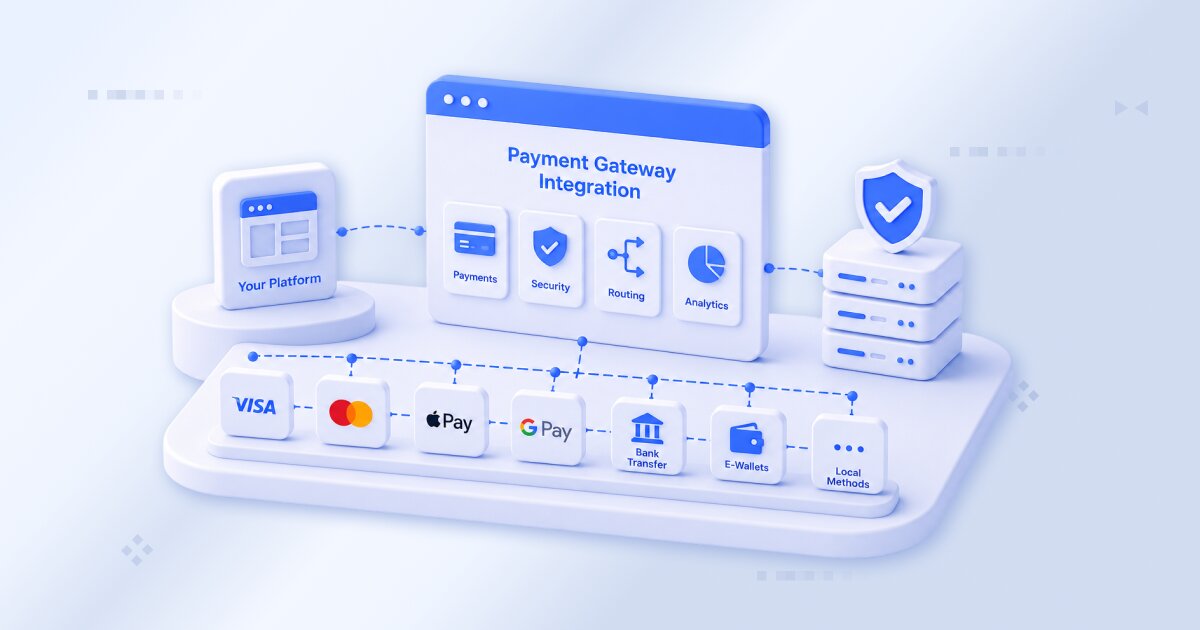

Owning a payment gateway means more than having a checkout form on your website.
TL;DR. Starting a payment processing company means picking a business model, lining up acquiring partners, meeting compliance rules and shipping reliable processing software. This guide walks finance and product leaders through every step, from licensing to merchant onboarding, and shows that a white label or rent-to-own route reaches the market faster than building a payment stack from scratch.
The industry is fragmenting fast, and that is good news for anyone planning to start a payment processing company. A decade ago, a handful of banks and legacy payment processors controlled how merchants accepted payments, and no one outside the bank-led club could provide modern processing. Today the market is wide open. Buyers want better rates, faster settlement, modern service and processing software that fits their business, and many incumbents cannot move quickly enough to provide it. That gap is where a new payment venture wins, and where a new generation of providers now competes.
Three trends explain why now is the moment.
First, digital payments keep growing across every region, so transaction volume is rising for any business that can process it.
Second, acquiring and banking infrastructure is now available through open APIs that banks expose to anyone, so a new processor no longer needs to build a card network from the ground up. Banks now operate as platforms, and specialists ride on top of them.
Third, white label and rent-to-buy models let a payment operation launch on proven software instead of years of engineering, and someone can be live within months by leasing the gateway from a software provider that already integrates with a deep bank list.
Together, these shifts mean a focused team can launch a payment processing company and reach clients in months, not years.
The opportunity is broad. Online retail, subscriptions, marketplaces and cross-border commerce all need payment services, and each vertical pays a processor to move money safely. A processor that picks a niche and serves it well can build a durable, high-margin business with reliable bank partnerships behind it.
The "why now" answer is simple: demand for modern payment services is climbing while the barriers to launching a payment processing business keep falling. Banks and providers want healthy entrants, so providers are providing easier onboarding and banks are providing broader rails. A focused processor that brings the right service mix to each vertical wins faster than a generalist. Providers that work with multiple banks gain leverage that a single bank cannot match. Your edge is rarely the payments themselves; it is the processing, the routing and the services wrapped around those payments that win and keep clients, which is why a modern payment routing solution matters from day one.
Before you begin, it helps to be clear on what a payment processing company actually does. At its core, a processor sits between a merchant, the card networks and the acquiring bank that moves the money. When a customer pays, the payment operation captures the transaction, routes the payments to an acquirer, handles authorisation and then settles funds back to the client. Along the way the processor provides fraud screening, reporting and customer service.
A payment processing company earns money on each transaction. The processor charges merchants a processing fee, pays the underlying processing and network costs, and keeps the margin. Volume is everything in payments: the more transactions the processor processes, the more revenue each point of margin returns. That is why payment systems, pricing and merchant relationships all matter from day one.
A processor can play several roles. Some firms provide the full payment gateway and processing stack. Others act as a payment service provider that sits on top of a sponsor bank. Many new entrants use white label payment processing software to offer a branded payment service without building the engine. The model you pick shapes how you launch, what capital the processor needs and how fast it can grow.
The first real decision when you start your own payment processing company is the processor model. This choice drives licensing, acquiring relationships and how much payment software the processor builds.
The four models at a glance
- ISO (Independent Sales Organisation), resells the payment services of a larger processor. Fastest to launch, lowest compliance burden, thinnest margin because revenue is shared.
- Payment Service Provider (PSP), aggregates many merchants under a master merchant account with a sponsor bank. More compliance work, stronger margin, a real product to sell.
- Payment Facilitator (PayFac), onboards sub-merchants instantly under a master account. More risk and more compliance including PCI DSS, but full control of the checkout experience and economics.
- White label / rent-to-buy, license a complete platform, brand it, go to market quickly. Keeps capital free and grows into full control as volume rises. For most new payment ventures, this is the pragmatic route.
No payment processing company can operate without meeting compliance rules, so plan this early. The exact licences depend on region and model, but several requirements are universal across the industry.
PCI DSS is the baseline. Any business that touches card data must meet the Payment Card Industry Data Security Standard. PayAdmit operates at PCI DSS Level 1, the highest tier, which means card data is handled inside a certified, secure environment. A business that builds on white label payment software already certified to PCI DSS Level 1 inherits much of that compliance work instead of building it out itself, details on our security and compliance page.
Beyond PCI DSS, a processor may need money transmitter licences, registration with the card networks as a Visa or Mastercard partner, and anti-money-laundering and know-your-customer programmes. A PSP often registers through a sponsor bank, while a PayFac registers directly. AML and KYC are not optional: every client the processor onboards must be screened, and every payment must be monitored for fraud and sanctions.
Compliance insight. Card network registration matters. To process Visa and Mastercard transaction volume, a business must be sponsored by, or registered with, a bank that holds the right network memberships. PayAdmit is a registered Visa PSP and Mastercard MRP, so the network relationships are already in place for partners that build their payment venture on the platform.
Every payment processing company depends on an acquiring bank. The acquirer holds the merchant funds, connects to the card networks and ultimately moves the money. Without an acquiring partner, the processor cannot process a single payment.
Securing the right acquirer is among the hardest parts of how to launch a processor. Banks are cautious about risk, so they assess the processor model, the compliance programme and the projected payment volume before they sponsor a new processor. A strong business plan, a clean AML programme and credible payment systems all help a business win an acquiring partner faster.
Most new processors work with more than a single acquirer. Multiple acquiring relationships let the processor route each transaction to the partner with the best rate, the best approval odds or the right geographic coverage. Spreading payments volume across acquirers also protects the processor if one partner changes its terms. A good platform makes connecting a new acquirer a configuration task rather than a fresh integration, so the processor can add acquiring capacity as it grows.
If acquiring relationships feel beyond reach, this is another reason the white label route is attractive. A white label provider often brings existing bank and acquiring relationships, so a new business inherits the banking layer instead of negotiating it itself.
It helps to understand the banking chain behind every transaction. The acquiring bank settles funds, the issuing bank holds the cardholder, and the card networks connect the two. A new processor usually starts with a single sponsor bank, then adds further banking partners as volume grows. Each bank brings different strengths: some may offer strong domestic rates, while others provide better cross-border banking coverage. Building relationships with several acquirers gives the processor resilience and sharper pricing, and a platform that treats each bank connection as configuration, such as payment middleware & gateway integration, makes that banking expansion far easier.
Software is the engine of a payment processing company. It captures each transaction, routes payments to the right acquirer, screens for fraud and produces the reporting that clients and regulators expect. A business has three ways to get this payment software.
Three paths, three trade-offs
- Build it yourself. Hire engineers and build the gateway, the processing logic and the merchant tools from scratch. Full control, but it costs millions, takes years and exposes the processor to compliance risk while the software is built. Few new processors should start this way.
- Buy a closed platform. Purchase a processing platform from a vendor and run it. Faster than building, but the processor is often locked into one provider, one set of banking rails and a rigid payment product it cannot easily change.
- Rent to own with white label payment software. License a complete, PCI DSS Level 1 platform, launch under your brand, and grow into full control over time. Proven software on day one, predictable processing costs and the freedom to focus your team on sales and merchant service. For most teams that want to launch quickly, this is the smartest path, see the white label payment gateway software overview.
Once the platform is in place, orchestration is what turns it into a competitive business. Payment orchestration is the logic that decides where each transaction goes. Instead of sending all payments to a single acquirer, the platform evaluates cost, currency, risk and historical approval rates, then routes payments to the best option in real time.
Cascading goes further still. If the first acquirer declines a transaction, the platform automatically retries through a second acquirer, then a third if needed. This single feature can lift approval rates by several points, which flows straight to client revenue and to the processor margin. For a payment processing company, higher approval rates are a powerful selling point the processor can provide.
The payment loop, simplified
A customer pays → the gateway captures the transaction → the orchestration layer scores it → the best acquirer authorises it → if that acquirer declines, cascading reroutes payments before the customer notices. Reporting then feeds every result back into a unified dashboard.
Strong orchestration and cascading separate a modern payment venture from a basic reseller. They are hard to build from scratch, which is one more reason a white label platform that already includes this logic helps a company start ahead of the competition and provide real value to merchants.
Merchants are the lifeblood of any payment processing company, so onboarding them smoothly is critical. A slow, manual onboarding flow loses deals, while a fast, automated one wins them. The payment software should let a client apply, pass KYC checks and start accepting payments in hours, not weeks.
Risk management runs alongside onboarding. Every merchant the processor provides service to is a likely source of fraud or chargebacks, so the processor must underwrite each one. Set exposure limits, monitor spending patterns and flag anomalies in real time. A good platform automates much of this, scoring each client and each transaction so the team only reviews genuine exceptions, the antifraud & risk management layer plugs into that flow.
Chargebacks deserve special attention. When a customer disputes a payment, the cost lands on the processor unless the business manages it well. Clear reporting, early fraud screening and strong client agreements all reduce chargeback losses and protect the margin. Handling risk well is not just compliance: it is how a payment processing company stays profitable as it scales and continues to provide dependable service.
Transaction monitoring is the heart of risk control. The platform inspects every payment in real time, scoring those payments against the client profile and historical patterns. Suspicious payments are held for review, while clean ones clear smoothly. Solid transaction data also feeds reporting, so the processor can show clients exactly how their payments perform. Over time, this transaction intelligence lets a processor price risk accurately and provide a service that larger rivals struggle to match.
The final building block is how a payment processing company prices its service and earns revenue. Most processors charge a percentage of each transaction plus a small fixed fee. From that, the business pays the acquirer, the card networks and its software costs, and keeps the rest.
There are several pricing models. Interchange plus passes through the network cost and adds a transparent margin, which sophisticated merchants prefer. Flat rate pricing is simpler and suits small merchants. Tiered pricing groups transactions into bands. Whatever model you choose, the margin depends on payments volume, on the rates your team negotiates with each acquirer and on how efficiently the software runs.
Revenue grows in two ways. The processor adds more clients, and it processes more payments per merchant. A processor that combines strong orchestration, high approval rates and smooth onboarding and strong support services will grow both numbers at once. This is why the payment platform you start with matters so much: the right platform compounds revenue as the venture scales, while a weak one caps it.
Whatever route you take, keep your numbers accurate. Model your transaction volume, your blended cost per transaction and your target margin before you launch. Your pricing, your acquiring mix and your churn rate decide whether the venture thrives. The teams that win treat these levers as a living plan, revisit them each quarter and let real performance data guide every decision. A processor that keeps churn low and adds new payment services also lifts revenue per merchant over time.
Most founders weigh three paths to launch a payment processing company, and the trade-offs are clear.
| Path | Speed to market | Cost & risk | Long-term control |
|---|---|---|---|
| Build from scratch | Years | Highest, millions in engineering and compliance | Total, if you survive the build |
| Buy a closed platform | Months | Locked to one vendor and one set of rails | Limited, hard to differentiate |
| Rent to own (white label) | Weeks to a couple of months | Predictable, inherits PCI DSS Level 1 and bank relationships | Grows with volume, the smartest balance for most teams |
Build from scratch suits only well-funded teams with deep payment experience. Buy a closed platform rarely lets a processor differentiate its service. Rent to own payment processing balances speed, cost and control, the processor launches on certified software, inherits acquiring and network relationships, brands the product and grows into control as payment volume and revenue rise. For the large majority of teams that want to launch a processor, this is the route that wins, a natural fit alongside a white label payment gateway for PSPs.
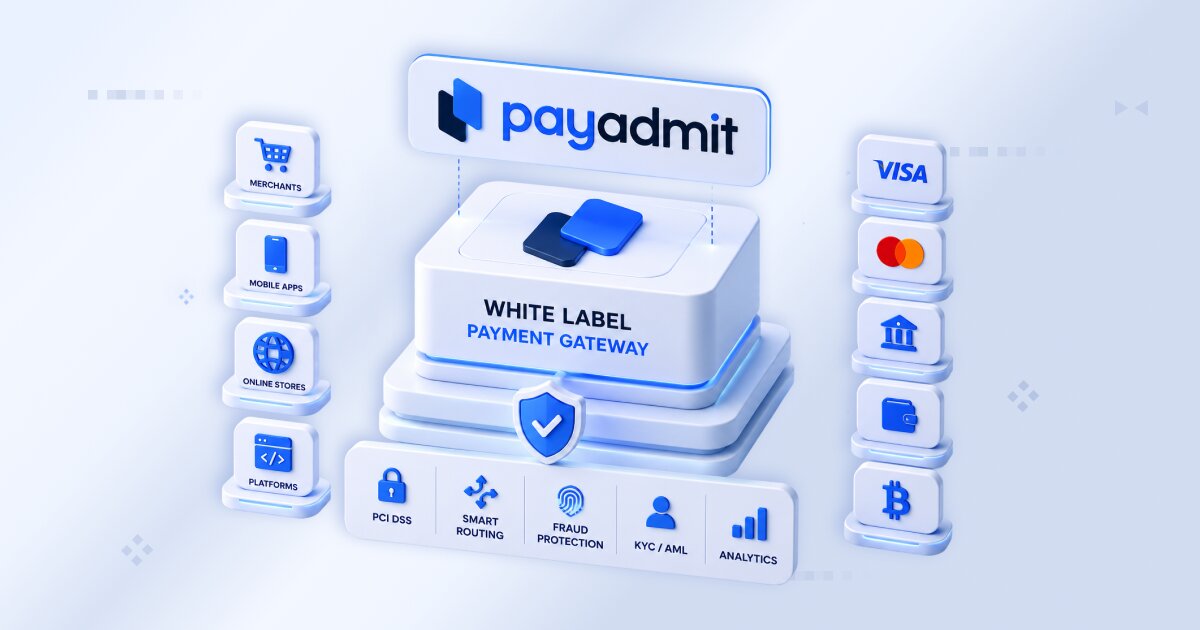
PayAdmit is built for exactly this journey. The White Label payment platform lets you launch a branded payment processing company on infrastructure already certified to PCI DSS Level 1 and registered as a Visa PSP and Mastercard MRP. The processor skips years of engineering and compliance work and goes to market with proven payment software.
PayAdmit Bridge connects the business to multiple acquirers and methods through a single integration, so you can add acquiring capacity, route every transaction intelligently and switch on cascading without rebuilding the stack. Orchestration, smart routing and reporting all come built in, so the team can focus on your merchants and growth rather than plumbing.
Whether you choose a full white label launch or a rent-to-buy path, PayAdmit provides the payment platform, the acquiring relationships and the compliance backbone to start a payment processing company with confidence.
Get the gateway integration guide and see how orchestration and cascading work inside a live payment platform.
Launch Your Own Payment Gateway.
See how fast you can start your own payment processing company on White Label and Bridge.