
A full custom gateway development project costs $600,000 to $2M or more including development, certification, and infrastructure in the first year. The cost reflects the complexity of building a system that processes customer transactions securely, integrates with acquiring banks, and meets PCI DSS requirements from the ground up. Ongoing maintenance costs 30 to 40 percent of the initial investment annually, covering security updates, bank integration maintenance, and compliance programme upkeep. A white label gateway deployment with PayAdmit costs a fraction of that, deploys in 1 to 2 months, and includes all development, certification, and maintenance as part of the solution.
How to Develop a Payment Gateway: Architecture, Cost, and Tutorial
Developing a payment gateway is one of the most technically demanding projects in fintech. This tutorial covers how to develop your payment gateway from first principles — the architecture decisions, the security requirements, the development steps, and the real costs involved. Whether you are a developer evaluating what gateway development actually involves, or a business weighing build versus buy, this guide gives you the honest picture.
26.05.2026
Updated:
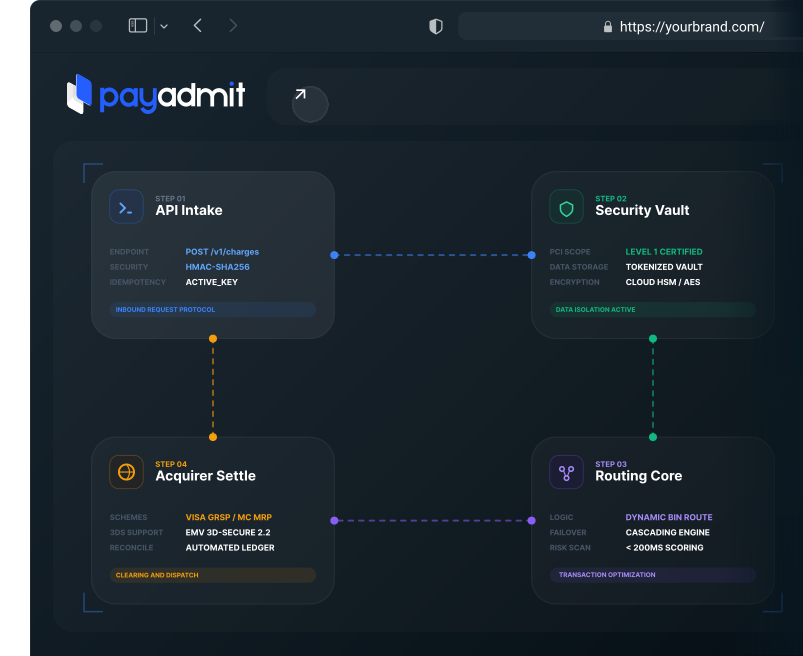
What Payment Gateway Development Actually Involves
Payment gateway development is not a single engineering project. It is an ongoing programme of technical work that combines software engineering, security infrastructure, financial compliance, and operational maintenance. Before any code is written, a developer or business evaluating gateway development needs to understand the full scope.
At its core, developing a payment gateway means building a secure software system that processes financial transactions between customers, merchants, and the banking infrastructure that moves money. Your gateway captures card or payment data, encrypts it, routes it to the appropriate payment service provider or bank, receives authorisation responses, and returns results, all in under three seconds, at any transaction volume, without data loss or security compromise.
The development challenge extends beyond the core transaction processing. A production payment gateway must comply with PCI DSS security standards, integrate with multiple payment service providers and acquiring banks, handle fraud screening, manage settlement data, and provide merchants with real-time reporting. Each of these capabilities requires separate development work, and each must be maintained as standards evolve and transaction volumes grow.
Payment Gateway Architecture: The Developer’s View
Before development begins, every payment gateway project requires an architecture decision. The architectural choices you make early determine your security model, your scalability ceiling, and the complexity of your ongoing development work.
Microservices vs. Monolithic Architecture
Most modern payment gateway development uses a microservices architecture. Separate services handle distinct functions, API gateway, transaction processing, tokenisation, fraud screening, reporting, settlement, communicating through message queues. This approach enables independent scaling of high-load services and makes it easier to update individual components without affecting the entire system. A monolithic approach is simpler to develop initially but creates scaling problems as transaction volumes grow.
The Core Three Layers
Every payment gateway, regardless of architecture, has three fundamental layers that development must address:
- API Layer: The external interface. Handles incoming payment requests from merchants, checkout pages, and mobile apps. REST API with webhooks is the current standard. Versioning and idempotency are critical development requirements.
- Processing Layer: The transaction engine. Applies routing logic, communicates with payment service providers and acquiring banks, handles responses, and manages cascade logic for declined transactions. This is the performance-critical core of your gateway.
- Data and Security Layer: Tokenisation vault, encryption management, fraud scoring, AML monitoring, and settlement data. This layer must be designed with PCI DSS compliance requirements in mind from the first line of development.
Infrastructure Considerations
Payment gateway development requires making decisions about where your system runs. Cloud-native development on AWS, GCP, or Azure offers scalability and managed security services but requires careful configuration to maintain PCI DSS compliance. On-premise or dedicated server infrastructure gives you more control over your security environment and data residency, relevant for businesses operating in markets with strict data localisation requirements.
Step-by-Step: How to Develop a Payment Gateway
This tutorial outlines the core development phases for a production payment gateway. Each phase has distinct deliverables, dependencies, and development timelines.
01 Requirements and Architecture Design (2–4 weeks)
Define target markets, supported payment methods, transaction volumes, and compliance requirements. Design the system architecture, service boundaries, data flows, API contracts, and infrastructure model. Document security requirements and begin PCI DSS scope assessment. This phase determines everything downstream.
02 Core API Development (4–8 weeks)
Develop the payment API layer, transaction submission endpoints, refund handling, webhook delivery, and merchant authentication. Write API documentation from the start. Develop the sandbox environment in parallel so your merchants can test integrations before you go live.
03 Tokenisation and Encryption Development (3–6 weeks)
Develop your card data vault and tokenisation service. Implement TLS across all data transmission. Develop 3DS2 authentication integration. This phase is the most security-critical part of gateway development, every decision here affects your PCI DSS compliance scope.
04 Payment Service Provider Integrations (6–12 weeks per provider)
Connect your gateway to acquiring banks and payment service providers. Each integration requires development work to map your transaction data format to the provider’s API, handle their specific response codes, and process settlements. A payment gateway serving multiple markets needs multiple provider integrations, plan for this development overhead.
05 Routing and Cascade Logic Development (3–5 weeks)
Develop the transaction routing engine. Build configurable routing rules that direct transactions to providers based on card type, currency, and custom criteria. Develop cascade logic that automatically retries declined transactions through alternative providers. This development work directly impacts your gateway’s approval ratios.
06 Fraud and AML Module Development (4–8 weeks)
Develop or integrate fraud scoring capabilities. Rule-based systems are faster to develop; ML-based systems require more data and development time but adapt to evolving fraud patterns. Develop AML transaction monitoring workflows. This development scope varies significantly based on the markets and merchant categories you serve.
07 Merchant Management and Reporting Development (4–8 weeks)
Develop the back-office system, merchant onboarding, account management, transaction history, settlement reporting, and custom report generation. For a gateway that serves multiple merchants, this development phase is as commercially important as the payment processing core.
08 Security Audit and PCI DSS Certification (6–12 weeks)
Engage a Qualified Security Assessor to audit your gateway development. Penetration testing, vulnerability scanning, and compliance documentation. Address all findings before certification. This process cannot be rushed, plan for it explicitly in your development timeline.
09 Testing and QA (4–8 weeks)
Full transaction flow testing across all integrated payment service providers. Load testing at projected peak transaction volumes. Fraud rule validation. Merchant onboarding flow testing. Your gateway must demonstrate stability at scale before going live.
10 Production Deployment and Monitoring Setup (2–4 weeks)
Deploy to production infrastructure. Configure real-time monitoring, alerting, and incident response procedures. 24/7 monitoring of transaction processing, security events, and system performance is required from day one.
Payment Gateway Development Cost Breakdown
One of the most important, and frequently underestimated, aspects of payment gateway development is cost. Here is an honest breakdown of what gateway development actually costs in 2026.
| Cost Category | Minimum Estimate | Full-Scale Estimate |
|---|---|---|
| Core gateway development | $150,000 | $400,000–$600,000 |
| PCI DSS certification | $50,000 | $100,000–$200,000 |
| Provider integrations (per provider) | $10,000–$30,000 | $50,000+ for complex integrations |
| Security infrastructure | $30,000 | $100,000+ |
| Development team (annual) | $300,000 (small team) | $800,000+ (full team) |
| Annual PCI DSS maintenance | $30,000 | $100,000+ |
| Total (first year) | ~$600,000 | $1.5M–$2M+ |
These cost estimates assume you are developing with experienced fintech engineers who understand payment processing, security, and compliance. Developers without payment domain experience add time and cost to every phase of gateway development. The ongoing annual cost of maintaining a production payment gateway is typically 30–40% of the initial development investment.
Hidden Cost: Development Time
The cost of time is often larger than the cost of development. A gateway in development for 18 months is not generating revenue. Every month your gateway is in development is a month your competitors are processing transactions, signing merchants, and building market position. Speed to market has real financial value that rarely appears in development cost estimates.
Security Requirements in Payment Gateway Development
Security in payment gateway development is not a feature, it is the foundation. Every development decision has security implications, and those implications compound as your gateway scales. Here are the security requirements that must be addressed in development:
TLS Everywhere
All data transmitted between your customer, your gateway, and your payment service providers must be encrypted using TLS 1.2 or higher. Develop your gateway with TLS as a non-negotiable baseline, not an afterthought.
Card Data Tokenisation
Your gateway development must implement a tokenisation service. Raw card data cannot be stored after capture. Your vault assigns tokens to card details, subsequent transactions use the token, never the underlying card data.
3DS2 Authentication
Strong customer authentication via 3DS2 is required for most card-not-present transactions in regulated markets. Develop your 3DS2 integration early, it affects transaction flow, customer experience, and fraud liability.
Fraud Scoring
Develop configurable fraud screening before going live. Rule-based systems check transactions against defined thresholds. ML-based systems analyse patterns across your transaction history. Your fraud module protects merchants, customers, and your gateway business.
Transaction Monitoring
Real-time monitoring of all transaction activity is required by PCI DSS and is a commercial necessity. Unusual transaction patterns, sudden volume spikes, high decline rates, unexpected geographies, should trigger automated alerts.
Access Control
Every admin user in your gateway system must authenticate with MFA. Role-based permissions ensure users access only what they need. Every privileged action must be logged for audit purposes.
Gateway security designed in, not added on.
PayAdmit’s payment gateway is PCI DSS Level 1 certified, and monitored 24/7. See how we handle security.
How to Develop Payment Gateway APIs
Your payment gateway API is the interface through which merchants integrate with your payment service. Well-designed gateway API development makes integration simple for developers, reduces support overhead, and enables your gateway to connect to any platform or application.
API Design Principles for Payment Gateway Development
- REST architecture with clear resource endpoints: /payments, /refunds, /customers, /webhooks
- Idempotency keys on all transaction requests, prevent duplicate payment processing if a request is retried
- Consistent error response format with clear error codes that developers can map to customer-facing messages
- Webhook delivery for asynchronous transaction events, payment confirmed, refund processed, dispute created
- API versioning from day one, your gateway API will evolve, and merchants need stable versions to integrate against
- Sandbox environment that mirrors production, every payment method and response code available for developer testing
Authentication and Security in Your Gateway API
API authentication in payment gateway development typically uses API keys for server-to-server communication and OAuth 2.0 for user-facing integrations. Your API security layer must validate every request, enforce rate limits to prevent abuse, and log all API access for security monitoring. Developers accessing your gateway API should never be able to handle raw card data, your API should be designed to receive tokenised data or to direct card data to your secure capture layer.
Developer Experience and Documentation
The quality of your payment gateway API documentation directly affects merchant adoption. A developer integrating your gateway needs clear reference documentation, code examples in multiple languages, a testing guide for your sandbox environment, and integration tutorials for common use cases. Treating developer experience as a product feature, not a support function, reduces integration time and increases merchant confidence in your payment service.
Developing Card Processing Capabilities
Card processing is the highest-value capability in any payment gateway. Developing the ability to process Visa and Mastercard transactions requires both technical integration work and commercial relationship development. Here is how to develop card processing in your gateway:
Connecting to Payment Service Providers
Your gateway needs at least one connection to a payment service provider or acquiring bank to process card transactions. Each connection requires developing a technical integration with the provider’s API, testing all transaction scenarios in their sandbox, and passing their technical certification process. The development work for a single provider integration typically takes 6–12 weeks. Production payment gateways connect to multiple providers, enabling routing and redundancy.
Card Network Technical Requirements
Developing card processing means complying with Visa and Mastercard technical specifications. These specifications govern how card data must be formatted, how authorisation requests must be structured, how responses must be handled, and how disputes and chargebacks must be processed. Card network technical requirements are updated periodically, your gateway development must include a process for staying current.
Transaction Response Code Handling
A robust payment gateway handles the full range of card transaction response codes — not just approve and decline. Development must cover soft declines (where retry is appropriate), hard declines (where retry wastes processing time and costs), referrals, and processing errors. Your routing and cascade logic depends on correctly categorising response codes to make smart retry decisions.
Developing Transaction Routing Logic
Transaction routing is where the technical sophistication of your payment gateway development delivers direct commercial value. A gateway with smart routing consistently outperforms one without it, on approval ratios, processing costs, and resilience to provider downtime.
Rule-Based Routing
The foundation of payment gateway routing is a configurable rule engine. Rules direct each transaction to a provider based on defined criteria: card network (Visa vs. Mastercard), card-issuing bank geography, transaction currency, merchant category, transaction value. Developing a flexible rule engine, where routing logic can be updated without code changes, is a key engineering challenge in payment gateway development.
Cascade Logic Development
Cascade logic is the automatic retry system. When a transaction is declined by the primary provider, your gateway evaluates whether to retry, and if so, which provider to try next. Developing intelligent cascade logic requires understanding decline categories (soft vs. hard declines), building provider-specific retry rules, and tracking retry outcomes to refine cascade sequences over time.
AI-Driven Routing
Increasingly, payment gateways are developing ML-based routing models that learn from transaction history to predict which provider will approve a given transaction. These models consider hundreds of variables, card BIN, transaction time, merchant history, customer behaviour patterns, to make routing decisions that rule-based systems cannot. Developing ML routing is a significant investment but delivers measurable approval ratio improvements at scale.
Payment Gateway Development for Different Business Verticals
The technical requirements of payment gateway development vary significantly by business vertical. Here is how development priorities differ across the sectors PayAdmit serves:
iGaming Payment Gateway Development
iGaming payment gateway development demands multi-acquirer routing from day one. Player transaction volumes are high and approval ratios directly impact revenue. Developing custom fraud rules for gaming transaction patterns, building multi-currency processing across a wide range of player geographies, and embedding AML workflows for high-risk merchant categories are all essential development requirements. Our dedicated white label payment gateway for iGaming ships with these capabilities pre-built for regulated gaming operators.
Banking Payment Gateway Development
Bank payment gateway development centres on reliability and integration depth. Your gateway must connect to existing core banking systems via secure APIs, meet banking-grade security requirements, and provide the uptime guarantees customers expect from financial institutions. Developing gateway-to-banking-system integrations is technically complex but commercially powerful, which is why banks extending services to business clients turn to our white label payment gateway for banks to retain the client relationship and the revenue.
Subscription and SaaS Gateway Development
Subscription gateway development requires a robust recurring billing engine. Developing the ability to store card data securely across customer lifetimes, manage billing cycle logic, handle failed payment retries with intelligent dunning, and support plan changes without breaking active subscriptions is a distinct development challenge from one-time payment processing. Software platforms solve this faster with our white label payment gateway for SaaS, which includes the recurring billing engine out of the box.
E-commerce Payment Gateway Development
E-commerce gateway development prioritises customer checkout experience. Developing optimised payment pages, mobile-first card capture forms, one-click payment flows, and fast transaction response times directly impacts conversion rates. Every 100ms of checkout latency costs measurable transaction approvals, so online retailers build on our white label payment gateway for eCommerce to keep checkout fast and conversions high.
How Long Does Payment Gateway Development Take
Realistic development timelines for payment gateway projects in 2026:
| Development Phase | Typical Duration |
|---|---|
| Architecture and requirements | 2–4 weeks |
| Core API and processing engine | 4–8 weeks |
| Tokenisation and encryption | 3–6 weeks |
| First payment service provider integration | 6–12 weeks |
| Fraud and AML module | 4–8 weeks |
| Merchant management and reporting | 4–8 weeks |
| PCI DSS certification | 6–12 weeks (post-development) |
| Testing and QA | 4–8 weeks |
| Total to production | 12–24 months for a complete payment gateway |
Developer Toolkit: What You Need to Build a Payment Gateway
For developers beginning a payment gateway project, here is the core toolkit:
Programming Languages and Frameworks
- Backend: Java (Spring Boot), Go, or Python (FastAPI/Django) are the most common choices for payment gateway development, all offer mature security libraries and performance at transaction scale
- API design: OpenAPI/Swagger for documentation, REST with JSON for external APIs, gRPC for internal service communication in microservices architectures
- Database: PostgreSQL for transaction data (ACID compliance required). Redis for session management and rate limiting. Consider separate read replicas for reporting to avoid impacting transaction processing performance
Key Development Dependencies
- HSM (Hardware Security Module) or cloud HSM for encryption key management, required for PCI DSS compliance
- Message queue (Kafka or RabbitMQ) for reliable event delivery between gateway services
- APM and monitoring (Datadog, New Relic, or Prometheus/Grafana) for transaction performance monitoring
- Fraud API (internal or third-party service), building ML-based fraud scoring in-house requires significant data and development investment
Development Environment
- Backend: Java (Spring Boot), Go, or Python (FastAPI/Django) are the most common choices for payment gateway development, all offer mature security libraries and performance at transaction scale
- API design: OpenAPI/Swagger for documentation, REST with JSON for external APIs, gRPC for internal service communication in microservices architectures
- Database: PostgreSQL for transaction data (ACID compliance required). Redis for session management and rate limiting. Consider separate read replicas for reporting to avoid impacting transaction processing performance
Testing and Quality Assurance
Payment gateway development requires a multi-layered testing strategy. Unit tests cover individual service logic. Integration tests validate each payment service provider connection. End-to-end tests simulate complete customer transaction flows. Load tests confirm the system handles peak transaction volumes without degradation. Every production deployment should be preceded by a full regression test suite, a failed transaction in production has direct revenue consequences that a failed unit test in staging does not.
Developer Experience and Documentation
Developer-facing documentation is a product, not a support asset. The quality of your payment gateway API documentation determines how quickly merchants can integrate, how many support tickets your team handles, and how confident developers feel in your platform. Invest in comprehensive reference documentation, integration tutorials, code examples in multiple languages, and a testing guide for your sandbox environment from the beginning of the development process.
The most honest advice in any payment gateway development tutorial is this: not every business should develop a gateway from scratch. The decision depends on your specific technical requirements, timeline, budget, and the commercial value of speed to market.
| Develop from Scratch When... | Deploy a Pre-Built Gateway When... |
|---|---|
| You have specific custom requirements that no existing platform can meet | You need to be live and processing transactions within 1–2 months, not years |
| You have the development budget and timeline flexibility | Development cost is a constraint |
| Maintaining full custom control of every code decision is a strategic requirement | You want to own the gateway without owning the development overhead |
| You have in-house payment domain expertise | Your team's strengths are in merchant acquisition and business development, not payment engineering |
PayAdmit: The Faster Path to Your Own Production Gateway
PayAdmit is a payment software company that has spent 10+ years developing payment gateway systems for PSPs, banks, iGaming operators, and fintech businesses. Our white label gateway platform is the result of that development investment, and it is available to deploy as your own production gateway in 1–2 months.
Rather than following this tutorial from line one, businesses that deploy with PayAdmit inherit a production-grade payment gateway: PCI DSS Level 1 certified, connected to 550+ payment service providers and methods, with smart routing, fraud screening, AML/KYC workflows, and a full merchant management system already developed and tested at scale.
Our development work covers the most expensive and time-consuming parts of gateway development, the security layer, the provider integrations, the compliance programme, the fraud module. Your business configures, brands, and operates the gateway. We maintain and evolve the underlying software.
Development Work Already Done for You
Core transaction processing engine. 550+ payment provider integrations. PCI DSS Level 1 certification. 3DS2 authentication. Smart routing and cascade logic. AI-driven fraud monitoring. AML/KYC merchant onboarding workflows. Real-time reporting and settlement reconciliation. Full REST API with developer documentation. Custom merchant management system. 24/7 technical support from payment engineers.
We also do not stop at deployment. Our team works with you to optimise your routing rules, improve your approval ratios, and connect you with merchants looking for payment processing partners. Payment gateway development is the foundation, the business built on top of it is where commercial value is created.
Once the gateway itself is understood, the system around it deserves the same rigor: our guide on how to build a payment system walks through the surrounding components.
Frequently Asked Questions
How much does it cost to develop a payment gateway?

How long does payment gateway development take?
A production payment gateway developed from scratch takes 12 to 24 months. This includes core development, bank and provider integrations, PCI DSS certification, and QA across all customer-facing transaction flows. The bank integration process alone can take months, as each acquiring relationship requires technical certification and commercial negotiation. Deploying a pre-built gateway solution reduces this to 1 to 2 months for a live production system that is already bank-connected, certified, and ready to process customer transactions.
What does a payment gateway developer need to know?
Payment gateway development requires knowledge of REST API design, encryption and tokenisation, PCI DSS compliance requirements, payment processing protocols, fraud detection approaches, and the operational realities of processing customer transactions at scale. Developers also need to understand how acquiring banks evaluate and approve gateway connections, how card scheme rules constrain technical decisions, and how to build systems that handle bank response codes correctly across all transaction scenarios. Most general-purpose software developers need significant upskilling to work effectively on payment gateway projects. A business that engages a development team without this domain knowledge will typically spend significant time and budget on compliance and bank integration rework that specialists address in the initial solution design.
Can I develop a payment gateway as a solo developer?
Theoretically yes, but practically, developing a production payment gateway alone is not viable for any business that intends to process real customer transactions at scale. The scope covers backend engineering, security architecture, compliance documentation, bank integration management, infrastructure operations, and provider certification. Each of these areas requires dedicated expertise. A gap in any one of them creates a compliance, security, or operational failure that affects every customer transaction that passes through the gateway. Most commercial gateway development projects require a team of 5 to 15 engineers with complementary specialisations to deliver a solution that banks, card schemes, and regulators will accept.
What payment service providers should I integrate with first?
Start with the bank or processor that covers your primary market and has strong API documentation and an established certification process for new gateways. For European businesses, Adyen, Worldpay, or regional acquiring banks are common first integrations. For North American businesses, Chase Merchant Services or a regional acquirer with clear technical documentation is a practical starting point. The specific bank or processor integrations you prioritise depend on your merchants’ geographies, the card types your customer base primarily uses, and the transaction volumes your solution is designed to handle. A multi-bank integration solution from the start gives your gateway routing flexibility and protects your business against single-provider downtime.
Is there a tutorial for developing a payment gateway sandbox?
Most payment service providers offer sandbox environments specifically for gateway development. Visa’s Developer Centre, Mastercard’s Developer Zone, and individual bank and processor APIs all provide test credentials and full documentation. Building your gateway against sandbox environments before production integration is standard practice and reduces certification complexity. The sandbox process also helps your development team understand how each bank or processor formats its responses, which transaction scenarios require special handling, and how the settlement process works before any real customer funds are involved. A well-structured sandbox testing process is the difference between a smooth certification review and a costly remediation cycle.
What is the difference between developing a payment gateway and a payment processor?
A payment gateway is software that routes transaction data. It is the layer you develop that sits between merchants and the financial network, handling customer data capture, encryption, routing decisions, and response management. A payment processor handles the actual movement of funds between banks: communicating with card networks, authorising transactions on behalf of acquiring banks, and managing the settlement process that moves money from the customer’s issuing bank to the merchant’s acquiring bank. When you develop a payment gateway, you are building the routing and management solution that connects to existing bank processing infrastructure. You are not replicating the bank-level financial settlement process itself. Understanding this distinction is important for scoping any gateway development project and for managing the bank relationships your solution depends on.
What should a payment gateway launch checklist include?
Include provider certification, security review, transaction testing, monitoring, reconciliation, and incident response. Test declines, timeouts, refunds, and duplicate requests as well as successful payments before enabling live traffic.
ADDITIONAL RESOURCES

How to Own a Payment Gateway
Owning a payment gateway means more than having a checkout form on your website.
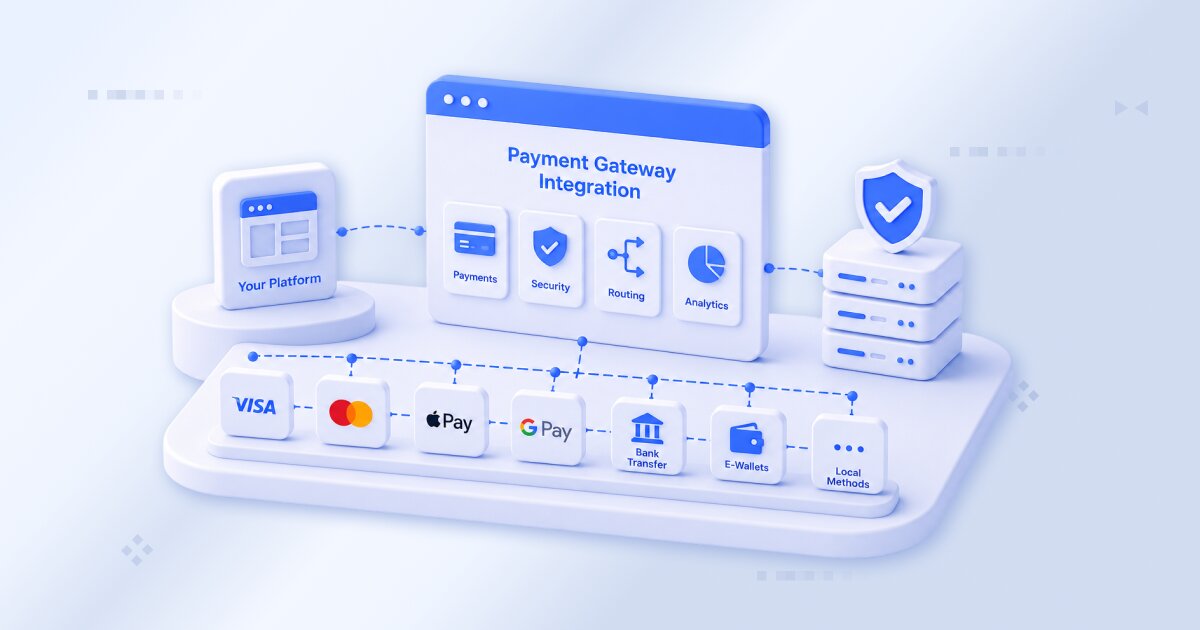
Payment Gateway Integration Services
Payment gateway integration services are the technical and operational work that connects your business systems, your website, app, or platform, to the payment infrastructure that processes transactions.
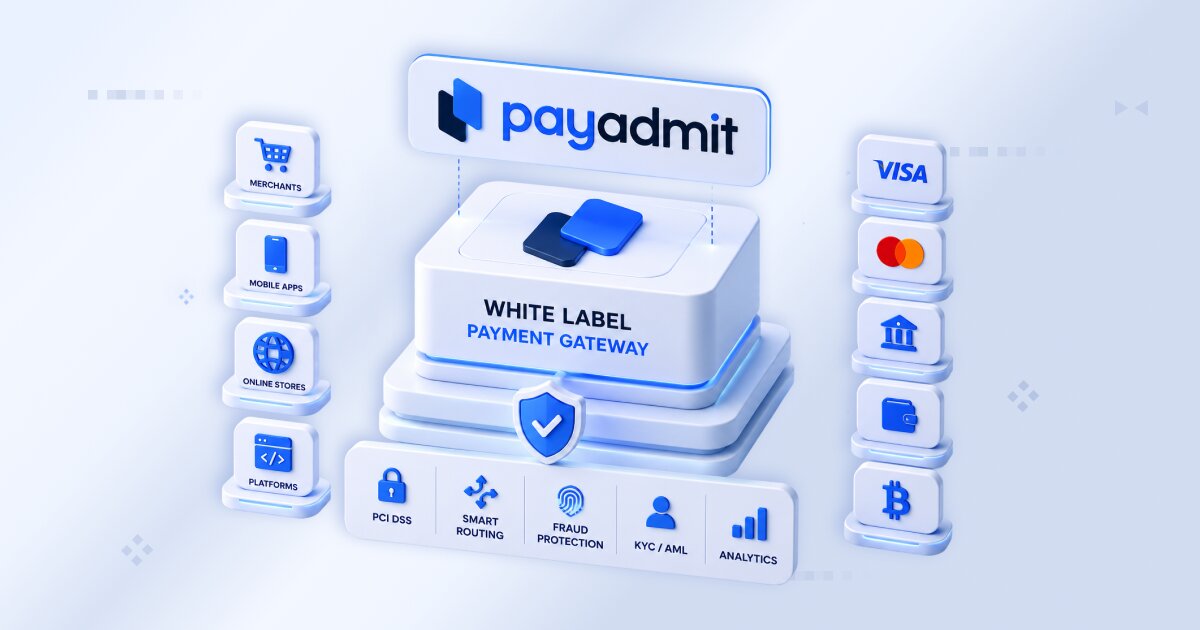
What Is a White Label Payment Gateway
In plain terms: someone else builds the engine. You put your name on the hood, set the rules, and keep the revenue.