

Custom gateway development typically costs between $500,000 and $1,000,000 for the first year, covering development, PCI DSS certification, acquiring bank connections, payment network certifications, anti-fraud tooling, and infrastructure. Annual ongoing cost runs $150,000 to $300,000. Specific amounts depend on team size, how many acquiring connections you need, and how configurable the routing logic needs to be.
How to Build a Payment Gateway: Real Costs, Real Timeline, and What Most Companies Do Instead
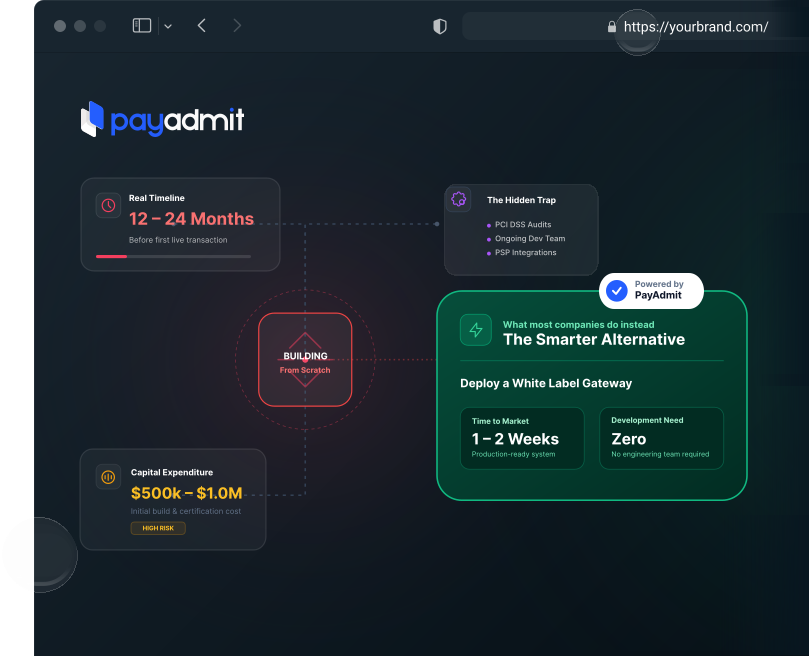
Building a payment gateway costs $500,000 to $1,000,000 and takes 12 to 24 months before your first live transaction. This guide answers the question of how to build a payment gateway, what the process involves at every stage, how cost accumulates, and when deploying a white label gateway like PayAdmit makes more sense.
14.04.2026
Updated:
What a Payment Gateway Does
A payment gateway is the infrastructure layer that sits between a customer’s payment method and the acquiring bank. The payment gateway is the first and last thing in every transaction. When a customer enters card details on a merchant website, the payment gateway captures that data, encrypts it, routes it to the correct payment processor, receives the payment authorization result, and returns that result to the website. The gateway handles this payment cycle in real time. The full payment loop completes in under three seconds. When the gateway slows or fails, the payment transaction fails and the gateway loses the sale. In payment-critical businesses, that is direct revenue loss on every affected order.
The payment gateway is distinct from the payment processor. The payment gateway handles data capture, encryption, and payment routing. No payment reaches the processor without passing through the payment gateway layer. Every payment gateway decision, approve, decline, cascade, happens inside the gateway in real time. The payment processor handles the financial transaction between issuing and acquiring banks. A payment service provider often bundles both services into one product. This distinction matters because it defines the scope of what you are actually building when you set out to learn how to create a payment gateway. A payment gateway is a specialized financial system, not just another piece of web infrastructure. Understanding this difference is what determines whether the project stays on budget and whether the gateway actually goes live on schedule.
Most businesses access payment gateway functionality through third-party hosted providers. These providers handle PCI compliance, fraud detection, and payment transaction routing through a hosted checkout on the merchant’s behalf. Stripe is the most referenced example. It charges a per-transaction percentage. For low payment volumes, hosted providers represent a cost-effective path. For high volumes, those fees become a significant line item. For businesses that want to offer payment services to other merchants, using a hosted provider means reselling someone else’s payment infrastructure rather than running a payment gateway as a revenue stream.
Why Payment Businesses Want to Build Their Own Gateway
The decision to build a payment gateway comes from a specific commercial logic. Companies researching how to build a payment gateway typically fall into one of three profiles. There are three business profiles that consistently reach the point where owning or deploying a white label payment gateway makes financial sense.
PSPs That Want to Stop Reselling Payment Infrastructure
If your business earns from payment processing fees, every transaction passes through a cost layer you do not control. Making your own payment gateway removes that cost layer. The payment gateway becomes a direct revenue-generating asset, every transaction your payment gateway processes contributes margin. The payment gateway pays for itself at scale. You capture the full margin. More importantly, you gain direct control over your payment gateway routing logic. Payment routing control means you can optimize which PSP or acquirer each payment transaction goes through, based on real-time approval rate data, card type, geography, and payment transaction value. A one to two percentage point payment gateway approval rate improvement at meaningful volume translates into measurable revenue.
Fintech Products That Need Native Payment Integration
A payment gateway running on the operator’s domain, with a branded payment checkout and a payment API, is a different product from a redirect to a hosted checkout page. For companies where the payment experience defines the product, the gap between a hosted solution and a fully controlled payment gateway is a competitive issue. Customers on your website should complete every payment step within the operator’s payment gateway environment. Completing a payment outside the product environment breaks the experience.
High-Volume Businesses With Payment Gateway Fee Sensitivity
At modest transaction volumes, per-transaction gateway fees like Stripe’s pricing feel manageable. At high volumes, the math shifts. A business processing a million transactions per month at Stripe’s standard rate pays a significant sum annually in gateway fees alone. Building your own payment gateway eliminates that line. The question is whether the cost to build is lower than the cost to continue paying gateway fees. For most businesses, the answer depends on the volume they process and what their timeline looks like.
For operators weighing the build path against licensing a platform under their own brand, the companion piece on how to own a payment gateway lays out the timeline and cost differences in detail.
HOW TO BUILD A PAYMENT GATEWAY STEP BY STEP
Building a payment gateway is not a standard software project. It is a compliance, infrastructure, and financial undertaking that also requires software development. Here is what the process actually involves.
Step 1: PCI DSS Certification
Any payment gateway that handles cardholder data must achieve PCI DSS compliance. Every payment gateway operating in production must maintain this certification continuously. Level 1 certification, which applies to gateways processing above six million transactions annually, requires an on-site assessment from a Qualified Security Assessor, formal penetration testing of your payment environment, a Report on Compliance, and annual renewal. The PCI DSS certification timeline for a new gateway typically runs six to twelve months before your first live payment transaction. Certification cost ranges between $50,000 and $200,000 depending on the complexity of your cardholder data environment and the remediation work the QSA assessment identifies.
Expert Insight, The Hidden Cost Layer
Most gateway builds run over initial budget during the PCI DSS remediation phase. QSA assessors routinely identify gaps in the cardholder data environment that require architectural changes before certification is granted. Teams that build first and engage a QSA late discover that remediation can add $50,000 to $150,000 and three to six months to their timeline. Engaging a QSA early in the design phase is significantly cheaper than remediating after the fact.
Step 2: Acquiring Bank Relationships
Your gateway needs direct connections to acquiring banks to process payment transactions. Each connection requires legal negotiation, financial due diligence on your business and your merchant portfolio, and a technical integration that the acquiring bank’s team reviews and approves. This is not like integrating a third-party API. Each connection takes three to six months per bank. For a payment gateway that wants genuine routing flexibility, budget for a minimum of three to five initial acquiring connections. Each one adds to both the cost and the timeline.
Step 3: Payment Gateway Software Architecture
The gateway software includes multiple components, each requiring its own development cycle:
- Payment checkout and data capture layer for cardholder information
- Encryption and tokenization module for payment cardholder data
- Payment routing engine that directs each payment transaction
- Payment cascading and fallback logic
- Anti-fraud layer and behavioral scoring
- Payment settlement and reconciliation engine
- Merchant payment portal
- Payment reporting and analytics back office
- Payment API layer connecting all payment components
The routing engine alone, if you want it to evaluate live approval rate statistics by BIN, currency, geography, and transaction amount, is a multi-month engineering project. How configurable each module needs to be affects the total cost and the timeline. How much you need to customize the routing engine, the merchant portal, and the anti-fraud layer determines how long the build takes.
Step 4: Ongoing Maintenance and Compliance
A payment gateway does not reach a stable state at launch. Payment network rules change regularly. PCI DSS standards update. Acquiring bank APIs evolve. Fraud patterns shift. Your team must monitor all of these and respond. Industry benchmarks put ongoing gateway maintenance cost at fifteen to twenty-five percent of your initial build cost per year. On a $600,000 initial payment gateway build, that means $90,000 to $150,000 annually in maintenance before you add any new payment features or payment method integrations.
PAYMENT GATEWAY COST BREAKDOWN
How much does building a payment gateway actually cost? The $500,000 figure most often quoted is the floor for a minimal payment gateway, not a full-featured production system.
Engineering team:
$200,000–$400,000
Backend engineers with payment processing experience, security engineers, DevOps, QA, and product management. Plan for six to eight people working twelve months or more.
Payment infrastructure:
$50,000–$150,000/yr
Dedicated servers, databases, CDN, monitoring, and backup infrastructure. Gateway uptime requirements are strict, payment downtime means lost transactions.
PCI DSS certification:
$50,000–$200,000
Initial certification plus remediation costs identified during QSA assessment.
Acquiring bank connections:
$80,000–$250,000
$20,000–$60,000 per bank in technical integration cost, plus legal overhead. Budget for three to five initial connections.
Payment network certifications:
$30,000–$80,000
Visa and Mastercard gateway certification requirements.
Anti-fraud tooling:
$20,000–$60,000/yr
Third-party fraud scoring providers plus internal engineering time to integrate and maintain.
Legal and compliance:
$30,000–$100,000
Acquiring agreements, network compliance review, and data processing documentation.
Total first-year payment gateway cost: $500,000 to $1,100,000
Annual ongoing cost after launch: $150,000 to $300,000
These figures exclude the opportunity cost of the engineering team spending twelve to twenty-four months on payment infrastructure instead of your core product.
The faster path to own a payment gateway is to license white label software on dedicated infrastructure and skip the 12 to 18 months of in-house build work entirely.
What a White Label Payment Gateway Like PayAdmit Delivers
A white label payment gateway like PayAdmit delivers the same operational outcome as building your own. The difference is not in the payment capabilities you get. The difference is in who built the underlying infrastructure.
With PayAdmit, your gateway runs on dedicated servers with a PCI DSS certification environment specific to your deployment. Your payment routing engine evaluates each transaction by BIN, geography, approval rate statistics, transaction value, and PSP priority in real time. Failed payment transactions cascade to the next configured acquirer within the same payment session without interrupting the payment flow. Merchants access a branded portal on your domain. Checkout pages sit on the operator’s domain and carry the operator’s brand. Payment API documentation publishes under the operator’s name. Anti-fraud tooling integrates through a unified pipeline. Three hundred fifty or more payment method integrations are available on day one. Each payment method is active and tested.
PayAdmit deploys a production-ready payment gateway in one to two months. The payment gateway goes live on your domain, under your brand.
The comparison with building is direct. PayAdmit operates on a service fee model rather than a per-transaction cut, more like infrastructure ownership than a usage-based gateway fee. As payment volume grows, the infrastructure stays flat in cost while revenue increases. This resembles operating the payment highway instead of paying a toll on every payment that crosses it.
Established hosted providers operate payment infrastructure like this at scale. The fee to access their infrastructure is a per-transaction fee that compounds with volume. PayAdmit’s white label model works differently. Your business operates its own gateway on dedicated infrastructure. PayAdmit manages the software. Your business manages the commercial merchant relationships.
Custom Build vs White Label: Direct Comparison
| Custom | PayAdmit | |
|---|---|---|
| Time to first live transaction | 12 to 24 months | 1 to 2 months |
| Year one cost: | $500,000 to $1,100,000 | Fraction of the cost, no overhead |
| PCI DSS | Team-managed certification, 6 to 12 months | Dedicated environment per client, included |
| Payment method access | Each integration requires a separate cycle | 550+ integrations available on day one |
| Routing engine | Design and develop from zero, months of engineering | Configurable engine with live approval optimization |
| Anti-fraud | Separate integration for each provider | Pre-integrated anti-fraud layer, configurable per merchant |
| Merchant portal | Separate development effort | Branded merchant payment portal on your domain, included |
| Ongoing maintenance | Dedicated internal team, $150k–$300k/yr | PayAdmit manages all software maintenance and updates |
| Routing and branding control | Full control | Full control, white label works like owning a custom gateway |
The white label model works like owning a custom-built payment gateway. Like a fully owned gateway, it supports your routing rules, your merchant portal, and your branded payment pages, without the build timeline and the ongoing cost. Think of it like owning the infrastructure without constructing it.
Even after the gateway itself is built, the merchant-side work continues. Payment gateway integration services cover the API and webhook plumbing that turns a functioning gateway into a usable production system for each merchant connecting to it.
Key Takeaways
- A fully custom payment gateway fits a narrow set of companies: large engineering teams, long capital runways, requirements no existing solution meets.
- For most PSPs, fintechs, and high-volume operators, the custom build path is not optimal. Payment gateway cost is real. The timeline is real. The maintenance commitment is real.
- Many teams reach the point where the estimate has doubled, the timeline has extended, and the white label option was clearly the right call.
- The strategic question: does the business require infrastructure it owns outright, or infrastructure it controls? These are different requirements.
- PayAdmit’s white label model gives operators direct control over payment routing, merchant relationships, pricing, and branding.
- Merchants connect to your payment gateway and interact with your brand. Checkout runs on your domain. Payment API documentation carries your name.
- The difference between building your own payment gateway and deploying a white label is not the outcome. It is the time and cost of getting there.
A more technical view of how to develop payment gateway software covers the API design, the data model, the encryption layer, and the integration patterns that turn a payment platform into something a merchant can actually deploy at production scale.
A gateway is the transaction engine; a platform is everything around it. If your roadmap is closer to the second, read our companion piece on how to build a payment platform for the operating-model view.
Want to see how PayAdmit deploys your branded payment gateway in 1 to 2 months?
FREQUENTLY ASKED QUESTIONS
How much does it cost to build a payment gateway?

How long does it take to build a payment gateway?
Most custom payment gateway builds take 12 to 24 months. Before the payment gateway processes a single live transaction, the gateway environment needs full PCI DSS certification, acquiring connections, and completed software development. PCI DSS certification alone takes 6 to 12 months. Teams that do not engage a QSA early in the design phase often add months during the remediation phase.
Is Stripe a payment gateway?
Stripe operates as a combined payment gateway and payment processor. Stripe provides hosted payment pages, card tokenization, fraud detection, and settlement in one platform. Stripe charges a per-transaction percentage, which is cost-effective at low volumes. At high transaction volumes, Stripe’s fee model becomes expensive. Businesses that want to control their own payment gateway infrastructure and stop paying a per-transaction fee to a hosted provider need a different approach.
How does a white label payment gateway compare to building from scratch?
A white label gateway like PayAdmit delivers production-grade infrastructure equivalent to a custom build: dedicated servers, own PCI DSS environment, configurable routing, branded checkout on your website, and your own payment API documentation. The difference is cost and timeline. PayAdmit deploys a production-ready payment gateway in one to two months at a fraction of what a custom build costs. Most businesses that fully evaluate the build path choose a white label solution once they understand the full scope of what is involved.
Can I add payment methods to a white label gateway?
Yes. PayAdmit provides access to 550+ payment integrations on day one. When a payment method is not in the current network, PayAdmit’s technical team handles the full integration development within one to two months. The operator does not need to allocate engineering resources. Once integrated, the new payment method is available across the full merchant network immediately.
What transaction scenarios should we test before launch?
Test successful authorisations, declines, timeouts, refunds, and repeated requests. Verify that notifications, transaction records, and reconciliation remain consistent when a provider is unavailable or a response arrives late.
ADDITIONAL RESOURCES

How to Own a Payment Gateway
Owning a payment gateway means more than having a checkout form on your website.
Payment Gateway Integration Services
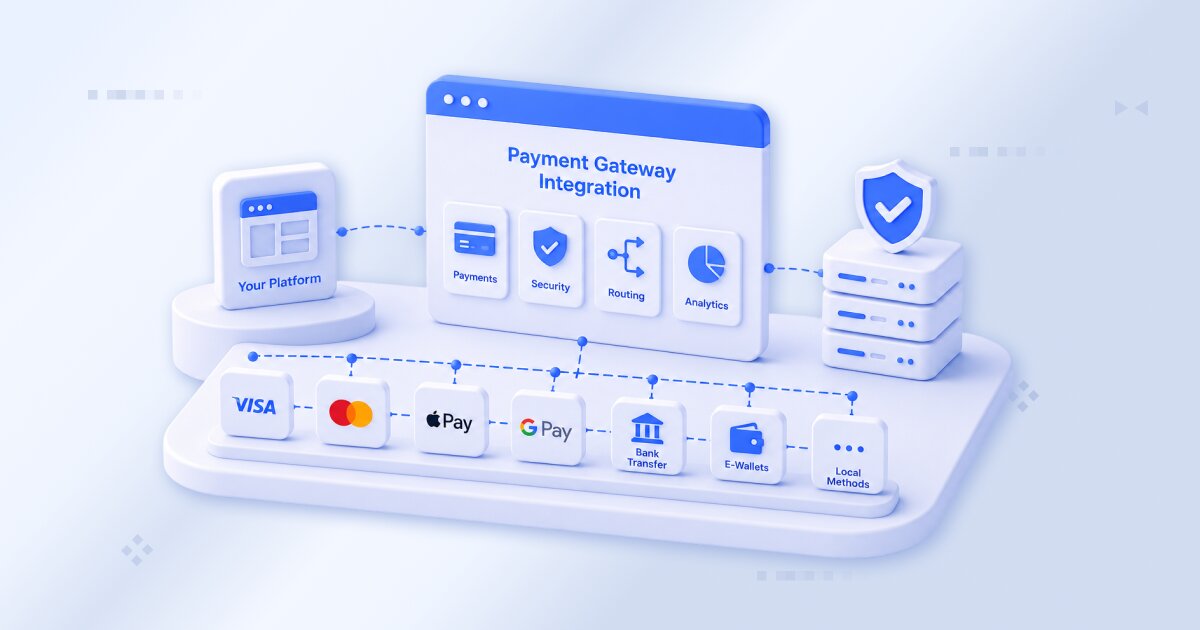
Payment gateway integration services are the technical and operational work that connects your business systems, your website, app, or platform, to the payment infrastructure that processes transactions.
What Is a White Label Payment Gateway
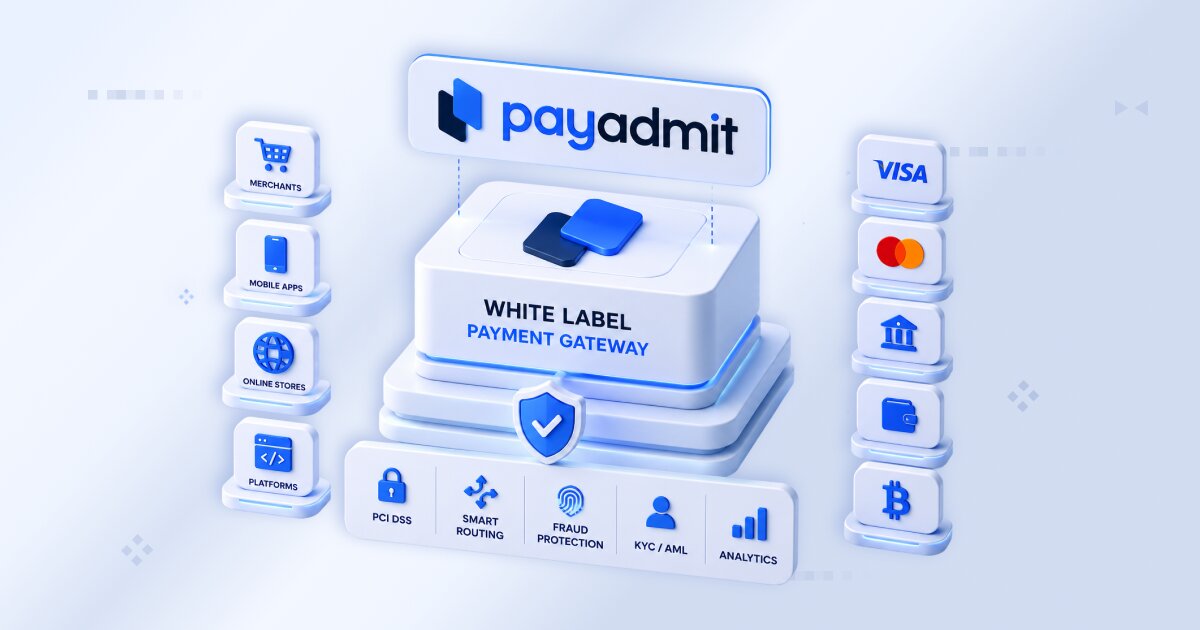
In plain terms: someone else builds the engine. You put your name on the hood, set the rules, and keep the revenue.