

For a PSP launching its first merchant network, the best white label payment gateway combines fast deployment, dedicated infrastructure, and full routing control without requiring an internal engineering team. PayAdmit deploys a production-ready white label payment service in 1 to 2 months, with the client’s own PCI DSS environment, a configurable routing engine, and 550+ payment integrations active from day one.
Best White Label Payment Gateway
The white label payment gateway market grew past $2.76 billion in 2025 and is on track to reach $8.19 billion by 2035. Over 58% of payment service providers now use white label solutions rather than building payment infrastructure in-house. The number of providers has grown alongside the market, and so has the gap between solutions that genuinely deliver infrastructure ownership and those that only offer branded reseller arrangements.
01.05.2026
Updated:
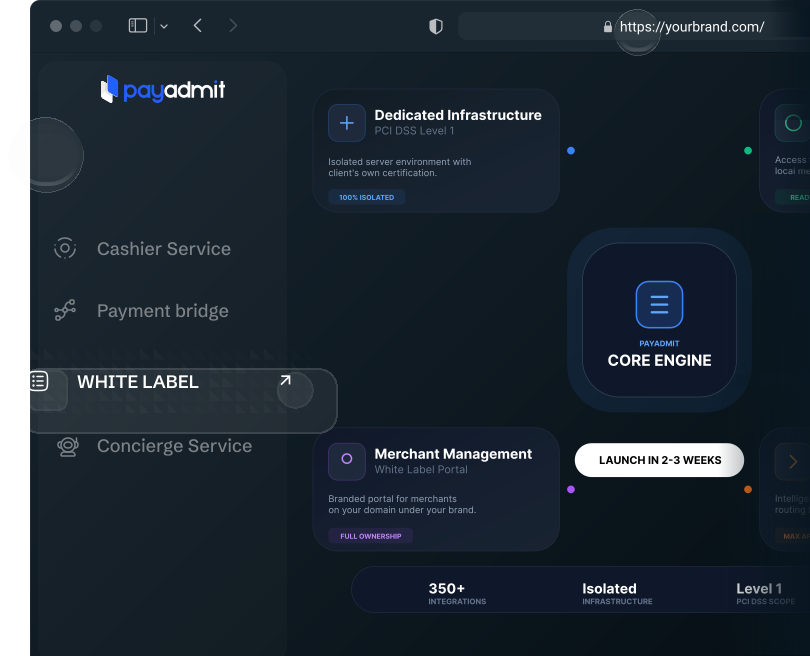

This guide covers what makes a white label payment gateway solution worth selecting, how the leading providers compare on the criteria that matter for businesses that process real payment volume, and how to match the right solution to your business type. The best white label payment gateway for a regional PSP launching its first merchant network looks different from the best solution for a bank that needs dedicated infrastructure under its own PCI DSS certification.
What a White Label Payment Gateway Actually Is
A white label payment gateway is a payment processing solution that a business deploys under its own brand. The business’s merchants, clients, and end users interact with a payment service that carries the business’s identity, branded checkout pages, merchant portals on the business’s domain, and API documentation under the business’s name. The underlying payment software is provided by a third-party technology vendor.
The term covers a spectrum. At one end are genuine white label solutions, dedicated server infrastructure, client-owned PCI DSS certification, full routing control, and a merchant management back office the client’s team operates independently. At the other end are rebrandable hosted gateways that place a business’s logo on a shared payment service with limited routing control and a compliance scope the business does not own.
The distinction matters because businesses that operate payment services at scale, PSPs, banks, acquiring institutions, face regulatory and audit requirements that shared environments cannot satisfy. For these businesses, a white label solution that provides a dedicated, technically isolated payment environment is not a preference. It is a prerequisite.
PayAdmit’s Position
PayAdmit is a payment software vendor. PayAdmit provides white label payment gateway software on dedicated infrastructure with client-owned PCI DSS certification. PayAdmit does not act as a PSP, process funds, or own merchant relationships. The client business operates the payment service. PayAdmit provides the technical solution layer behind it.
Why Businesses Choose White Label Over Building or Reselling
Three business drivers consistently push companies toward white label payment infrastructure. Understanding which one applies to your business is the first step toward selecting the right solution.
1. Revenue ownership without infrastructure cost
A business that earns from payment processing fees needs to capture the full margin, not pay a per-transaction cut to a third-party gateway provider. White label solutions eliminate that external fee layer. The business becomes the payment service provider to its merchants. Every transaction the merchant processes contributes margin to the business rather than to an external platform.
2. Product integrity and brand continuity
For businesses where the payment experience is part of the product, fintech platforms, neobanks, SaaS companies, redirecting users to a third-party branded checkout page at the point of payment creates a break in the product experience. A white label gateway keeps every payment interaction native to the business’s domain and identity. The customer never encounters a third-party payment brand during the checkout process.
3. Control over routing, compliance, and merchant relationships
Businesses that process high payment volumes need to optimize approval rates across multiple acquiring banks and PSPs. A white label solution provides the routing engine the business configures, not the provider’s default routing logic optimized for the provider’s commercial interests. The business sets PSP priority, cascade sequences, and routing rules per merchant. The business also owns the merchant relationships and the data associated with every payment transaction.
Operators that have weighed the case to build a payment gateway from scratch typically find that the realistic timeline and recurring PCI DSS scope push the decision back toward licensing a white label platform.
7 Criteria for Evaluating a White Label Payment Gateway Provider
These are the criteria that separate white label solutions that deliver genuine business value from those that deliver a branded interface on top of someone else’s infrastructure. Evaluate every provider against all seven before making a selection.
1. Infrastructure Model: Dedicated vs. Shared
This is the most consequential criterion and the one most frequently obscured in provider marketing. A dedicated infrastructure model means the client’s payment environment runs on servers allocated specifically to that client. Card data, transaction records, and merchant accounts sit within a perimeter the client controls. PCI DSS certification covers that specific environment. A shared infrastructure model means multiple clients’ data sits in the same certified environment. The provider manages PCI DSS compliance for the shared perimeter. The client’s compliance scope is tied to the provider’s certification, not the client’s own.
For PSPs, banks, and acquirers operating under financial regulatory requirements, dedicated infrastructure with client-owned PCI DSS is not optional. Auditors, card networks, and acquiring banks require that the payment environment meets specific isolation and control standards. Shared environments fail these requirements.
2. Routing Engine and Cascading Logic
The routing engine determines which PSP or acquiring bank receives each payment transaction. A well-configured routing engine evaluates card BIN, transaction currency and amount, merchant risk profile, customer geography, and live PSP approval rate statistics, and selects the optimal processing path in real time. When a transaction fails at the first PSP, the cascading engine routes automatically to the next configured provider within the same checkout session.
The best white label payment gateway solutions provide routing engines the client configures independently, PSP priority, cascade sequences, routing weights, and rule logic all set from the client’s back office without requiring the provider’s involvement. Providers that require support tickets to adjust routing rules or limit routing logic to their own preferred PSP network do not deliver genuine routing control.
3. Merchant Management Capabilities
The white label merchant portal is where the client’s merchants interact with the payment service daily. Each merchant account should have its own view: transaction reports, settlement summaries, card processing data, and payout management. The portal must run on the client’s domain under the client’s brand. Role-based access controls should allow the client’s team to define what each back-office user can view or modify. Merchant onboarding, processing limits, fee configuration, and account deactivation should all be manageable from the back office without developer involvement.
4. Payment Method Coverage and Integration Count
The best white label payment gateway solution for a business serving a global merchant base needs broad payment method coverage from day one. Card network support, Visa, Mastercard, Amex, JCB, UnionPay, is the baseline. Beyond that, digital wallet support (Apple Pay, Google Pay, PayPal), regional alternative payment methods, and cryptocurrency processing determine whether the gateway can serve merchants across different geographies without requiring additional integration work. Providers that offer 550+ pre-integrated payment methods and can add new integrations within 1 to 2 months on request significantly reduce the time-to-market for new merchant segments.
5. Anti-Fraud and Risk Management
Every white label payment solution must include configurable anti-fraud tooling. The best implementations allow the client to set rules per merchant: BIN blocks, velocity limits per card and customer profile, spending thresholds, and behavior-based scoring. Third-party anti-fraud providers should connect directly to the transaction scoring pipeline without requiring separate integration work. Providers that offer rigid, non-configurable fraud rules, or that require the client to use only the provider’s preferred fraud service, limit the client’s ability to tune fraud prevention for specific merchant categories or geographies.
6. Settlement, Reconciliation, and Reporting
Settlement reporting is where payment operations happen daily. The best white label gateway solutions provide settlement data at the merchant account level and across the full portfolio, with reconciliation exports that map each transaction to a booking ID or merchant reference. Currency conversion using live exchange rate data should apply before routing so settlement currencies match PSP requirements automatically. Finance teams need consolidated portfolio-level data; individual merchants need their own transaction and settlement reports accessible through the white label portal without involving the client’s operations team.
7. Deployment Timeline and Ongoing Maintenance Model
Time to first live payment transaction is a direct measure of how production-ready the solution is. The best white label payment gateway providers deploy a fully configured, branded, PCI DSS-certified payment environment in 1 to 2 months. Providers that quote 3 to 6 months for deployment are delivering bespoke development, not a production-ready solution. After deployment, the provider should manage software maintenance, PCI DSS upkeep, card network integration updates, BIN database refreshes, and 24/7 technical support, without requiring the client to carry an internal payment engineering team.
Buyers who have narrowed their shortlist and want a practical walkthrough of the ownership model should read how to own a payment gateway, which covers the contract structure, infrastructure setup, and ongoing operational responsibilities.
Best White Label Payment Gateway Providers: Who They Are and What They Deliver
The providers below represent different approaches to the white label payment gateway market. Each profile covers strengths, limitations, and the business profile each provider serves best.
PayAdmit
White label payment software vendor. Dedicated infrastructure model. Purpose-built for PSPs, banks, and payment businesses.
PayAdmit is a white label payment gateway provider on dedicated server infrastructure, with each client operating under its own PCI DSS certification. The platform includes a fully configurable routing engine, PSP cascading, anti-fraud integration, merchant portal on the client’s domain, 550+ payment method integrations, and a white label API documentation layer. The client business holds the PSP license and merchant relationships. PayAdmit provides the technical platform and manages maintenance, PCI DSS upkeep, and network integration updates throughout the engagement.
PayAdmit does not process funds or hold merchant accounts. The separation between software vendor and payment service provider is explicit, a model that makes PayAdmit a clean infrastructure partner for banks, licensed PSPs, and EMIs that need payment software running under their own regulated environment.
- Dedicated infrastructure + client-owned PCI DSS
- Fully configurable routing and cascading, set from client back office
- 550+ payment integrations + new methods in 1–2 months
- 1–2 month deployment to live payment transactions
- White label merchant portal + API documentation on client domain
Best for:
PSPs, banks, fintech platforms, ISOs, and acquiring institutions that need a production-ready white label payment solution with dedicated infrastructure and full routing control from day one. Check out white label payment gateway price →
Akurateco
White label payment orchestration platform. 600+ integrations. Built for payment companies, banks, and ambitious merchants.
Strengths

Strong breadth of PSP integrations (600+), more than most providers
Payment orchestration layer with routing and cascading capabilities
PCI DSS compliant solution with merchant management tools
Active in multiple markets including high-risk verticals
Developer-focused with regular product updates
Limitations

Shared infrastructure model in standard configurations, dedicated environment may require enterprise tier
Primary business model includes Akurateco as PSP layer in some configurations
Less suitable for institutions requiring technically isolated payment environments for regulatory compliance
Best for:
PSPs, payment companies, and high-risk merchants needing broad integration coverage and orchestration capabilities.
Corefy
Payment orchestration platform with white label capabilities. API-first. Used by iGaming and fintech businesses.
Strengths
Strong payment orchestration and routing capabilities across multiple PSP connections
API-first architecture, well-suited for technical teams and complex integrations
Active in iGaming, fintech, and e-commerce verticals
Good coverage of alternative payment methods for specific markets
Analytics and reporting tools
Limitations
Orchestration-first model, not a pure white label infrastructure provider
PCI DSS compliance scope depends on deployment configuration
Less suitable for businesses that need dedicated server infrastructure under their own PCI DSS
Best for:
PSP founders and fintech businesses with strong engineering teams that want full ownership of payment software through source code licensing.
SDK.finance
White label fintech source code platform. PSP software with full source code license available.
Strengths
Source code licensing model, full ownership and customisation for enterprises
Broad fintech platform coverage beyond pure gateway: wallets, neobank software, ledgers
PCI DSS Level 1 compliance as standard in the platform
Suitable for businesses that want to build a payment business with full infrastructure control
Audit trail and financial transparency built into the transaction processing layer
Limitations
Source code license model requires internal engineering capacity to deploy and maintain
Longer implementation timelines than SaaS-based white label solutions
Higher upfront investment relative to turnkey gateway solutions
Best suited for well-resourced businesses, not fast-launch PSPs
Best for:
PSP founders and fintech businesses with strong engineering teams that want full ownership of payment software through source code licensing.
IXOPAY
Payment orchestration platform with white label capabilities. Multi-tenant, cloud-native architecture.
Strengths
Strong multi-tenant payment orchestration for platforms managing multiple merchant sub-accounts
Cloud-native deployment with flexible integration options
Broad PSP connectivity with smart routing features
White label merchant portal and branded checkout
Suitable for marketplaces and payment facilitators (PayFac)
Limitations
Shared cloud infrastructure, does not provide dedicated server environments for regulated entities
Less suitable for banks or institutions with strict data residency or infrastructure isolation requirements
Routing engine customization may require provider involvement for complex rule sets
Best for:
Marketplaces, PayFac platforms, and SaaS businesses that need multi-tenant payment orchestration with white label merchant management.
Provider Comparison: Key Criteria
| PayAdmit | Akurateco | DECTA | Corefy | SDK.finance | |
|---|---|---|---|---|---|
| Infrastructure | Dedicated | Shared/Flex | Dedicated | Shared | Own (source) |
| Client PCI DSS | Per client | Shared scope | Per client | Shared scope | Own (post-build) |
| Routing control | Full — client sets | Configurable | Limited | Strong | Full (source) |
| Integrations | 550+ | 600+ | Selective | 200+ | Platform- based |
| Deployment | 1–2 months | 4–6 weeks | 4–8 weeks | Variable | 3–6+ months |
| Best business fit | PSP, Bank, ISO | PSP, High-risk | EU PSP, Fintech | iGaming, Fintech | Enterprise PSP |
How to Choose the Best White Label Payment Gateway for Your Business
The right white label solution depends on your business type, regulatory obligations, and the payment volume and geography you serve. Use these decision paths to narrow down the best fit.
Before selecting a provider, teams new to the category usually need a clear definition of what is a white label payment gateway and how it differs from a hosted PSP, a reseller arrangement, or a shared-environment payment service.
You are a PSP launching your first merchant network
Your priority is time-to-market and operational simplicity. You need a solution that delivers dedicated infrastructure, merchant management, routing, and 24/7 support without requiring an internal payment engineering team. You need to process payment volume and generate revenue before you can justify a large infrastructure investment. PayAdmit’s deployment model, 1 to 2 months to live payment transactions, is designed specifically for this profile. You connect your merchants, configure routing, and start processing. The software handles everything beneath that.
You are a bank or financial institution
Your regulatory requirements mandate dedicated server infrastructure and client-owned PCI DSS certification. Shared environments are not viable for your compliance posture. You need a provider that delivers a technically isolated payment environment under your institution’s own certification scope, with full audit trail capability at the transaction level. The solution must run on your domain with your brand on every payment touchpoint. PayAdmit and DECTA both operate dedicated infrastructure models. The distinction is that DECTA bundles its own acquiring capabilities, while PayAdmit serves as a pure software vendor, which may be preferable for banks that already hold acquiring relationships.
You are a high-volume iGaming or high-risk merchant
Your priority is payment method coverage across diverse geographies, high transaction volume handling, and anti-fraud tooling tuned for the specific fraud patterns of your vertical. You likely need 100+ payment methods covering LATAM, CIS, and Asia-Pacific markets. Akurateco and Corefy both have strong track records in iGaming and high-risk verticals and offer broader integration coverage than general-purpose white label providers.
You are a fintech platform or neobank embedding payments
Your priority is API quality, payment flow configurability, and seamless integration with your existing product architecture. You need a white label payment solution that exposes clean REST APIs, delivers real-time webhooks for every payment event, and allows you to configure the checkout experience for your product’s specific requirements. Both PayAdmit and Corefy provide strong API layers. The infrastructure model, dedicated vs. shared, determines which is appropriate given your compliance obligations.
Operators looking specifically for an iGaming payment gateway should evaluate platforms on smart routing depth, multi-acquirer redundancy, and the speed at which new payment methods can be onboarded for specific regulated markets.
You are an enterprise building full payment ownership
Your business has the engineering capacity and capital to deploy and maintain payment infrastructure in-house long-term. Source code licensing, as offered by SDK.finance, gives full ownership and maximum customization. The tradeoff is a 3 to 6+ month implementation timeline and the need to manage ongoing software development, PCI DSS certification, and PSP integration work with your own team. This model delivers the highest level of long-term control at the highest upfront cost and implementation complexity.
Choosing the right partner is the first decision for any operator that wants to own a payment gateway under its own brand without taking on the full burden of in-house development.
Questions to Ask Every White Label Payment Gateway Provider
Before committing to a white label payment solution, ask every provider these questions directly. The answers will separate genuine white label infrastructure from rebrandable reseller arrangements.
- Does the solution run on infrastructure dedicated to my business, or on shared infrastructure with other clients?
- Is the PCI DSS certification specific to my payment environment, or does my business operate under the provider’s shared certification scope?
- Who sets the routing rules, my team from the back office, or the provider’s team on request?
- If I want to add a new PSP connection, how long does it take and who handles the integration work?
- Does the merchant portal run on my domain under my brand, or on the provider’s domain?
- Does the API documentation deliver under my brand, or does the provider’s name appear in the merchant-facing documentation?
- What does the provider manage after deployment, and what does my team need to manage internally?
- Is the provider a payment software vendor, or does the provider also act as a PSP, process funds, or hold merchant accounts?
- What is the SLA for uptime, and what happens if the payment processing service goes down during peak transaction hours?
- Can I switch PSPs or add new acquiring banks independently, or does every change require a support ticket to the provider?
Before choosing a vendor, many operators research how to make your own payment gateway from scratch, only to find that the realistic timeline and the recurring compliance cost push the answer back to a licensed white label platform.
Why PayAdmit Is the Best White Label Payment Gateway Solution for PSPs and Banks
PayAdmit’s white label payment gateway solution is built around a specific proposition: the client business owns the payment infrastructure, the merchant relationships, and the payment revenue. PayAdmit provides the software and the dedicated server environment to make that possible.
Dedicated infrastructure and client-owned PCI DSS
Every PayAdmit deployment runs on servers dedicated to the client. The PCI DSS certification covers the client’s specific environment, not a shared scope. This means the client’s cardholder data environment meets the isolation requirements of financial regulators, card networks, and acquiring banks. For PSPs and banks subject to regulatory audit, this is not a feature. It is the baseline requirement for operating a compliant payment service.
Full routing control, configured by the client
The PayAdmit routing engine evaluates every payment transaction against a ruleset the client configures: card BIN, transaction currency and amount, merchant risk profile, customer geography, and live PSP approval rate statistics. The client sets PSP priority weights, cascade sequences, and routing logic from the back office without requiring a support ticket to PayAdmit. When a payment fails at the first PSP, the cascading engine routes to the next configured provider within the same checkout session automatically.
550+ integrations, active from deployment
PayAdmit provides access to 550+ pre-integrated card networks, digital wallets, alternative payment methods, and PSPs from the first day of deployment. New integrations, when a client needs a payment method not in the current network, complete in 1 to 2 months, handled by the PayAdmit technical team. The client does not allocate engineering resources to integration work.
White label at every touchpoint
Payment pages run on the client’s domain. The merchant portal runs on the client’s domain under the client’s brand. API documentation delivers under the client’s name, ready to provide to merchants and technology partners who need to integrate with the client’s payment service. PayAdmit does not appear in any merchant-facing documentation or interface.
1–2 month deployment, production-ready
From contract to live payment transactions: 1 to 2 months. PayAdmit provisions dedicated server infrastructure, activates PCI DSS for the client’s environment, deploys branded payment pages and the merchant portal on the client’s domain, configures initial PSP connections, and builds the routing and anti-fraud ruleset. Full admin access to a production-ready white label payment service provides at the end of the deployment process.
Choosing a white-label core is one input into a much bigger decision. Here is the full picture on how to build a payment platform covering scope, budget and team shape.
Frequently Asked Questions
What is the best white label payment gateway for a PSP launching in 2026?

What is the difference between a white label gateway and a payment orchestration platform?
A payment orchestration platform routes transactions across multiple PSPs and provides workflow tooling, but typically operates on shared infrastructure under the provider’s compliance scope. A white label gateway solution provides dedicated infrastructure, client-owned PCI DSS certification, and a branded merchant portal, the client operates a payment service under its own identity. The two models are not mutually exclusive: PayAdmit provides both orchestration capabilities and a genuine white label infrastructure model.
How much does a white label payment gateway cost?
White label payment gateway pricing varies significantly by provider and model. Source code licensing solutions from providers like SDK.finance involve higher upfront investment and longer implementation timelines. SaaS-based white label solutions typically involve a monthly service fee plus transaction-based fees. PayAdmit operates on a service fee model, the client controls its own merchant pricing and captures the payment processing margin directly, rather than paying a per-transaction fee to a hosted payment gateway provider.
How long does it take to deploy a white label payment gateway?
Deployment timelines vary from 1 to 2 months (PayAdmit) to 3 to 6+ months (source code solutions like SDK.finance). The deployment timeline is a function of how production-ready the solution is. A provider that quotes 1 to 2 months is delivering a configured, certified, and branded payment environment. A provider that quotes 6 months is delivering a bespoke development project. For businesses that need to process payment volume quickly, the deployment timeline is a critical selection criterion.
Can a white label payment gateway support multiple merchants from one deployment?
Yes. The best white label payment gateway solutions support unlimited merchant accounts under one deployment. Each merchant account operates independently with its own routing configuration, processing limits, anti-fraud settings, and portal access. The operator manages the full merchant network from one back office. PayAdmit supports unlimited merchant accounts with no per-merchant licensing fee within the deployment.
Is PCI DSS compliance included in white label payment gateway solutions?
It depends on the provider and the infrastructure model. Shared environment solutions operate under the provider’s PCI DSS certification scope, the client is not independently certified. Dedicated infrastructure solutions like PayAdmit provide PCI DSS certification specific to the client’s environment. For banks, PSPs, and regulated entities, client-owned PCI DSS is a requirement, not a preference. Always confirm the infrastructure model and PCI DSS scope before selecting a provider.
ADDITIONAL RESOURCES

How to Own a Payment Gateway
Owning a payment gateway means more than having a checkout form on your website.
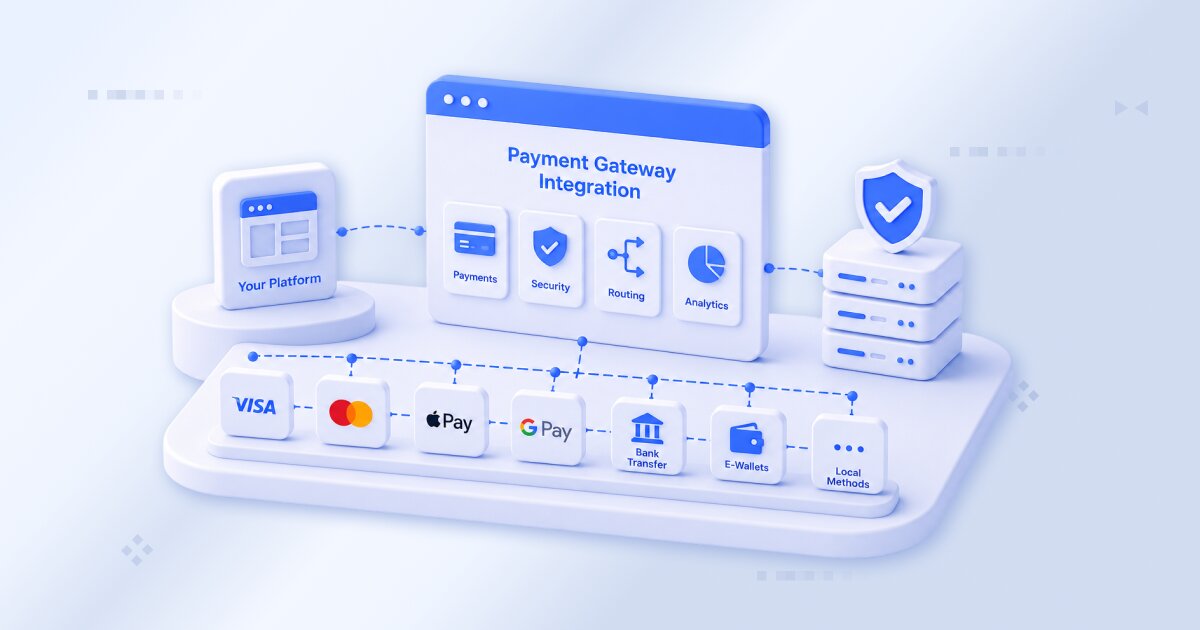
Payment Gateway Integration Services
Payment gateway integration services are the technical and operational work that connects your business systems, your website, app, or platform, to the payment infrastructure that processes transactions.
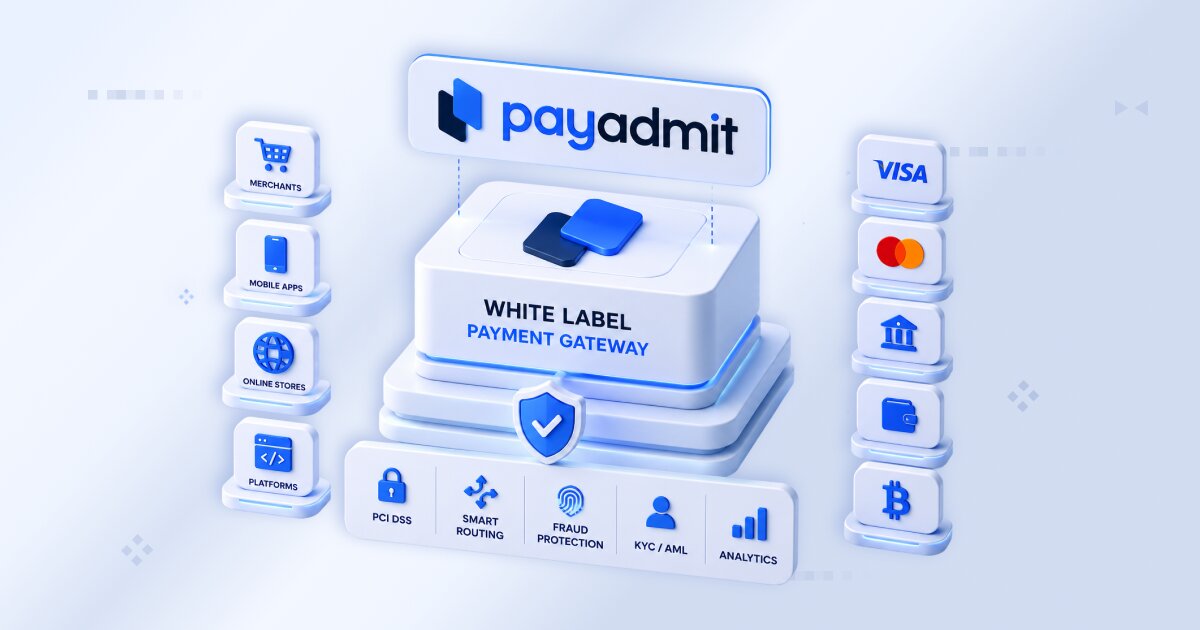
What Is a White Label Payment Gateway
In plain terms: someone else builds the engine. You put your name on the hood, set the rules, and keep the revenue.