
It is the combined set of payment services a gaming operator uses to take deposits and send withdrawals: a payment gateway, one or more acquirers, the alternative payment methods players use locally, payout rails and the orchestration platform that routes payment traffic between them. No single vendor supplies all of it, which is why operators talk about a payment stack rather than a payment product.
TL;DR. An iGaming payment solution is a stack, not a product: a gateway, one or more acquirers, the local payment methods your players use, a payout rail and an orchestration layer that routes between them. This guide maps every component, explains why gaming approval rates and payout speed behave the way they do, and sets out the criteria that separate a workable payment setup from one you will replace within a year. PayAdmit supplies the software layer, connecting your platform to the acquirers and methods you hold through a single integration.
On This Page
- Introduction: iGaming Payment Solutions
- How iGaming Payments Work
- Core Components of an iGaming Payment Stack
- Fraud, KYC/AML and 3DS
- Payment Methods Used in iGaming
- iGaming-Specific Payment Challenges
- How Payment Orchestration Improves iGaming Payments
- How to Choose an iGaming Payment Solution
- PayAdmit for iGaming Payment Operations
- Where to Go Next
- Frequently Asked Questions
Introduction: iGaming Payment Solutions
An iGaming payment solution is the set of payment components a gaming operator assembles so that players can fund an account and withdraw winnings reliably. It is not a single product. It is a stack: a payment gateway that captures the transaction, an acquirer that processes card volume, a collection of alternative payment methods that match local player behaviour, a payout rail that returns funds, and an orchestration layer that decides which of those paths each payment should use.
Operators arrive at this topic from two directions. Some are launching and need to know what the payment stack even contains. Others have a live platform and are trying to work out why deposit approval rates sit lower than they should, or why payouts take three days when competitors settle in one. Both questions share an answer: performance in gaming comes from the combination of components, not from any single provider.
The vertical is genuinely different from retail commerce. Gambling merchant category codes attract additional issuer scrutiny. Traffic is cross-border by default because players and licenses rarely sit in the same jurisdiction. Deposits are small, frequent and repeated by the same player, while withdrawals are larger and less predictable. Chargeback exposure carries a regulatory dimension that ordinary retail does not have, and provider availability changes as risk appetite shifts.
This guide covers the full scope: how gaming payments flow, what each component of the stack does, which iGaming payment methods matter and where, the operational problems specific to gaming, and the criteria that separate a workable payment solution from one that will need replacing within a year.
One framing is worth setting out early. There is no single best payment solution for iGaming that suits every operator, and any provider claiming otherwise is selling rather than advising. The best iGaming payment solutions are the ones matched to a specific license, a specific set of markets and a specific player base. An operator processing card payments across three European markets needs a different payment stack from one supporting crypto deposits in Latin America, and both are entitled to call their choice the best solution for their business.
What does stay constant is the shape of the problem. Every gaming operator has to process deposits reliably, support the payment methods its players actually use, pay winnings back quickly, and produce evidence that the whole payment process satisfies its license. The components differ; the obligations do not.
Definition iGaming payment solutions are the combined gateway, acquiring, alternative-method, payout and orchestration services a gaming operator uses to move money between players and the business.
How iGaming Payments Work
Every deposit follows the same path, whatever method a player picks. Knowing the sequence makes it obvious where latency, declines and reconciliation problems come from.
01 The player opens the cashier
The gaming platform presents a cashier with the payment methods available for that player's country, currency and account status. What appears here is already a business decision: methods are filtered by market, by license, and sometimes by the player's deposit history. A cashier that shows a method the player cannot complete is worse than one that hides it.
02 The transaction is captured
The player selects a method and enters payment details. If the operator uses hosted fields or a hosted cashier page, card data goes straight to the payment provider and never touches operator infrastructure, which keeps PCI scope small. The gateway creates a transaction record and returns a reference the gaming platform can track.
03 Routing selects a path
An orchestration layer reads the attributes of the payment (country, currency, amount, method, card BIN) and selects which provider should process it. Operators running a single provider skip this step, which is precisely why they cannot react when that provider degrades.
04 Authorisation and authentication
The chosen provider forwards the payment to the acquirer, which submits it to the card network and the issuer. In regulated markets a 3DS challenge may be triggered. The issuer approves or declines, and the answer returns along the same chain.
05 Confirmation reaches the platform
The gateway notifies the gaming platform through a webhook, and the player's balance is credited. This callback is the single most important integration detail in the whole flow: if it is not idempotent, network retries produce double credits that players are happy to exploit.
06 Settlement
Funds move from the acquirer to the operator's account on the agreed settlement cycle, net of fees and any rolling reserve. Settlement reporting has to reconcile back to individual transactions, or month-end becomes guesswork.
07 Withdrawal, in reverse
Payouts run the same chain backwards, with a risk and compliance check inserted before funds leave. Withdrawals rarely use the same rail as the deposit, which is why payout coverage has to be evaluated separately from deposit coverage.
Two details in this process cause more support tickets than the rest of the flow combined. The first is transaction state: a payment can be pending, authorised, captured, failed, refunded or reversed, and a gaming platform that collapses these into success or failure will credit balances it should not. The second is timing. The player sees the cashier response instantly, while settlement completes days later, and any reporting that conflates the two will not reconcile.
Core Components of an iGaming Payment Stack
The four building blocks every gaming payment stack contains, and the job each one is responsible for.
| Component | What it does | What to judge it on |
|---|---|---|
| Payment gateway | Captures and tokenises the transaction | Uptime, latency, method support |
| Acquiring | Processes card volume under an MCC | Risk appetite, markets, reserve terms |
| Alternative methods | Covers local player behaviour | Coverage per licensed market |
| Payout rails | Returns funds to the player | Speed, cost, destination coverage |
| Orchestration | Routes between all of the above | Rules depth, failover, reporting |
Fraud, KYC/AML and 3DS
Controls in gaming serve two masters at once: they protect the business from loss, and they evidence compliance to a regulator. A checklist keeps the two from being confused.
01 Verify identity before the first withdrawal
Most licenses require identity verification before funds leave. Doing it at deposit adds friction that costs conversion; doing it at first withdrawal is the common compromise. Whichever you choose, the policy has to be consistent and documented.
02 Apply 3D Secure where it earns its cost
Strong customer authentication shifts chargeback liability to the issuer and is mandatory in several markets. It also adds a step players can abandon, so exemptions and risk-based application matter as much as the integration itself.
03 Screen for the gaming-specific patterns
Bonus abuse, multi-accounting, card testing and deposit-then-immediate-withdrawal cycles are the patterns that matter here, and generic retail fraud rules do not catch them. Device fingerprinting and velocity checks across accounts are more useful than transaction-level scoring alone.
04 Monitor transactions against AML thresholds
Aggregation rules, source-of-funds triggers and sanctions screening apply to gaming operators in every regulated market. The payment platform should surface the data; the compliance function owns the decision.
05 Keep card data out of scope
Tokenisation and hosted fields keep the operator out of the heaviest PCI DSS obligations. This is the single cheapest security decision available, and it has to be made before integration rather than after.
06 Manage chargeback exposure actively
Gambling disputes carry a higher friendly-fraud rate than retail. Clear descriptors, accessible transaction history and prompt representment evidence keep the ratio inside acquirer tolerances.
None of these controls is optional in a licensed market, and none of them works as a bolt-on. The payment platform has to support them natively, with screening at the point of transaction, evidence retained per payment and configuration that varies per market. Retrofitting compliance onto a payment process designed without it is far more expensive than specifying it at the start.
Payment Methods Used in iGaming
Method choice is where most of the available conversion sits. The categories below behave differently enough that an operator should think of them as separate products rather than as interchangeable options:
- Cards. The widest reach and the most familiar checkout, but the lowest approval rates in gaming and the only category carrying chargeback risk
- Digital wallets. Fast, popular with regular players, and usable for payouts as well as deposits, which few other methods manage
- Bank transfers and pay-by-bank. Strong in northern Europe and increasingly elsewhere, irreversible, and typically cheaper than cards
- Vouchers and prepaid. The answer for players who will not put a card near a gaming site, though they cannot carry a withdrawal
- Crypto. Fast settlement and global reach where the license permits it, with volatility and source-of-funds obligations attached
- Local alternative methods. Often the dominant method in a market, and the difference between competing seriously and not competing at all
Each category is compared in depth in the guide to payment methods for iGaming. The practical rule is that no single category covers a market. Cards give you baseline coverage everywhere, one or two local methods give you the volume that cards miss, and a wallet gives you a payout route. Beyond that, each additional method has to justify the integration and reconciliation cost it adds.
Card payments deserve separate comment because they behave worse in gaming than operators expect. Card transactions carry the widest recognition and the lowest friction, so they will always be part of the payment mix, but card approval rates in this vertical sit meaningfully below retail and several regulators restrict card funding outright. Treating cards as the default and everything else as an extra is how operators end up with a payment process that underperforms in exactly the markets they care about most.
The opposite mistake is equally common: enabling every method a provider supports on the assumption that more choice converts better. It does not. A cashier with fourteen options presents a decision the player did not want to make, and each method still has to be reconciled, supported and monitored. Curate the list per market and retire methods that stop being used.
iGaming-Specific Payment Challenges
Three problems that separate gaming payment operations from ordinary online commerce.
Approval rates under pressure
Issuers treat gambling codes with extra caution, and cross-border traffic compounds it. Gaming operators routinely see approval rates well below retail benchmarks on the same card portfolios.

Local acquiring where volume justifies it
Correct MCC and descriptor handling
Routing by issuer performance
High-risk acquiring and reserves
Underwriting is slower, pricing is higher and rolling reserves are normal. Provider appetite also changes, which turns continuity into an operational concern rather than a contractual one.
Hold more than one live acquirer
Model the working-capital effect of reserves
Keep a documented migration path
Regulatory fragmentation
Each licensed market brings its own rules on methods, authentication, affordability and reporting. What is compliant in one jurisdiction may be prohibited in the next.
Configure the cashier per market
Track method legality per license
Keep audit evidence per transaction
How Payment Orchestration Improves iGaming Payments
Orchestration is the layer that turns a collection of providers into a payment system. Without it, an operator integrates each provider separately, reconciles each one differently, and has no mechanism for choosing between them at runtime.
One integration, many providers
The gaming platform talks to a single API, which is the same mechanism described in what payment routing is. Providers are added, replaced or removed behind that interface without the platform changing, which is what makes provider continuity a configuration exercise instead of a development project.
Routing and cascading
Traffic is directed to the provider most likely to approve it, and failed attempts can be presented to the next candidate. In a vertical where approval rates run low, recovering a share of first-attempt declines is one of the largest single gains available.
Centralised operations
Reconciliation, reporting and dispute handling happen once, in one shape, across every provider. Operators running four providers with four separate back offices spend more time reconciling than optimising.
The key conclusion In gaming, orchestration is not a nice-to-have optimisation layer. It is what makes a multi-provider payment stack operable at all, and a multi-provider stack is the only kind that survives a provider withdrawing from the vertical.
How to Choose an iGaming Payment Solution
Evaluation is easier when it follows a fixed order. Each step below either qualifies a candidate or eliminates it, and the early steps are the ones that most often disqualify an otherwise attractive provider.
01 Confirm eligibility
Does the provider accept your license, your entity jurisdiction and your target markets? This is a yes or no question and it removes most of the shortlist immediately. Ask for it in writing before investing time anywhere else.
02 Map market coverage
List your licensed markets and check method coverage in each one, not in aggregate. A provider supporting two hundred methods globally may support none of the three that matter in your largest market.
03 Evaluate payouts separately
Withdrawal coverage, speed and cost are a distinct question from deposits, and providers vary far more here. Ask specifically which destinations are supported and what the realistic settlement time is.
04 Assess integration effort
Read the API documentation before signing, and see gaming payment gateway integration for what that work involves. Look at idempotency handling, webhook reliability, sandbox quality and how transaction states are modelled. These determine whether integration takes two weeks or two months.
05 Test the risk controls
Ask how fraud rules are configured, whether you can write your own, and what the platform does about the gaming-specific abuse patterns. Generic scoring is not sufficient in this vertical.
06 Check reporting and reconciliation
You need per-transaction data that reconciles to settlement, exportable in a form your finance team can use. Reporting that only exists as a dashboard becomes a bottleneck at volume.
07 Model the commercial terms in full
Compare cost per approved transaction rather than headline rates, and include reserve terms, chargeback fees, cross-border charges and minimums. The cheapest quoted rate frequently produces the highest total cost.
08 Ask what happens when things go wrong
Support quality is invisible during a sales process and decisive during an incident. Ask who you can reach at two in the morning when payment processing stops, what the escalation path is, and whether support covers the provider connections or only the platform. Operators who skip this question discover the answer at the worst possible moment.
09 Plan the exit before you sign
Token portability, data export and contractual notice determine how expensive it will be to leave. A payment platform that holds your card tokens hostage converts a commercial disagreement into a re-integration project, and that leverage is worth removing at the point of signature.
Two final points on selection. First, judge a payment platform on the markets you will be in next year, not only the ones you support today, because migrating a live cashier is far more disruptive than specifying coverage upfront. Second, ask to speak to an operator already using the platform in your vertical. Gaming payment processing has enough edge cases that a reference call surfaces more than any feature matrix.
PayAdmit for iGaming Payment Operations
What the platform contributes to a gaming payment stack, stated without embellishment.
One integration
many providers
The gaming platform connects once. Provider connections sit behind that interface and can be added or changed without touching the platform, which is what makes continuity manageable.
Routing and cascading
configurable
Rules select a provider by country, currency, method, amount and recent performance, with cascading on recoverable declines and retry limits you control.
Deposits and payouts
one system
Withdrawal flows run through the same platform and the same reporting as deposits, so reconciliation covers both directions rather than half the money movement.
Software, not acquiring
an honest boundary
PayAdmit is a payment technology platform. Merchant accounts, underwriting and settlement terms remain with the acquirers; the platform is the layer that lets an operator use several of them coherently.
Where to Go Next
This page is deliberately broad. Each component introduced here has depth that a hub guide cannot cover honestly, and the linked pages carry that detail.
If your immediate question is which methods to enable in a given country, the guide to iGaming payment methods compares the categories by reach, cost, reversibility and payout suitability. If you want the transaction flow at a finer resolution, including declines and approval optimisation, the iGaming online payments guide walks it step by step.
For a buyer-side view of what a provider actually delivers and how to compare two of them fairly, see iGaming payment services. And if the routing layer described above is the part you are evaluating, what payment routing is gives the mechanics in isolation.
Frequently Asked Questions
What is an iGaming payment solution?
Do gaming operators need a specialist payment provider?
In practice yes. Mainstream payment providers usually exclude gaming in their acceptable-use policies, so an operator needs providers whose underwriting and risk appetite explicitly support the vertical and the licensed markets it serves. Using a provider that does not formally support gaming is how operators lose payment processing without notice.
How many payment methods should an operator support?
Enough to cover the dominant local behaviour in each licensed market, which usually means card payments plus two or three local methods per country. Adding payment methods nobody uses only adds reconciliation work and support load, so review usage quarterly and retire what players have stopped choosing.
What is the biggest driver of deposit conversion?
Payment method availability in the player's market, followed by approval rates on the path the transaction actually uses. A perfectly designed cashier cannot rescue a market where the popular local payment method is missing, and no amount of interface work substitutes for the method players already trust.
Why are gaming approval rates lower than retail?
Issuers apply extra scrutiny to gambling merchant category codes, cross-border card traffic is common, and several markets block card funding of gaming outright. Local acquiring, correct MCC handling and routing by issuer performance recover much of the gap, but a portion of it is structural to the vertical and will not disappear.
How fast should withdrawals be?
Player expectation is hours, not days. Payout speed is a retention feature in gaming rather than a payment detail, and operators who automate withdrawal approval within defined risk limits consistently report better player lifetime value. Manual review of every payout does not scale past a few thousand players.
Does a payment platform replace an acquirer?
No. An orchestration platform connects to acquirers and processes payment traffic through them; it does not underwrite the merchant. The acquiring relationship, the merchant account, the reserve and the settlement terms all stay with the acquirer. Any provider blurring that boundary is worth questioning closely.
Can one provider cover every market?
Rarely. Licensing, local payment rails and issuer behaviour differ enough that most gaming operators of any size end up using several providers with a routing layer deciding between them. Single-provider setups are simpler to run and considerably more fragile when that provider changes its risk appetite.
What does PCI DSS mean for a gaming operator?
If card data never touches your servers, which is what hosted fields or a hosted cashier page achieve, scope is limited to a self-assessment questionnaire. Handling raw card data directly moves the operator into a far heavier audit that has to be repeated annually. Decide this before integration, because changing the payment capture model afterwards means rebuilding the cashier.
How long does it take to launch a payment stack?
Technical integration with a payment platform is usually a matter of weeks. Underwriting, licensing checks and acquirer approval are the long poles and typically run one to three months per acquiring relationship, so operators who start the commercial process in parallel with development launch far sooner than those who treat it as a later step.
BUILDING AN IGAMING PAYMENT STACK?
Our payment engineers will map your markets, your method mix and your payout requirements against what the platform actually supports.
SIMILAR ARTICLES

Cards, wallets, bank transfers, vouchers and crypto compared by reach, speed and conversion.
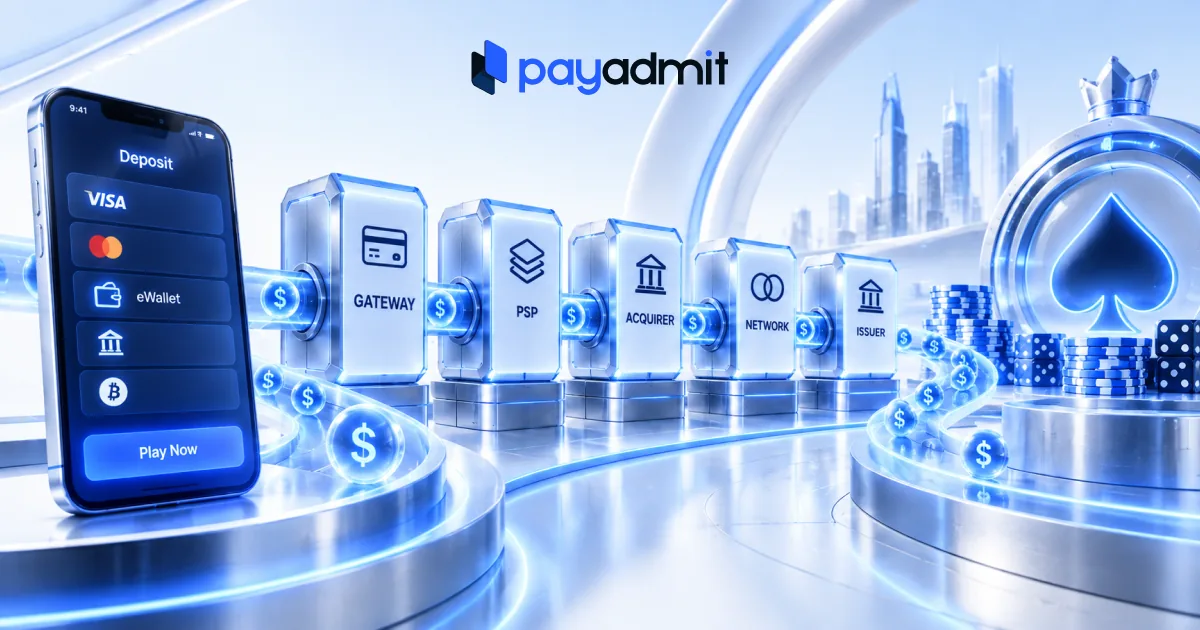
The deposit and withdrawal flow end to end, from cashier to settlement.
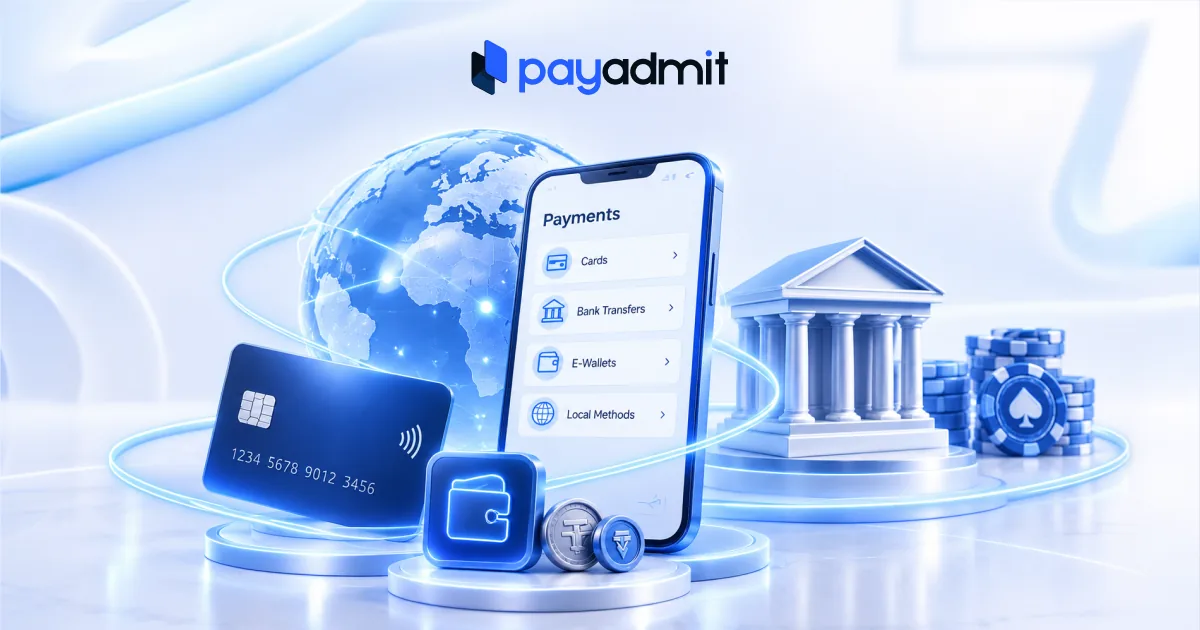
What a payment provider actually delivers, and how to compare one against another.