Compare processor types, fees, security, and support for your business.
A payment provider is a company or service that helps a business accept and manage payments. It links a customer’s chosen payment method with the business’s account. The payment provider meaning can vary by seller, since one firm may handle several payment tasks.
Some providers offer a full set of merchant services. Others focus on one part, such as checkout, payment processing, or settlement. A payment system provider may bundle these tools so a business can manage payments through one service.
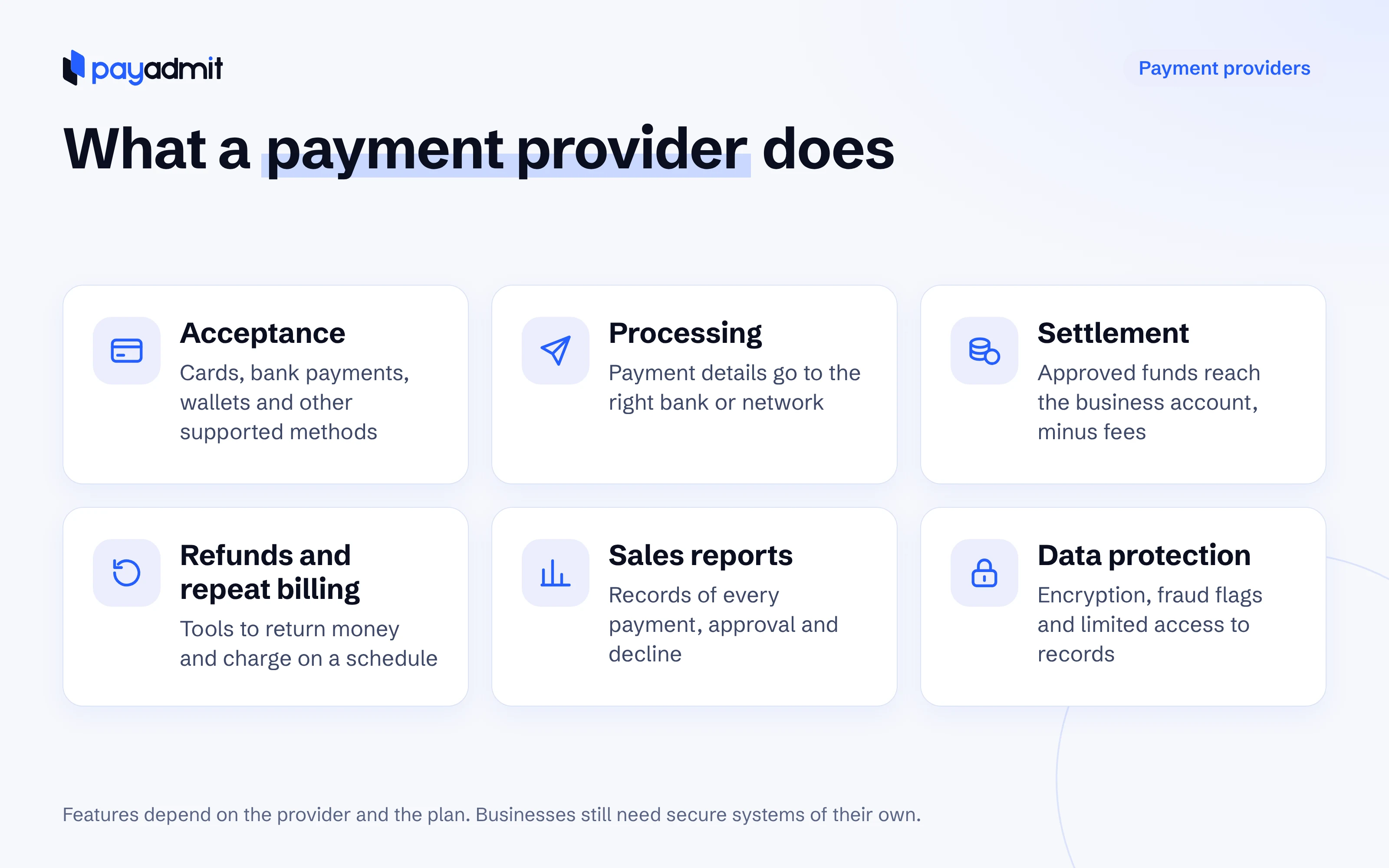
Common provider tasks include accepting payment details, sending requests for approval, and reporting results. Many also support refunds, recurring charges, fraud checks, and sales reports. Features depend on the provider and the seller’s plan.
Providers also help protect payment data. They may encrypt details, flag unusual activity, and limit access to sensitive records. They cannot remove every risk. Businesses still need secure systems and clear staff rules.
An online payment provider lets a business take digital payments through a website, app, or invoice. It may support cards, bank payments, and digital wallets. Stripe and PayPal offer online payment services, while Adyen serves sellers with online and in-person needs.
A crypto payment provider helps a business accept digital currencies, such as Bitcoin or some stablecoins. Some services can convert funds into local currency. Others send crypto to a wallet. This differs from a standard online provider, which mainly handles familiar methods and settles funds through banks or card networks.
| Provider type | Typical use | What to check |
|---|---|---|
| Online payment provider | Web stores, apps, and invoices | Supported cards, wallets, and fees |
| Crypto payment provider | Businesses serving crypto users | Conversion, custody, and settlement rules |
| Merchant account provider | Businesses that need card acceptance | Whether processing is a separate service |
| Payment service provider | Sellers seeking bundled payment tools | Which features and payment methods are included |
Names and service models can overlap. One payment solution provider may combine checkout, fraud checks, and processing. Another may focus on routing payments or handling crypto settlement. A gateway payment provider often supplies the tools that pass payment details between checkout and the payment network.
The right type depends on how and where customers pay. An internet-based shop may need a payment provider online with wallet support and repeat billing. A seller serving customers abroad may need an international payment provider with clear exchange rates and cross-border fees.
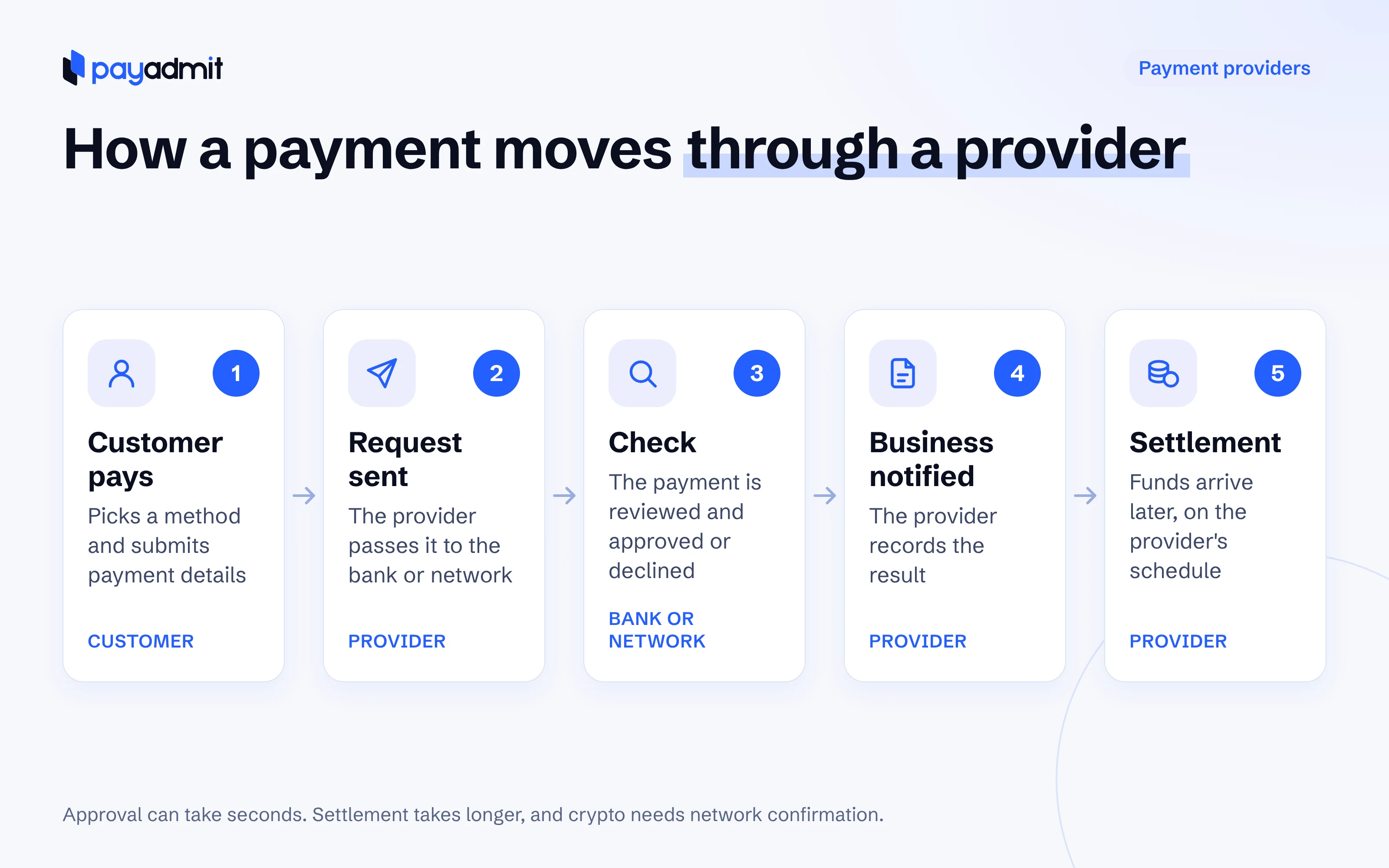
At checkout, the customer picks a payment method and submits their details. The provider sends a request to the relevant bank or payment network. That party checks the payment and returns an approval or decline.
If approved, the provider tells the business and records the payment. Funds usually arrive later, based on the provider’s settlement schedule. Card payments pass through banks and card networks. Crypto payments may need confirmation on a blockchain.
Security checks can happen during this process. A provider may encrypt data, flag unusual activity, or ask for extra proof. Ask which party protects card data and handles each security task. The PCI Security Standards Council’s merchant guidance explains key steps for card security.
Approval and settlement are not the same thing. A payment can be approved in seconds, while funds take longer to reach the business. Crypto transfer times depend on the network and service rules. Check settlement timing, refund steps, and chargeback support before you launch.
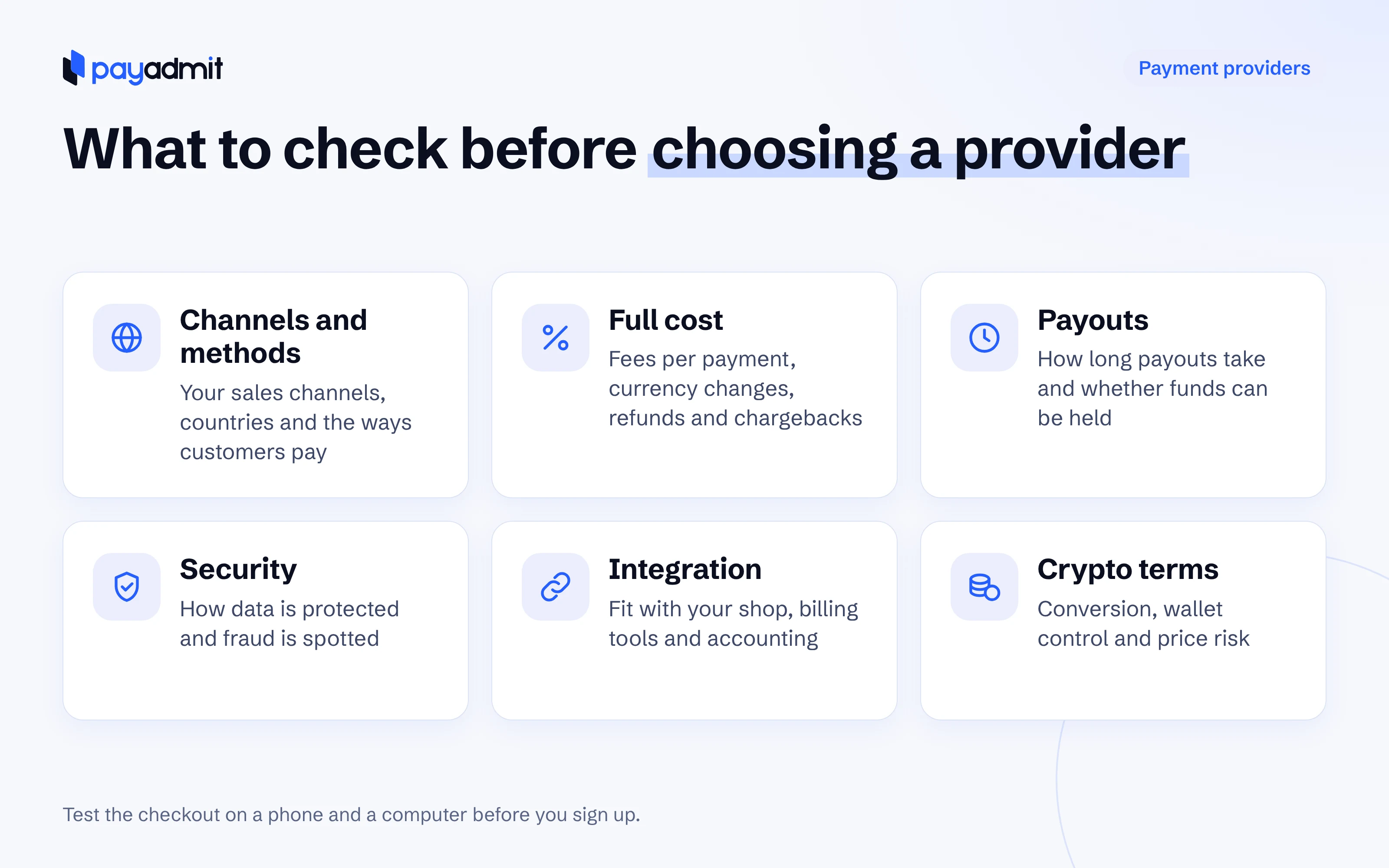
Start with your sales model and your customers’ needs. A local service business may need card readers and invoices. An online store may need fast checkout, wallet support, and repeat billing. A business with overseas buyers should review supported countries and currency costs.
Compare the full cost, not just the advertised rate. Fees may apply to each payment, currency changes, refunds, or chargebacks. Ask how long payouts take and whether the provider can hold funds. These details shape cash flow.
The best online payment provider is the one that fits your needs and costs. Do not choose by brand name alone. Test the checkout on a phone and computer. Make sure customers can see the total and fix errors before paying.
For cross-border sales, check supported markets, payout currencies, and exchange rates. An international payment provider may offer broad reach, but its fees and payout terms still matter. For crypto, confirm who holds the funds and what happens if a transfer is delayed.
A payment provider can make it easier to accept more ways to pay. That can help customers complete checkout with a method they trust. A single service can also reduce the work of managing separate payment tools.
Many providers offer records, refunds, and recurring billing tools. These features can cut manual work and make it easier to track business payments. They also help teams spot failed charges and follow up sooner.
Payment providers can add useful security checks, but they do not take every task away from the business. Check how the service handles data, access, and suspicious payments. Keep your own devices and staff practices safe, too.
Choose a provider based on the payments you need today and the markets you plan to serve. Read its terms, test the payment flow, and ask about costs before you sign up. A good fit should make paying simple for customers and managing funds clear for your team.