


PAY-INS
Card payments, APM transactions, crypto deposits, and bank transfers route through the configured routing engine with cascading where required. Real-time webhook on each status change.
PayAdmit is a software vendor that provides white label payment gateway infrastructure for payment companies, PSPs, fintech businesses, and operators. We provide the technology layer — routing engine, PCI DSS environment, PSP connections, and account management software, so you run a branded payment product without building or maintaining the underlying infrastructure.
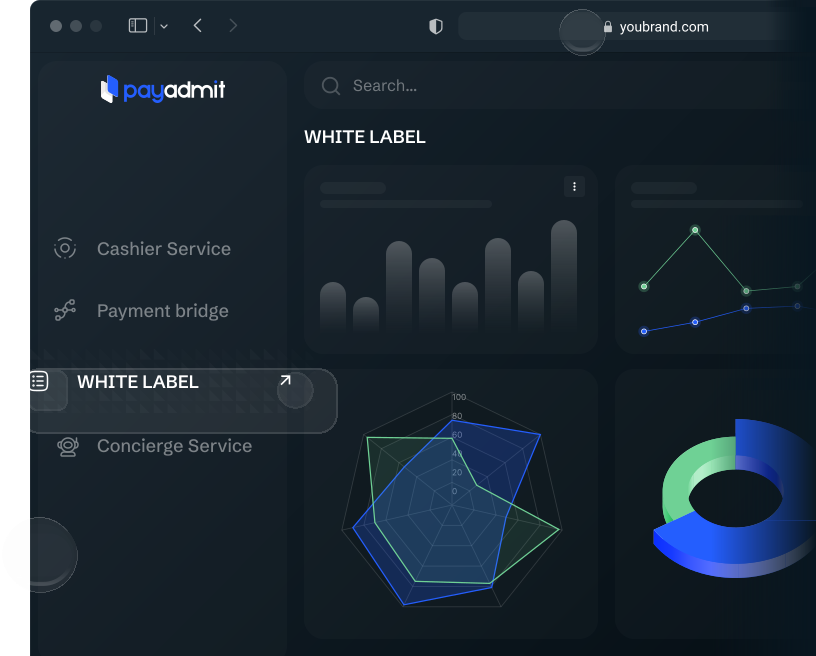
The word “white label” gets applied loosely in the payments industry. A hosted checkout with a logo swap is not white label. A shared processing environment with your brand on the login screen is not white label. Real white label means the business owns the environment.
As a white label payment gateway provider, PayAdmit gives each client a technically isolated environment: dedicated servers, its own PCI DSS certification, its own domain on every payment page and system URL, and full control over routing logic. Card data, transaction logs, and records stay within the client’s own certified perimeter — not shared with other PayAdmit clients. The payment pages, admin panel, merchant portal, and API endpoints all operate under the client’s domain and brand.
This distinction matters commercially. When a business provides payment services to merchants, those merchants interact with the client’s brand at every touchpoint — the checkout, the back office, the settlement reports. PayAdmit stays invisible as the technology layer behind the product.
PayAdmit delivers the white label payment gateway as a ready-to-deploy package and as a fully custom development project for clients with proprietary requirements. Both options run on dedicated infrastructure under the client’s own PCI DSS certification.
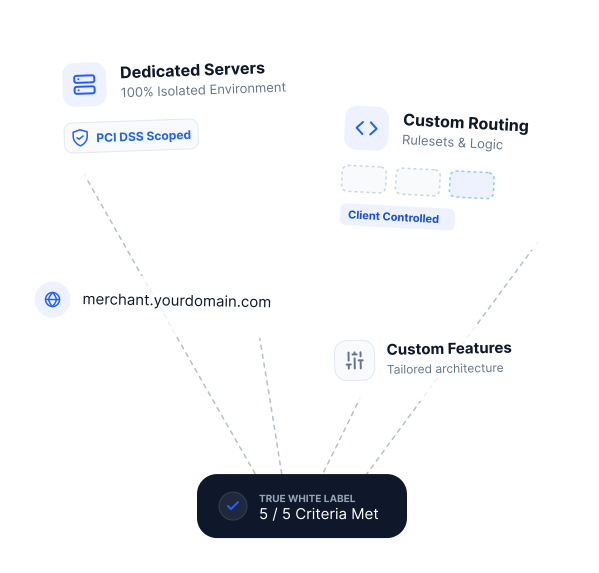
Most operators evaluating white label payment providers encounter the same problem: the market is full of shared solutions that describe themselves as white label but deliver something far narrower. Before committing to a provider, ask these five questions:
1. Does each client run on dedicated servers, or a shared environment?
2. Does the PCI DSS certification cover the client’s environment specifically — not a shared scope?
3. Can the client configure its own routing rules, cascading logic, and provider priority independently?
4. Does the client own the merchant portal and back office under its own domain?
5. Can the provider build custom functionality when the standard product does not cover the requirement?
PayAdmit answers yes to all five.
Working with PayAdmit means an ongoing technical partnership. PayAdmit manages the infrastructure layer so the client manages the business layer.
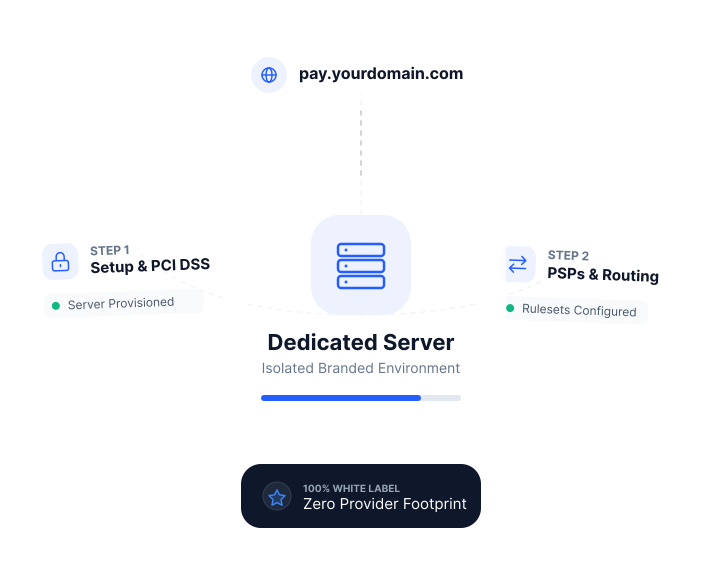
PayAdmit sets up the payment environment on dedicated servers under the client’s domain. The client’s brand appears on every payment page, system URL, notification, and client-facing document. PayAdmit branding does not appear anywhere in the client or merchant experience.
The initial setup covers server provisioning, PCI DSS activation, payment page configuration, initial PSP connections, and routing and anti-fraud ruleset configuration — all completed before the first merchant goes live.
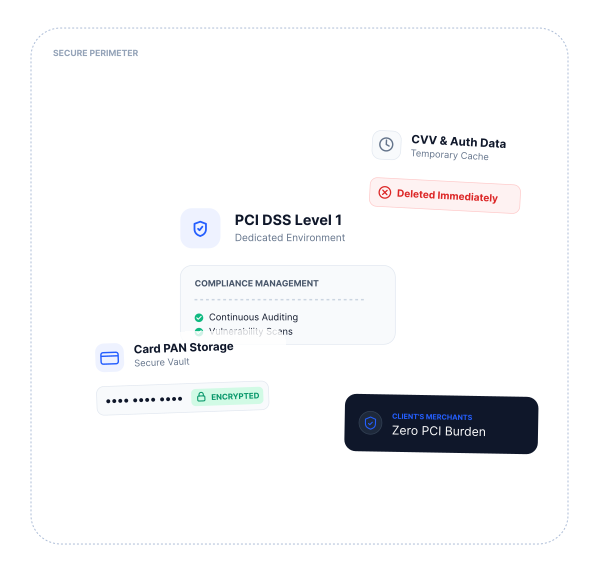
PayAdmit manages PCI DSS certification for the client’s dedicated environment. Card PAN is stored in encrypted format in line with PCI DSS requirements. CVV and sensitive authorization data are held in temporary cache only through the authorization step and deleted immediately after.
No sensitive cardholder data persists beyond its operational requirement. The client’s merchants process payments within a compliant environment without running a separate PCI DSS program.
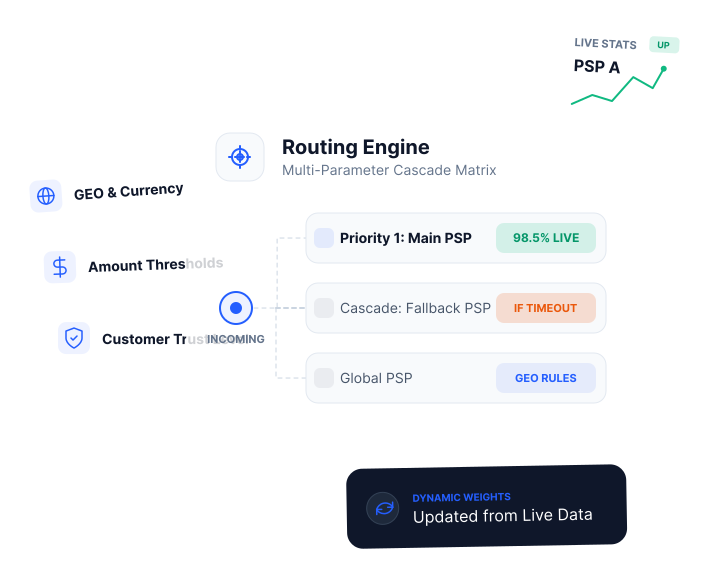
The routing engine selects the payment path for each transaction based on a configurable parameter set: GEO and currency; transaction amount thresholds; customer trust level built from payment history; live approval rate statistics per PSP and card BIN; and the client-defined provider priority matrix.
The client configures cascade sequences, timeout thresholds, and fallback logic per merchant account. Provider weights update continuously from live data — routing always reflects current PSP performance, not static onboarding rules.
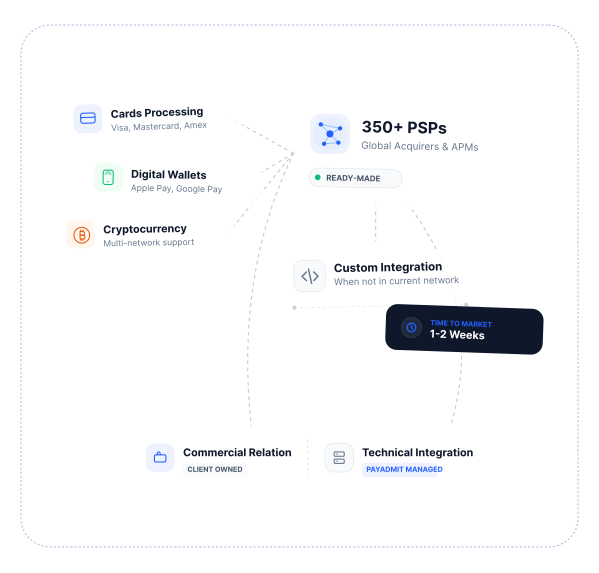
PayAdmit connects the client to 350+ PSPs, acquirers, and payment method providers: Visa, Mastercard, Amex, JCB, and UnionPay card processing; cryptocurrency processing with multi-network support; Apple Pay, Google Pay, PayPal, and 300+ alternative payment methods.
When the client needs a PSP not in the current network, PayAdmit develops the integration in 1 to 2 weeks. The client owns the commercial relationship with each PSP; PayAdmit manages the technical one.
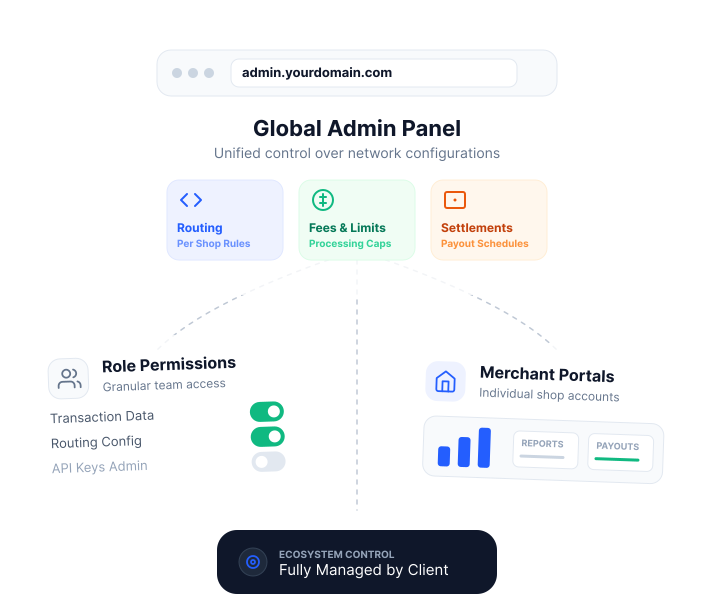
The client creates accounts, configures routing rules per shop, sets processing limits, manages fee structures, manages payout schedules, and accesses settlement data — all from an admin panel on the client’s domain.
Role-based permissions define what each team member can view and manage across the network: transaction data, routing configuration, settlement records, risk settings, and API keys. Each merchant account gets its own portal with reporting, payout management, and reconciliation tools.
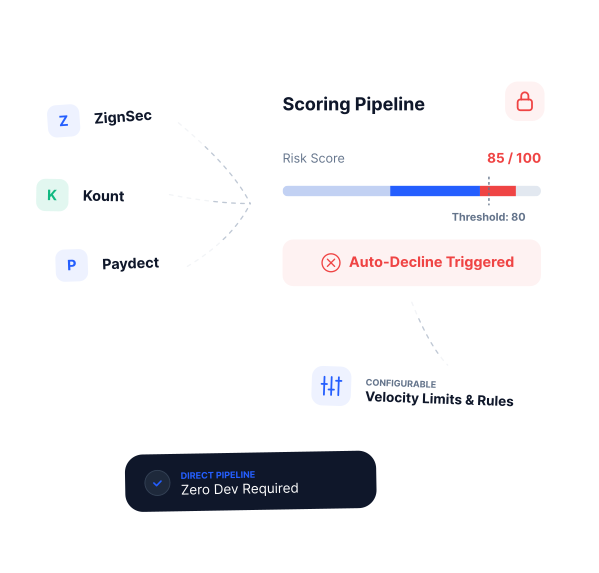
The gateway includes a smart anti-fraud layer that protects every transaction before it reaches the acquiring network.
Third-party anti-fraud providers connect through a unified integration point — no additional development required on the client side.
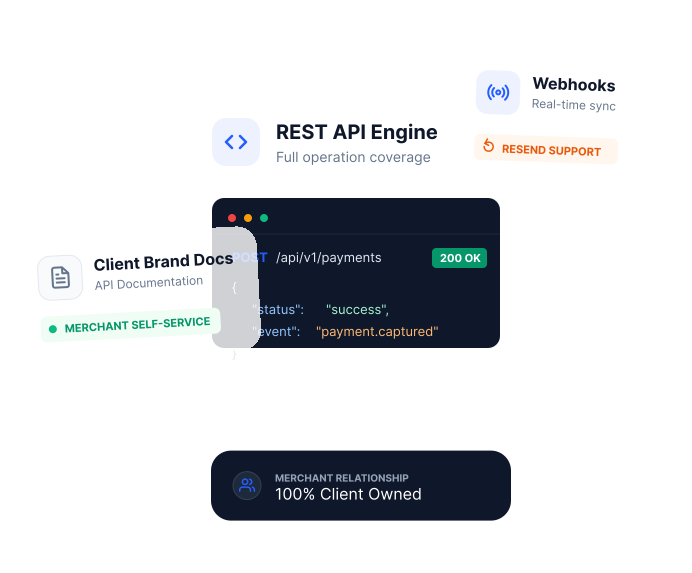
The gateway provides a full REST API covering all operation types. Webhooks deliver real-time transaction updates to the client’s system and merchant systems with resend support for any transaction state.
PayAdmit provides complete API documentation under the client’s brand — the client hands this documentation to merchants for self-service integration. PayAdmit builds the documentation; the client owns the merchant relationship.
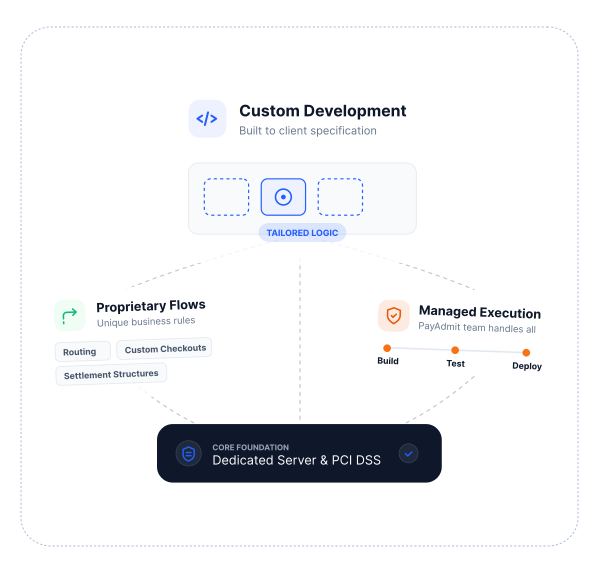
When the client’s business requires logic not available in the standard product — proprietary routing workflows, unique settlement structures, custom checkout flows, or non-standard PSP integrations — the PayAdmit development team builds to specification.
Custom work runs on the same dedicated infrastructure with the same PCI DSS coverage. PayAdmit manages development timelines, testing, and deployment.
PayAdmit provisions dedicated servers, activates PCI DSS, configures the branded payment environment, connects initial PSPs, and builds the routing and anti-fraud rulesets. The client receives full admin access to a production-ready environment on dedicated infrastructure.
The client onboards merchants through the branded portal. Each new merchant gets a routing profile, processing limits, and portal access within the client’s environment. When the client needs a new PSP or payment method for a specific market, PayAdmit delivers the integration in 1 to 2 weeks. PayAdmit manages the PSP technical relationship; the client manages the commercial one.
PayAdmit provides continuous software maintenance, security updates, BIN database refresh, and new feature development. When the client’s business evolves — new markets, new payment methods, new merchant verticals — PayAdmit delivers the technical capability. The client scales the business; PayAdmit scales the infrastructure.
The white label gateway supports all standard payment operation types through a single API integration.
Card payments, APM transactions, crypto deposits, and bank transfers route through the configured routing engine with cascading where required. Real-time webhook on each status change.

Outbound transfers to merchants, customers, or third parties. Bulk operations run through CSV or TXT file upload with configurable approval workflows before execution.

Refund requests route to the originating PSP through the same API. Full, partial, and standalone refund operations are supported where the PSP allows.

The system stores tokenized card data and runs scheduled charges without requiring the cardholder to re-enter details. Schedules configure at the merchant account level.
PayAdmit manages the technical security layer of each client’s payment environment.
PAN stored in encrypted format per PCI DSS requirements. CVV retained only in temporary cache through authorization and deleted immediately after. No sensitive cardholder data persists beyond operational need.
Every transaction passes through a multi-layer pipeline before reaching the PSP. Internal rule engine runs first. Third-party anti-fraud scores apply next. Only cleared transactions proceed to processing.
Role-based permissions across admin panel and merchant portal. Each role defines read, write, and execute access across transaction data, routing configuration, settlement records, and risk settings.
Dedicated servers per client mean no cross-client data exposure at the infrastructure level. Security updates, patches, and monitoring run on a continuous schedule managed by the PayAdmit technical team.
PSPs building their own acquiring infrastructure use PayAdmit as the white label technology layer. The PSP manages merchant relationships and commercial terms. PayAdmit provides the routing and processing stack. The PSP’s merchants see the PSP’s brand at every touchpoint; PayAdmit operates as the invisible infrastructure layer.
EMIs issuing payment accounts to business clients need a payment gateway that connects to card networks and processes transactions under the EMI’s license and brand. PayAdmit provides the processing infrastructure and PSP network on dedicated servers under the EMI’s own PCI DSS environment.
High-volume operators across multiple jurisdictions need a gateway provider that supports multi-currency routing, PSP cascading per market, crypto processing, and payout management under one environment. PayAdmit provides the full infrastructure without requiring dependence on a shared cashier solution.
Fintech businesses building payment products for their clients need a provider that gives them the processing infrastructure, the back office, the API documentation, and the ability to extend the product as their requirements evolve. PayAdmit operates as the technical backbone; the fintech company owns the product and the client relationship.
Banks providing payment gateway services to corporate clients need white label infrastructure with a PCI DSS environment that meets their compliance requirements. PayAdmit provides dedicated infrastructure and technical management — the bank provides the brand and manages the client relationship.
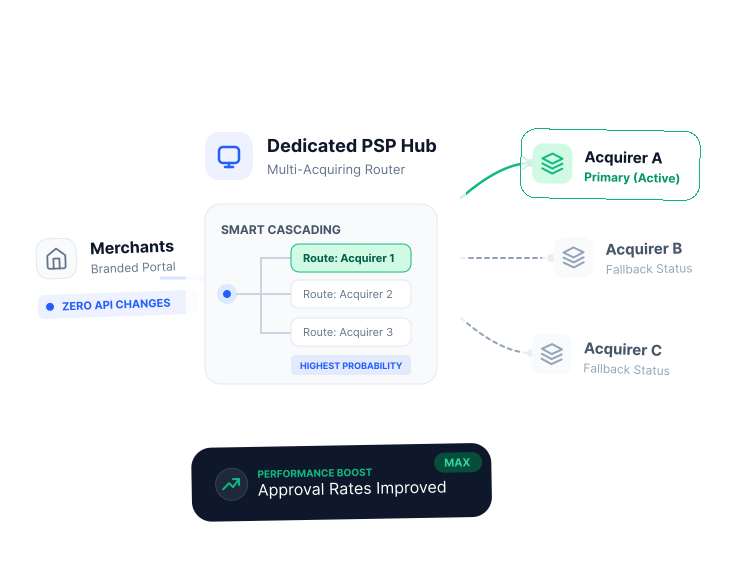
A payment service provider had established merchant relationships but ran all card payment transactions through a single acquirer. The inability to process payments through multiple channels created a single point of failure. The business depended entirely on one processing channel. Volume growth made approval rate risk significant, and the PSP had no ability to cascade to a backup provider when the primary declined transactions. The PSP deployed PayAdmit as its white label payment gateway — a dedicated solution on its own infrastructure. The environment connected to multiple acquiring banks simultaneously.
The PSP configured cascading rules to route each transaction to the acquirer with the highest approval probability for that card type and region. Merchants remained connected to the PSP’s branded portal and API — no visible change on their side. Processing control — and the ability to process transactions across multiple acquirers — moved entirely to the PSP, and approval rates improved across all card types. The PSP now manages its own routing rules independently.
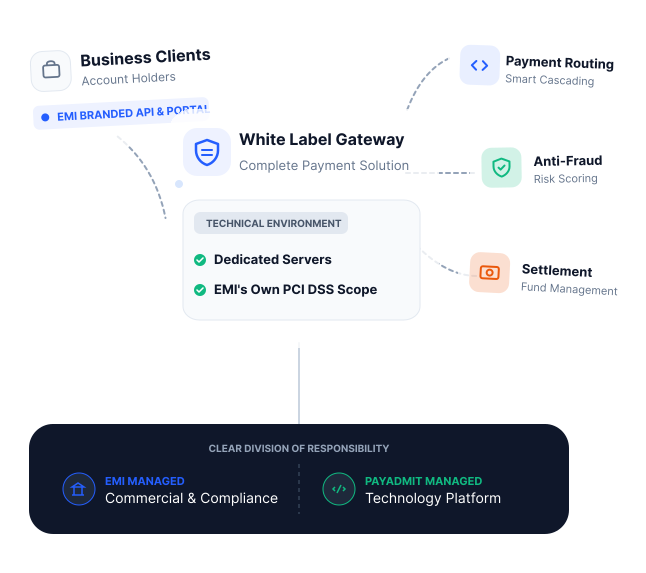
An electronic money institution with business account clients needed to offer card payment acceptance and build a full payment service offering without building processing infrastructure from scratch. Regulatory requirements and PCI DSS obligations demanded a dedicated technical environment.
The EMI deployed the white label payment gateway on dedicated servers under its own PCI DSS certification — a complete white label payment solution. Business clients connected through the EMI’s branded payment API and portal. The payment gateway handled card payment routing, anti-fraud scoring, and settlement. The EMI managed the commercial relationship, the payment service offering, and compliance obligations — a clear white label division of responsibility. PayAdmit managed the technology platform.

PayAdmit builds and owns the software. Each client runs on dedicated servers under their own PCI DSS certification. The client operates a branded payment gateway on infrastructure their business controls — not a resold payment product on shared infrastructure. The payment software is built and maintained by PayAdmit; the payment environment belongs to the client. This means the client owns the payment platform, controls the processing rules, and can offer a white label payment service to their merchants — giving the business full ownership of its payment product — the entire business without depending on a third-party payment processor.
The client owns the commercial relationship with each PSP — the payment contract, the pricing, the service terms, and the merchant payment service agreement, and the service level terms. PayAdmit manages the technical integration: API connectivity, payment transaction routing, and ongoing maintenance of each PSP connection. Routing configuration updates automatically as new PSPs go live. When a new PSP is needed to extend coverage, PayAdmit develops the integration in 1 to 2 weeks. The client’s payment business scales without touching the technical layer. As it grows, new PSPs add automatically.
Yes. PayAdmit provides complete API documentation under the client’s brand. The client hands this documentation to merchants for self-service payment integration. The documentation covers all operation types — pay-ins, pay-outs, refunds, and recurring payment processing. PayAdmit does not appear in the merchant’s technical onboarding materials. The client owns the payment integration relationship end to end, maintaining a direct service relationship with each merchant, and provides merchants with a fully branded payment service experience. The client can provide a complete payment solution under its own brand.
The PayAdmit development team builds it. Custom payment logic, proprietary payment routing rules, custom checkout flows, and non-standard PSP integrations are all in scope. The custom payment solution runs on the same dedicated infrastructure and PCI DSS environment as the standard product. Any requirement the business needs to process — unique settlement structures, multi-currency flows, or custom payment page logic — gets built to specification. Development timelines are agreed at project start.
PayAdmit updates the BIN database on a regular schedule to maintain accurate payment routing decisions. Payment approval rate statistics update continuously from live transaction data flowing through each PSP connection in the client’s payment platform. The payment routing engine uses these statistics to weight provider priority automatically — no manual intervention required from the client’s side. This keeps the payment processing solution optimized at all times, so the client can process payments efficiently without managing routing statistics manually.
Yes. The client can operate multiple merchant accounts, multiple shop configurations, and multiple payment checkout environments within one gateway deployment. Each brand gets its own payment routing rules, payment processing limits, and portal configuration. The payment platform supports unlimited sub-brands under one deployment. The client manages all brands from one admin panel with role-based access controlling visibility per account. This makes the gateway a scalable payment business solution — a unified solution — one technical layer supporting multiple payment products or merchant segments.

