

The SaaS platform has no control over routing logic. Every payment transaction routes through the gateway provider’s rules, not the SaaS platform’s. When approval rates drop for a specific card network or geography, the SaaS platform cannot reconfigure routing. At scale, this inability to optimize routing directly affects revenue.
White Label Payment Gateway for SaaS
SaaS companies that handle money movement — subscription billing, marketplace payouts, platform payments, or merchant services — face a specific problem: the payment infrastructure has to feel like part of the software product, not a redirect to a third-party gateway.
Every time a SaaS user encounters an external payment brand at checkout, a gap opens between the product experience and the payment experience. For any software business that competes on product quality, that gap is a business problem — not just a UX issue.

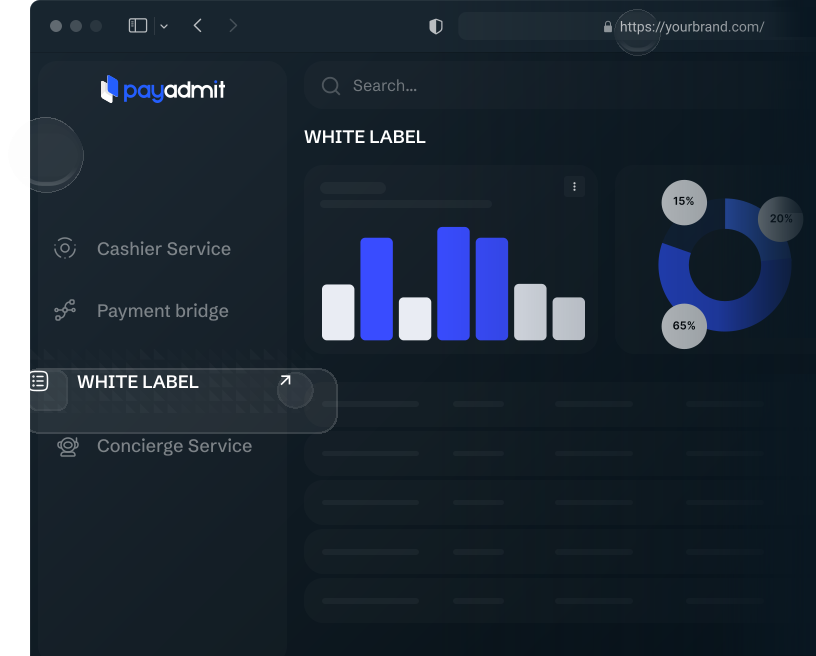
The right solution is not another integration. It is ownership. PayAdmit provides a white label payment gateway solution for SaaS platforms that closes that gap entirely.
The SaaS company embeds a fully branded payment processing layer directly into its software — payment pages on the SaaS domain, a merchant portal under the SaaS brand, and a white label payment infrastructure running on dedicated servers with PCI DSS certification that belongs to the SaaS platform.
Users complete payment transactions without ever leaving the SaaS product experience.
For a software business at growth stage, this solution means two things: the payment service becomes a native part of the product, and the business earns on every transaction processed through its own software platform.
That is the difference between offering payments as a feature and building payments into the business model.
Any SaaS business running on this solution stops being a software company that uses a payment gateway — and starts being a software company that owns one.
What SaaS Platforms Actually Need From Payment Infrastructure
Most SaaS platforms start by connecting to a third-party payment gateway.
This works at early stage — but as the platform grows, the limitations become structural.

The SaaS platform shares payment infrastructure with other businesses. This means shared PCI DSS scope, shared performance risk, and no infrastructure differentiation. A SaaS platform serving merchants cannot provide a fully branded payment experience if the underlying infrastructure is shared with competitors.

The SaaS platform cannot manage merchants independently. Multi-tenant SaaS businesses need per-merchant routing configuration, per-merchant processing limits, and per-merchant settlement management. Generic payment gateways do not provide this level of merchant management control at the software integration layer.
PayAdmit’s White Label Payment Gateway
PayAdmit’s white label payment gateway solves all four problems for SaaS platforms. The SaaS company gets a dedicated payment infrastructure it controls — routing, cascading, merchant management, and the full payment processing layer — under its own brand, with global payment method coverage and a developer-friendly integration that embeds into the existing SaaS product.
1
Full control over cascading and routing rules
2
Independent merchant management and limits
3
Global coverage with local branding
Key Use Cases
for
SaaS Payment Processing
SaaS platforms with recurring billing models need a payment processing solution that handles subscription payment management natively. The white label gateway provides recurring payment transaction processing, tokenized card storage for subscription renewals, failed payment retry logic, and dunning management — all configurable from the back office. The SaaS platform manages subscription payment flows without routing users to an external billing service.
SaaS marketplace businesses that connect buyers and sellers need a payment gateway with split payment capability and multi-merchant payout management. The white label payment solution routes payment transactions from buyers, distributes funds to merchant accounts, and manages payout schedules — all under the SaaS platform brand. Each merchant on the marketplace gets its own portal access with its own transaction and settlement data.
SaaS companies building vertical software for retail, hospitality, services, or any merchant-facing business need to provide payment processing as a core product feature. Embedding a white label payment gateway into the SaaS product gives merchants a native payment processing experience. The SaaS platform earns payment service revenue on top of subscription revenue, with full control over merchant routing rules, processing limits, and fee structures.
SaaS platforms operating across multiple geographies need global payment method coverage and multi-currency processing. The white label gateway connects the SaaS platform to 350+ PSPs and payment methods globally, with routing optimized per region and automatic currency conversion before transaction routing. The SaaS platform provides a global payment solution to its users without managing individual payment provider relationships.
The Full White Label Payment Gateway Feature Set for SaaS
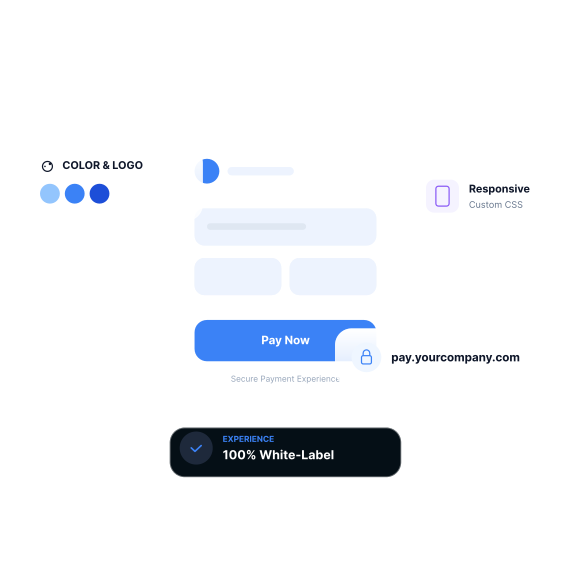
Embedded Branded Checkout
The payment page lives on the SaaS platform’s domain. Custom CSS, mobile-responsive layout, and domain configuration are included in the white label solution setup. The SaaS platform’s brand appears on every payment page, confirmation, and receipt.
No third-party payment brand is visible in the product experience. The SaaS platform provides its users with a secure, native payment processing experience that strengthens product trust.
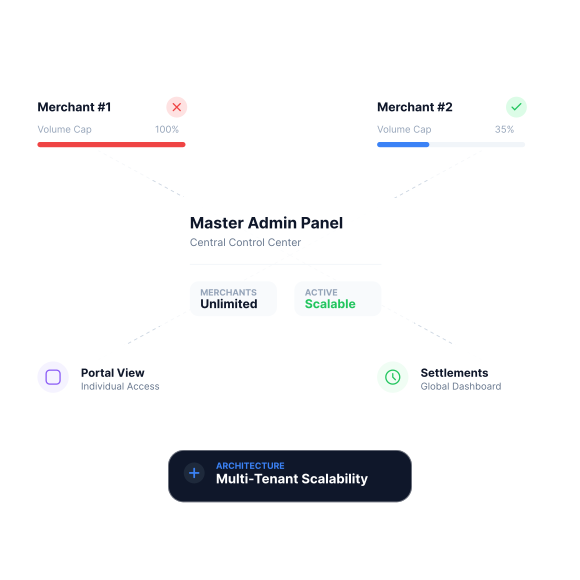
Merchant Management and Multi-Tenant Architecture
The white label payment solution supports multi-tenant merchant management — the core requirement for any platform SaaS business. The SaaS platform creates merchant accounts, configures routing and processing limits per merchant, and manages settlement data from a central admin panel.
Each merchant accesses its own portal view with its own payment transaction data. The system scales to unlimited merchant accounts under one SaaS platform integration
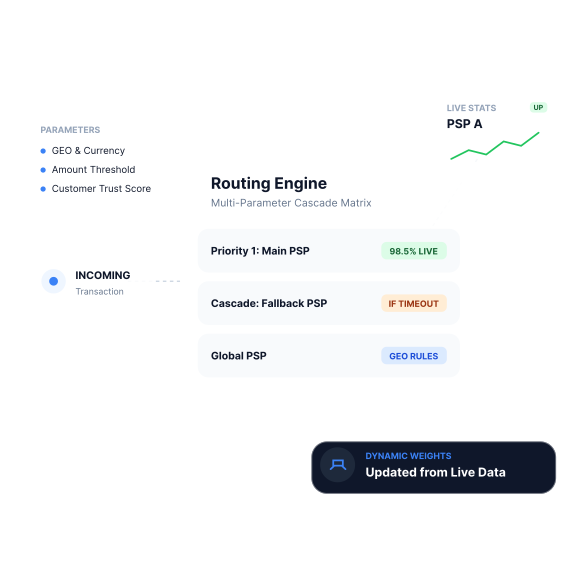
Smart Routing and Approval Rate Optimization
The routing engine evaluates each payment transaction against live performance data to select the optimal processing path. Routing parameters include card BIN, transaction amount, geography, customer trust score, and real-time approval rate statistics per PSP and card type.
The SaaS platform sets routing rules and PSP priority per merchant. Provider weights update automatically from live transaction data — the platform monitors approval rate performance across the merchant network from the back office.
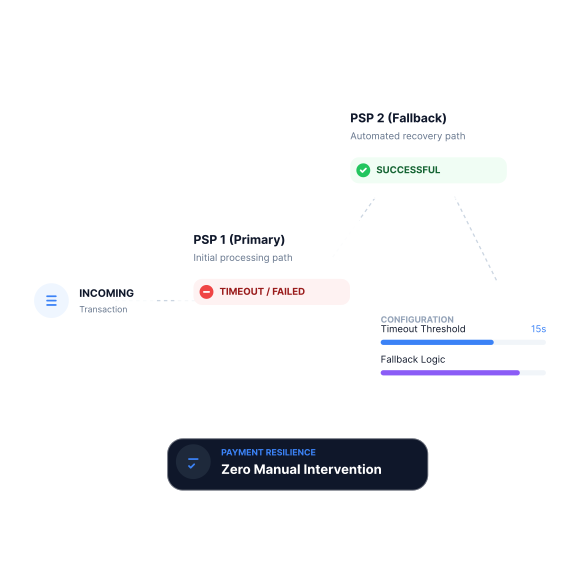
PSP Cascading and Payment Resilience
The white label gateway cascades payment transactions across the SaaS platform’s full PSP network when a transaction fails at the first provider. Cascade sequences, timeout thresholds, and fallback logic are configurable per merchant.
The SaaS platform maintains high payment success rates across different card networks and geographies without manual intervention. For global SaaS platforms, cascading across regional PSPs is a critical component of payment processing reliability.
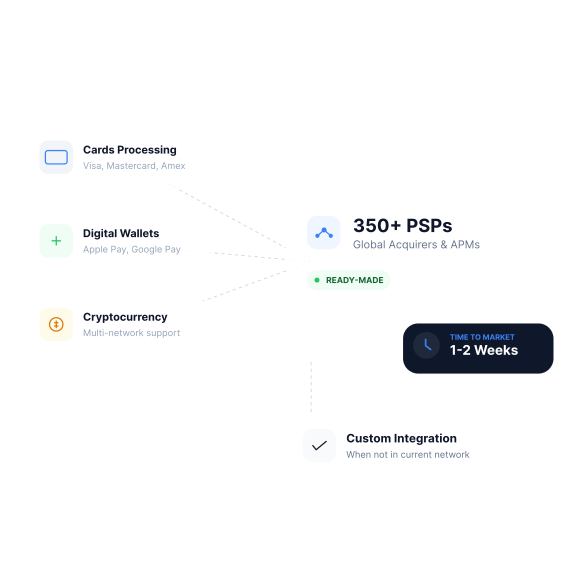
350+ Global Payment Integrations
The white label payment gateway connects the SaaS platform to 350+ payment providers globally: Visa, Mastercard, Amex, JCB, and UnionPay card processing; Apple Pay, Google Pay, PayPal, and 300+ alternative payment methods by region; and cryptocurrency processing as an additional service.
The SaaS platform provides merchants with complete payment method coverage through a single white label integration. New payment provider integrations take 1 to 2 weeks on request.
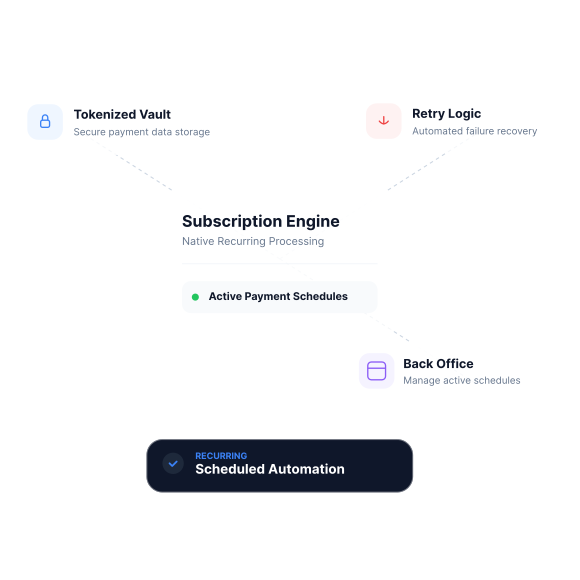
Subscription and Recurring Payment Management
For SaaS platforms with subscription business models — or SaaS platforms serving subscription merchants — the white label gateway provides native recurring payment processing.
The system stores tokenized payment data, processes scheduled payment transactions without cardholder intervention, and manages failed payment retry logic per configurable rules. The SaaS platform manages all active subscription payment schedules from the back office.
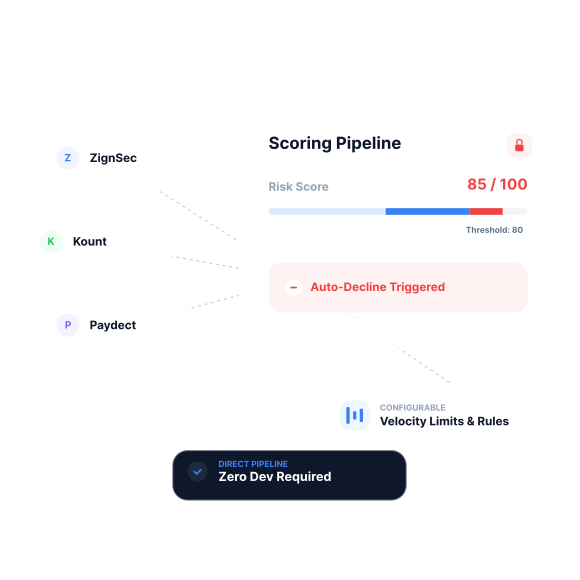
Anti-Fraud and Secure Payment Management
The white label gateway provides configurable anti-fraud rules per merchant: velocity limits per card and customer profile, BIN blocking rules, and behavior-based transaction scoring.
Third-party anti-fraud service providers connect through the same transaction scoring pipeline. The SaaS platform’s risk management team controls anti-fraud rules and alert thresholds from the central admin panel. Secure payment transaction logging provides the audit trail the SaaS platform needs for compliance.
Developer-Friendly Integration
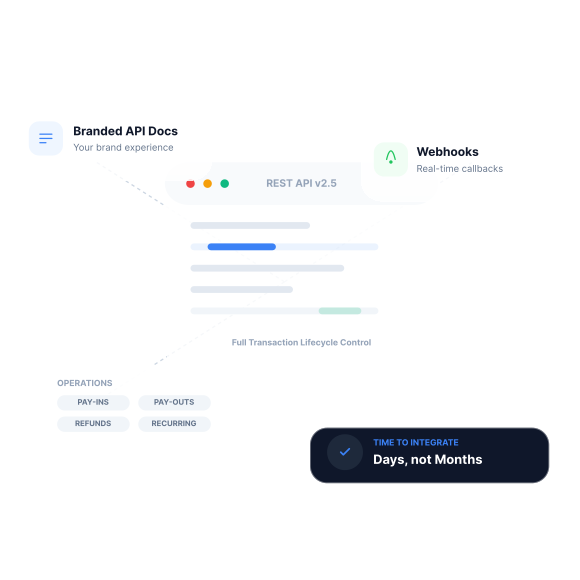
The white label payment gateway exposes a full REST API for payment initiation, transaction status queries, and refund management. Webhooks deliver real-time payment updates to the SaaS platform’s backend.
PayAdmit provides complete white label API documentation under the SaaS platform’s brand. The API supports all payment operation types: pay-ins, pay-outs, refunds, and recurring payment transactions. Integration with the SaaS product takes days, not months.
Why SaaS Platforms Choose White Label Over Native Integration
Direct payment gateway integrations give SaaS platforms a single connection. They do not give the platform control over routing, cascading, merchant management, or infrastructure.
“The SaaS platform is a customer of the payment gateway — not an operator.”
A white label payment gateway changes the relationship. The SaaS company becomes the operator of its own payment infrastructure. It controls routing rules. It manages merchants. It owns the white label merchant portal and the payment product experience. It earns payment service revenue in addition to subscription revenue.
The business model difference is significant: a SaaS platform with embedded white label payment processing earns on every payment transaction processed through the platform — not just on software subscriptions. For marketplace SaaS and vertical SaaS businesses, payment processing revenue can equal or exceed subscription revenue as the merchant network scales
Implementation Getting Started
with White Label
PayAdmit deploys the full white label payment gateway for SaaS platforms in 2 to 3 weeks. The deployment covers: dedicated server provisioning, PCI DSS activation, branded checkout configuration on the SaaS domain, initial payment provider connections, routing ruleset configuration, and merchant portal setup.
After deployment, the SaaS platform’s team connects the gateway to the product via the REST API, configures merchant onboarding flows, and sets routing rules per merchant segment. PayAdmit manages ongoing infrastructure maintenance, payment method integrations, and technical support. The SaaS platform scales its merchant network and payment processing volume without additional infrastructure investment.
How White Label Changes Everything

Most SaaS platforms treat payments as infrastructure — a cost center. Embedding a white label payment gateway changes this entirely.
When a SaaS platform operates its own infrastructure, it becomes a payment service provider for its merchants. The SaaS platform sets the fees and earns the spread as direct revenue.

For a marketplace processing $10M in monthly volume, a 0.5% fee generates $50,000 in monthly revenue that did not exist before.
Vertical SaaS businesses — retail, hospitality, services — can see processing revenue match or exceed software subscriptions within 12 to 18 months.

The white label payment model also improves merchant retention. Merchants embedded in your infrastructure are significantly less likely to churn.
This integration creates a deeper product dependency that increases the commercial value of each merchant relationship across the entire platform.
FREQUENTLY ASKED QUESTIONS
Can the SaaS platform set its own payment processing fees for merchants?

Yes. The SaaS platform operates as the payment service provider for its merchants. The platform sets the payment processing fees — per-transaction rates, monthly minimums, or custom merchant-level pricing. The SaaS platform pays PayAdmit a platform infrastructure fee and earns the spread between its merchant-facing rates and the infrastructure cost. Pricing terms between the SaaS platform and its merchants are entirely the SaaS platform’s commercial decision.
How does white label payment processing affect SaaS product compliance?
The white label payment gateway runs on dedicated infrastructure with its own PCI DSS certification. Card data never passes through the SaaS platform’s application infrastructure — it processes through PayAdmit’s certified environment. This means the SaaS platform’s PCI DSS scope is significantly reduced. The SaaS platform does not store or transmit card data, which simplifies its own compliance obligations.
What reporting does the SaaS platform get for its merchant network?
The white label back office provides transaction reporting, settlement summaries, and reconciliation exports at the merchant level and across the full portfolio. The SaaS platform’s team accesses aggregated transaction volume, approval rate data by PSP and card type, settlement amounts by currency, and failed transaction analysis. Individual merchants access their own reports through the white label merchant portal under the SaaS platform’s brand.
Can the SaaS platform integrate the white label gateway with its existing product database?
Yes. The REST API provides full transaction event data via webhooks in real time. The SaaS platform’s backend receives transaction status updates, settlement confirmations, and refund events as they occur. The SaaS platform can sync transaction data to its own database, integrate it into product dashboards, and surface payment reporting directly within the SaaS interface. PayAdmit provides the API and webhook infrastructure; the SaaS platform builds the product experience on top of it.
How does a white label payment gateway integrate with a SaaS product?
The white label gateway provides a REST API and webhook layer. The SaaS platform connects via API for payment initiation and transaction management. Checkout pages embed directly into the SaaS product flow on the SaaS domain. The integration takes days, not months, and does not require the SaaS platform to build any payment processing infrastructure.
Can SaaS platforms manage multiple merchants from one account?
Yes. The white label payment solution supports multi-tenant merchant management. The SaaS platform creates and manages merchant accounts, configures routing and processing limits per merchant, and accesses settlement data across the merchant network from one admin panel. Each merchant gets its own portal with its own transaction data.
What happens when a payment transaction fails?
The cascading engine automatically routes to the next configured PSP within the same session. The merchant’s checkout does not interrupt — the customer sees a seamless payment experience while the gateway processes the cascade in the background. The SaaS platform monitors cascade performance and approval rates from the back office.
Does the solution support global payment methods?
Yes. The white label gateway connects to 350+ payment providers and payment methods globally. The SaaS platform selects which payment methods to activate per merchant or per market. Currency conversion applies before routing so merchants settle in their preferred currency. New global payment integrations take 1 to 2 weeks on request.