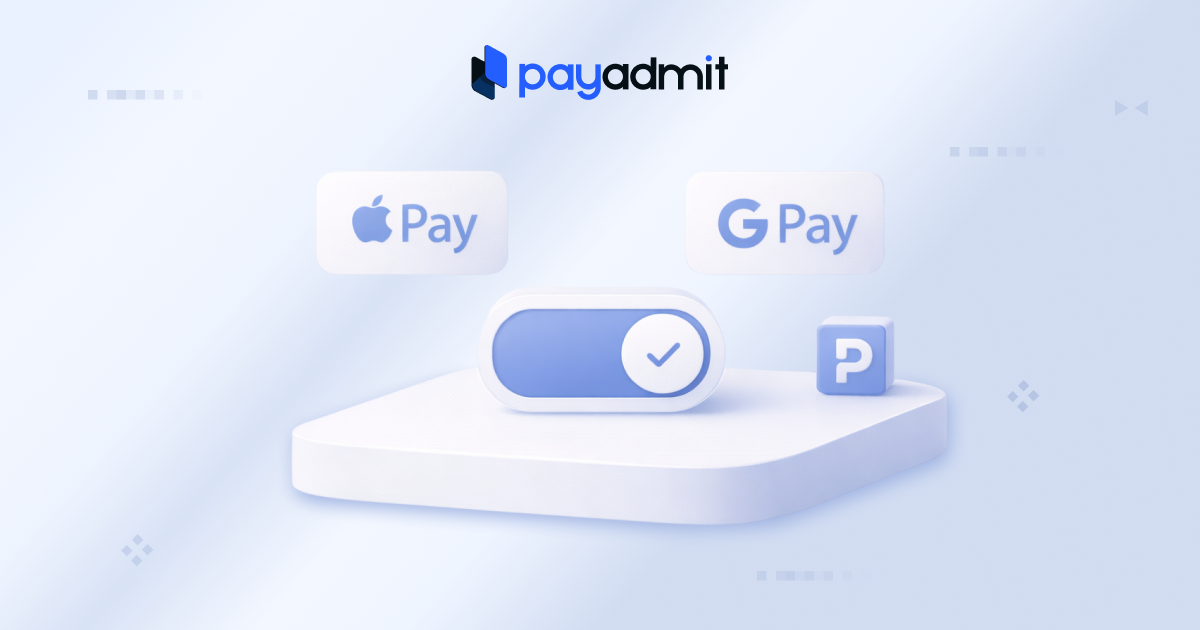
PayAdmit is an official partner of both methods and has integrated them directly into its payment gateway platform.
Payment processing can be hard for any business, but it’s even harder for high-risk business industries such as e-commerce and logistics. Financial, operational, and regulatory challenges may result in higher transaction fees, reputational damage, or restricted access to financial services. Businesses can still benefit from specialized partnerships, proactive chargeback prevention, and strong regulatory compliance checks to address their challenges effectively. In this guide, we’ll explain what makes a business “high risk,” which industries commonly fall under this description, and most importantly, how to thrive despite it.

Ever get a rejected payment processor application or faced huge processing fees without warning? You’re likely running a “high-risk business” – and that’s not the reason for being upset. Before finding proper solutions, answer a few basic questions. What are high-risk businesses? And how does a “high-risk” designation affect your operations?
High-risk industries present specific challenges that require careful management. High-risk businesses usually operate in complex regulatory environments, process large cash transactions, or show dynamic international growth. These challenges increase the possibility of facing financial losses, regulatory violations, and even reputational damage, which makes them less appealing to traditional payment processors and banks.
Financial institutions are categorizing firms as high-risk using merchant category codes (MCCs). This way, they mark merchants that are more likely to be rejected by card processors and banks. They also expect payment service providers to secure accurate coding for merchants, preventing misunderstandings.
Understanding specifications of high-risk industries helps entrepreneurs find proper solutions to address the existing challenges. Merchant accounts for high-risk businesses are quite costly. You’ll pay more for your account and processing, and you’ll be stuck in long contracts with a large early termination fee.
High-risk merchants need to show compliance with the major oversight bodies. These regulations may be established at the local, state, or even federal level. Also, high-risk businesses face an increased chargeback risk, leading to account termination and making it more difficult to work with payment processors and banks. To reduce financial risk, financial institutions may place a rolling reserve on your account, temporarily withholding a portion of your transaction volume.
A “high-risk” designation doesn’t reflect a business’s quality, but rather the likelihood of financial losses for payment processors and consumers. Several key factors contribute to this classification. Let’s break them down.
Understanding risk factors is crucial for maintaining operations while ensuring safe payment processing for consumers. These include:
Banks and payment processors use different methods for risk assessment. Quantitative methods use statistical models and numerical data to estimate risk and potential impact. Qualitative methods rely on less measurable factors such as emotional decisions, regulatory changes, market conditions, and emerging threats, and motivation among company customers and investors.
There are some other ways to methodically assess risks. For example, a risk assessment matrix serves as a visual tool for evaluating and prioritizing potential risks. It can incorporate either quantitative or qualitative assessment methods. Other risk assessment methods include scenario analyses and decision trees.
Certain industries are vulnerable to increased financial, reputational, and legal risks. It doesn’t mean that they are illegal, but they may cause problems for banks and payment processors, which makes them hard to work with. Find the list of high-risk business industries below.
Businesses offering loans, debt collection, or credit repair services are high risk because of regulatory scrutiny and financial instability. It might seem counterproductive for banks to place restrictions on these types of businesses, but it all comes down to regulations and fraud risk. Even small lapses can lead to severe consequences such as multi-million-dollar fines, forced shutdowns, or license loss.
Credit repair businesses help consumers dispute inaccurate information on their credit reports. They are considered high-risk due to a history of fraudulent operators, strict regulatory requirements, and the potential for misleading claims, which can expose payment processors to compliance violations.
Payday lenders offer short-term loan services at very high interest rates. These businesses often face reputational risks and regulatory scrutiny for predatory lending practices. They also experience high default rates because many borrowers struggle to repay loans with such steep fees and interest.
Debt collection agencies recover unpaid debts on behalf of creditors. Aggressive, non-compliant, or illegal collection practices can harm the reputation of any bank or payment provider associated with them.
Some online retailers, especially those selling high-value items like electronics or jewellery, are considered high risk due to increased fraud and chargeback rates. Businesses that operate on recurring or subscription billing models also face more disputes because customers forget about renewals or misunderstand cancellation terms. These merchants need rolling reserves and strict fraud controls.
Dropshipping refers to a model where online retailers sell digital products such as e-books, online courses, software licenses, and viral videos. Its high volume of fraudulent charges and frequent chargebacks can cost a lot of money, leading many third-party payment processors to refuse to work with dropshipping businesses.
Digital services, such as e-books, online courses, or software licenses, are high risk because buyers can easily dispute transactions, claiming non-delivery or dissatisfaction. This leads to higher chargeback rates and stricter requirements from payment processors.
Membership models often result in disputes when customers forget renewals or misunderstand cancellation terms. These recurring-billing issues increase chargeback risk and make such businesses more difficult to support.
Companies selling regulated or controversial products belong to high-risk business industries for credit services. They often face strict legal requirements, frequent compliance checks, and reputational concerns. Higher fraud rates and stricter underwriting make these businesses harder for banks and payment processors to support.
Adult industry is deemed high-risk because of its controversial nature. Entertainment and pornography websites may be illegal and distributed where they shouldn’t be. If banks choose to work with these businesses, they often face reputational risks.
Cannabis/CBD products aren’t legal everywhere, which creates unique challenges. Many banks label such businesses as high-risk, either refusing to collaborate with them at all or placing strict restrictions upon them.
Vaping products have gained a large public interest. Their manufacturers face a lot of scrutiny in terms of health concerns and increased regulatory oversight. There is a constant need to stay up-to-date with current regulations and to ensure compliance.
Emerging industries often face uncertain regulations, frequent technological changes, and potential money laundering accusations, placing them in the high-risk category for banks and payment processors. New business models, limited historical data, and cross-border transactions further increase scrutiny, requiring stronger compliance and monitoring measures.
Cryptocurrencies demonstrate high volatility and inconsistent global regulations, which makes exchanges, wallets, and crypto payment processors high-risk. Price fluctuations, limited security measures, and strict AML/KYC requirements increase exposure for financial institutions. Many banks apply enhanced due diligence checks and may even avoid working with crypto businesses.
Digital assets platforms are considered to be high risk due to potential fraud, money laundering concerns, and difficulty verifying ownership or legitimacy. Chargebacks are also common because digital items cannot be returned, making disputes harder to resolve.
International trade faces increased risk from currency fluctuations, long delivery times, and inconsistent international regulations. High fraud potential and chargeback rates made financial institutions implement stricter monitoring and compliance controls.
Logistics companies face significant risks due to the transportation of goods. Natural disasters, supplier insolvency, and cyberattacks can disrupt supply chains and harm customer trust. These vulnerabilities increase financial and operational exposure, making logistics providers subject to stricter risk assessments from banks and payment processors.
Unexpected events can disrupt even the most efficient logistics network. Supply chains now spread across borders, making them vulnerable to both internal and external factors. The risks of natural disasters, delayed shipments, and import or export issues may appear without warning, affecting customer satisfaction and profitability. That’s why effective logistics risk management is essential.
Integrating a proactive approach into logistics helps ensure smooth operations. Leaders must design workflows that fit the business in real time. Here are the main factors that reduce potential risks:
Consulting is generally not classified as high risk unless the merchant handles large transactions or works with clients in high-risk sectors such as finance, healthcare, or crypto. In these cases, enhanced due diligence, stronger compliance documentation, and more frequent monitoring may be required to mitigate operational and regulatory risks.
Consulting is considered a low-risk business due to its customer-oriented nature. However, this status may change depending on the sector a consulting company represents. If it facilitates transactions for high-risk industries, it can also be classified as high risk. The absence of a physical card during payment processing, large transaction amounts, and frequent chargebacks are factors that contribute to higher risk.
With a proactive approach, consulting firms involve assessing an organization’s risk exposure and designing strategies to minimize vulnerabilities. Using special strategies helps mitigate risks for consulting firms. Here are the main ways:

Businesses from the high-risk industries list can face consequences, directly or indirectly, leading to lost sales (e.g., losing customers, damaging your reputation) or increased costs (e.g., legal bills, business interruptions, emergency management), or both. So, the result of a business risk is always a financial cost to your company.
High-risk businesses often pay higher processing fees because banks and payment providers view them as more vulnerable to chargebacks, regulatory issues, or financial instability. They also need to make investments in advanced compliance software for transaction monitoring. As a result, underwriting becomes more rigorous, requiring extensive documentation, financial scrutiny, and a stricter approval process that delays onboarding and increases operational pressure.
High-risk businesses frequently struggle to secure strong relationships with banks and payment processors, which may restrict account openings, block international money transfers, or decline lines of credit. These issues can reduce cash flow, disrupt daily operations, and reduce the company’s ability to maintain consistent revenue.
Operating in a high-risk sector usually exposes a business, especially a startup, to stricter regulatory requirements and a constant need for updated compliance practices. Regular risk assessments and audits are also required to ensure compliance with anti-money laundering (AML) and anti-terrorist financing regulations. Failing to meet these expectations can lead to legal consequences and reputational damage, ultimately making it harder to attract customers, partners, or investors.
Overcoming payment processing challenges in high-risk businesses requires a strategic approach. Without it, you may be stuck in a continuous search for reliable payment processors while making your business work under pressure. By implementing advanced solutions, businesses can mitigate risks but also enhance their operations, improve customer satisfaction, and encourage growth.
A transparent approach improves trust, reduces customer disputes, and proves to financial institutions that your business manages risk efficiently. Smooth communication increases customer satisfaction and reduces unnecessary chargebacks. Merchants should display transparent pricing and refund conditions on their sites. Automated tools can be used to send notifications and updates about transaction statuses and provide direct channels for customers to report issues or payment disputes. This transparency can reduce misunderstandings and potential inconveniences.
Many high-risk merchants have to deal with frequent chargebacks simply because their customers aren’t aware of refund timelines or subscription model renewal terms. Your business can implement a clear chargeback prevention strategy with tools such as chargeback alerts and representation services. A special protocol should rely on real-time monitoring to detect and respond to chargebacks as they happen. Detailed analytics help identify the initial causes of chargebacks and address them proactively.
When choosing the right payment processor for your high-risk businesses, consider multiple factors such as:
Before signing an agreement with the payment processor, check out all terms and conditions. Also, pay attention to fees, contract duration, and cancellation terms that could affect your business operations.
Your business should stay compliant with local and international laws, which requires regular monitoring of the relevant regulations that apply to your industry. Compliance is a continuous process. You may also consider getting insurance and ensuring all the necessary permits to prevent or minimize potential risks. Work with legal consultancy agencies that specialize in high-risk industries to audit your practices regularly, making sure that you implement the best practices regarding legal compliance and risk management.
High risk business industries face financial, operational, regulatory, and other challenges, which make them less attractive to financial institutions. Effective risk assessment helps merchants find and implement proper strategies.
A high-risk status is not an inherently negative label. It simply means that a business doesn’t meet the strict metrics by which financial institutions assess risk. Choosing a reliable payment processor like PayAdmit offers absolute transparency based on effective risk management, clear verification, and smart routing. Being a high-risk business shouldn’t be a verdict, but a sign to strengthen your operations and build more resilient payment processes.
A high-risk industry is a sector where businesses face a higher chance of facing financial losses, regulatory violations, and even reputational damage. Finance, e-commerce, and crypto belong to high-risk industries.
Banks and payment processors classify certain industries as high-risk due to a higher possibility of chargeback, fraud, regulatory scrutiny, or financial instability. These factors increase potential losses and regulatory burden.
High-risk businesses often face higher processing fees, stricter underwriting, and frequent account reviews. They must comply with the changing regulations when maintaining accurate documentation. Banking access can be limited, with increased chances of freezing accounts and funds.
High-risk business owners can reduce chargebacks by implementing a clear chargeback prevention strategy with tools such as chargeback alerts and representation services.
High-risk businesses should monitor the relevant regulations that apply to their industry. Legal advisors can help them audit business operations regularly, ensuring legal compliance and risk management.
Yes, there are specialized merchant service providers and fintech banks working with high-risk businesses. They offer more flexible underwriting, higher chargeback rates, and legal compliance support.